Make the whole setup work together.
A distillery is a connected production system. The strongest equipment plan follows the material from delivery to finished spirit, with enough room for people, utilities and the next stage of growth.
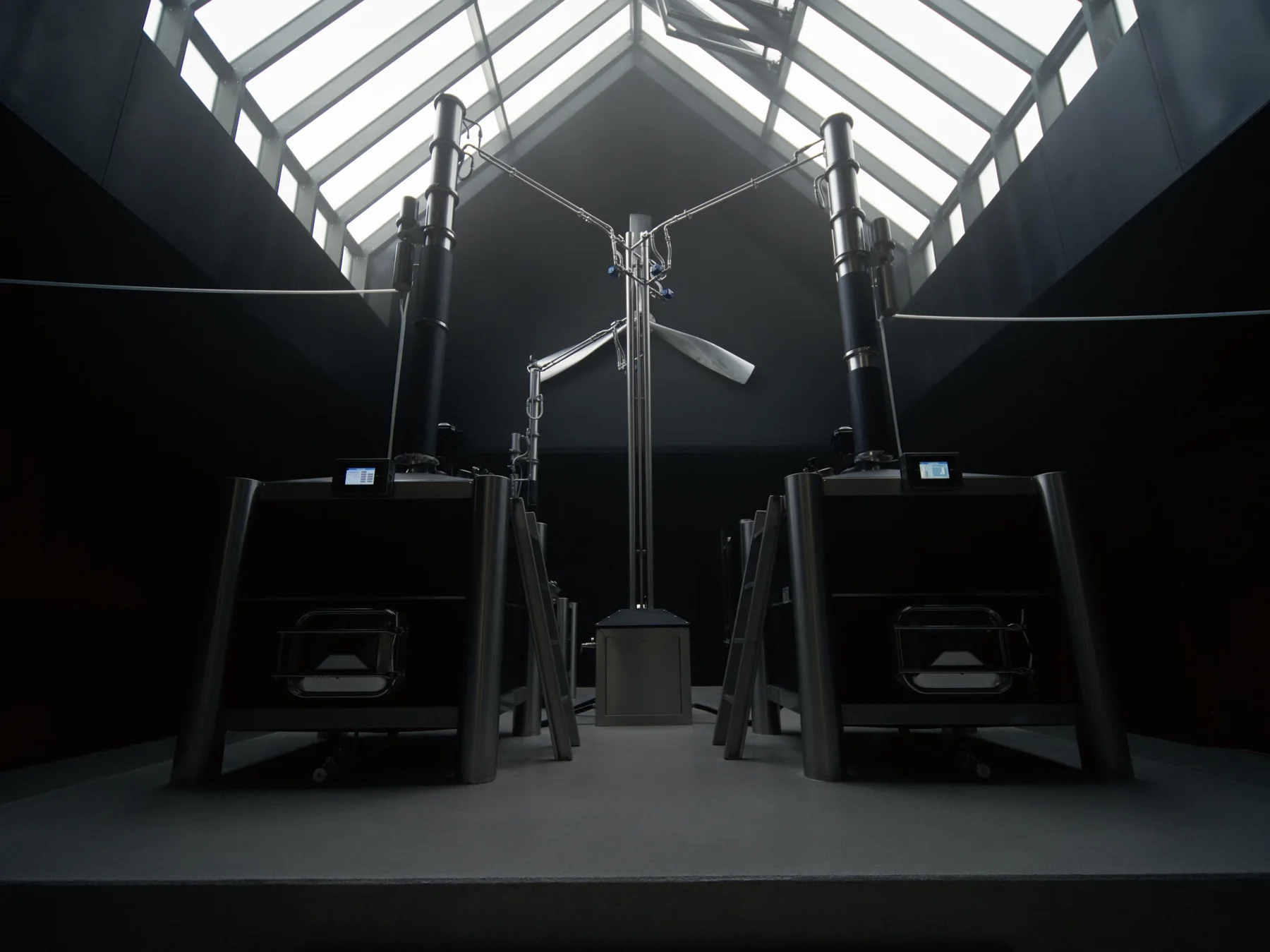
Follow the product through the building.
Start with your portfolio and the route each product takes. A grain-to-glass whisky needs mashing and fermentation before distillation; a gin made from purchased neutral spirit begins elsewhere. Fruit introduces seasonal handling and storage. These are different workflows, even if the final still has the same nominal capacity.
Sketch the movement of ingredients, vessels, product and operators. Include charging, transfer, cleaning and collection. Every handover is a possible bottleneck. A complete equipment proposal should explain how the vessels work together, not simply put several machines on one quotation.
Where iStill fits.
Combine NextGen with dedicated iMasher, iFermenter and iPump equipment where the workflow calls for them. A multipurpose vessel can be a useful starting point; separate vessels can allow processes to overlap as utilization rises.
Size the working week, not just the boiler.
Fermentation occupies a vessel for much longer than a transfer. Distillation includes heat-up and cleaning as well as collection. The number of batches your team can finish depends on these relationships, available operating days and the time needed to prepare the next charge.
Soligny describes this clearly in its customer interview: one 2,000-liter masher, four fermenters and a distilling iStill support its cask-filling rhythm. Pegasus describes a different route, developing on iMini before expanding into a 500 and two 2,000-liter production hybrids. Neither installation is a universal template. Both show equipment serving a particular business.
Where iStill fits.
Use the capacity calculator to test your assumptions, then discuss the bottlenecks with our team. Plan expansion around the next constrained process rather than assuming the next purchase must always be a larger still.
Their ambition. In the glass.
The producers, the products and the recognition they have earned.
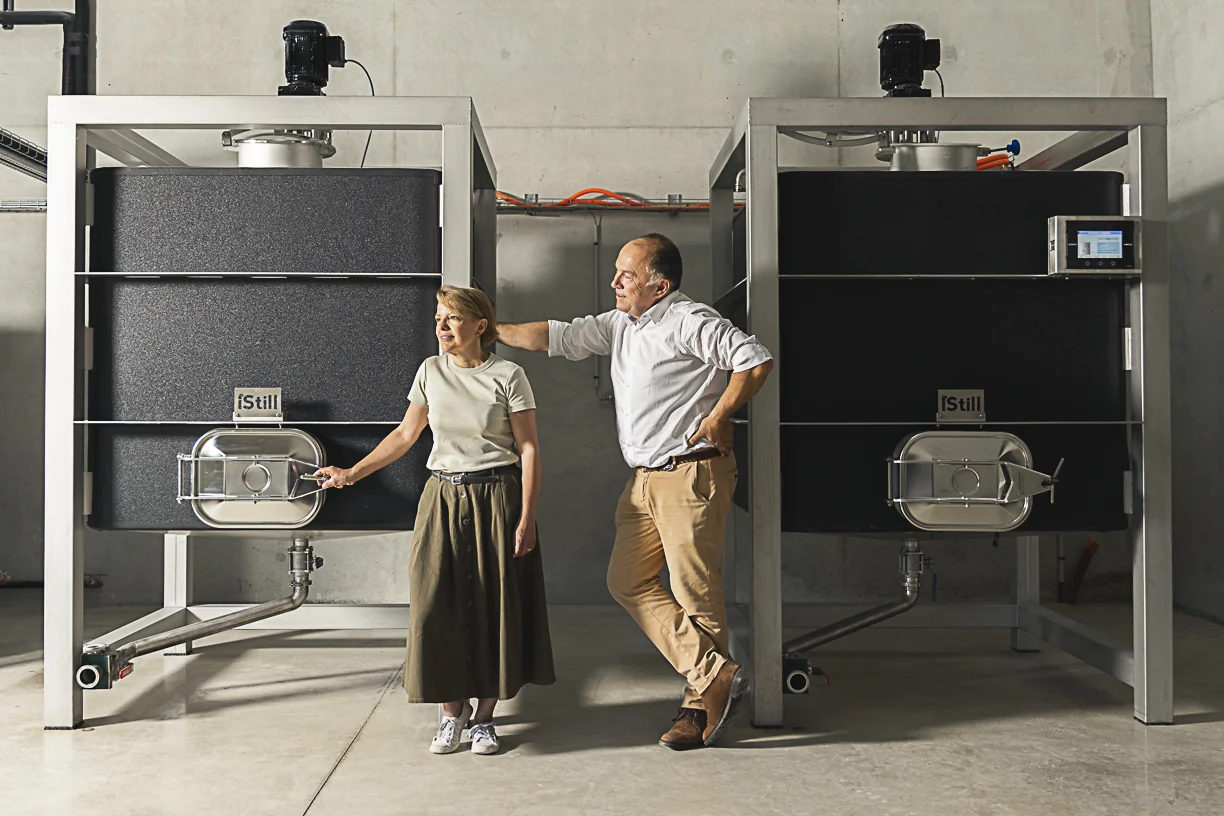
Distillerie de Soligny
Grain, fermentation and cask filling. One connected workflow.
France · Customer interview, 2025
Pegasus Distillerie
From iMini trials to three production hybrids.
Burgundy, France · Customer interview, 2026
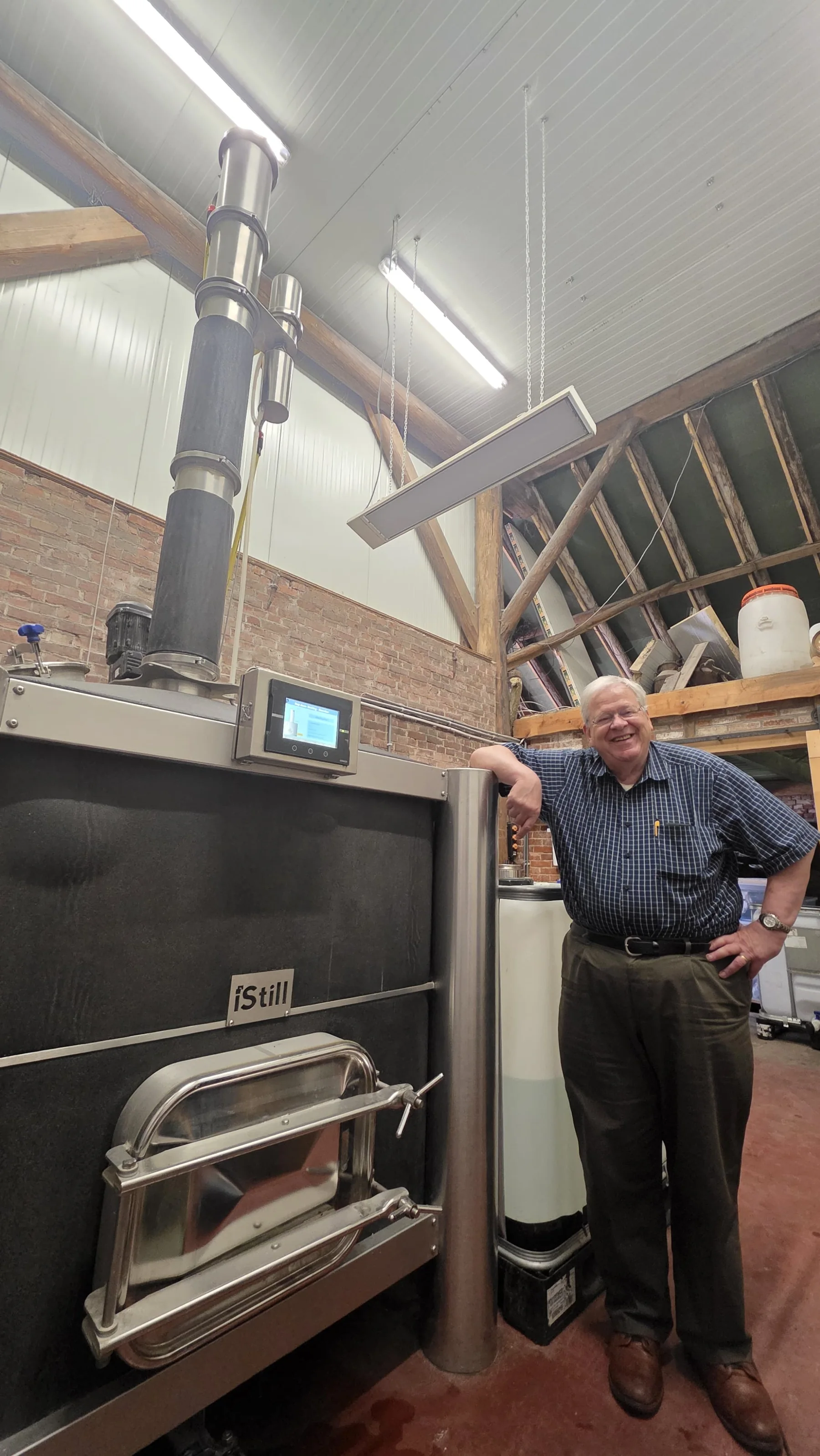
Wieke Distillers
Single-estate whisky, built around the family farm.
The Netherlands · Customer interview, 2025
Make the interfaces explicit.
Available electrical power, cooling, drainage, access and working space affect the equipment choice. Confirm them before finalizing the layout. Include how equipment arrives, where operators work and how materials move without blocking other tasks.
The phrase turnkey can hide very different scopes. Equipment supply, building works, utilities, local approvals, installation, commissioning and training need named responsibilities and agreed milestones. A clear proposal makes those boundaries visible early, while changes are still manageable.
Where iStill fits.
We plan the equipment configuration with your process and site in mind. Confirm the supply, installation and training scope in the project proposal, including interfaces with local contractors and other suppliers.
Build a process the team can own.
A successful handover is more than a first run. Your operators need to understand the recipe, the variables that shape it, the checks that define an acceptable batch and the cleaning and maintenance work that keeps the process dependable.
Develop documented recipes and an operating calendar alongside the equipment. Training helps the team understand why a setting matters instead of simply copying it. University offers a shared foundation in fermentation, distillation and flavor; practical training connects that knowledge to the installation.
Where iStill fits.
Pair recipe-driven automation with trained operators and a clear quality process. Discuss development-scale trials, commissioning and ongoing support as part of the production plan.
Different tools. Informed choices.
Traditional equipment can make exceptional spirits. Compare the actual process and control you need, rather than a material, a shape or a headline.
| Decision | What to consider | The iStill approach |
|---|---|---|
| One vessel or several | A multipurpose vessel can reduce the initial number of machines, but processes compete for its time. | Dedicated mashing and fermentation capacity can support parallel work as demand grows. |
| Equipment capacity | Nominal liters describe vessel size, not finished output over a working week. | Model fermentation, collection, cleaning and operator availability as one cycle. |
| Delivery scope | Turnkey means different things across suppliers and projects. | Agree the equipment, site interfaces, installation responsibilities and training in writing. |
“For us, the iStill was really the only option that ticked all the boxes. It is the best of both worlds.”Build your setup.
Explore the equipment, then compare sizes and options in Design Studio.
Questions worth asking.
Do you supply everything needed to open a distillery?
We can help plan a connected equipment setup. The agreed proposal defines the supply and service scope. Buildings, local approvals, utilities, bottling and other systems must be considered separately rather than assumed to be included.
Can I expand in stages?
Yes. Plan the first installation around the products and working rhythm you need now, then identify where dedicated vessels or additional capacity would support growth. The best next investment depends on the actual bottleneck.
What should I prepare before discussing a setup?
Bring your intended products, annual output, operating days, raw-material route and site information. Even preliminary estimates help us compare realistic workflows and identify the questions to resolve next.
Go deeper. Learn from the source.
This guide draws on Odin’s teaching, the iStill archive and firsthand distillery interviews. The online University is free and open to everyone.
Explore the lessons, articles and tools 9 ↗
- Innovation: Mashing made easy! ↗iStill Blog
- Temperature, pH, and Fermentation Direction ↗University
- Yearly production capacity calculator ↗iStill
- Interview with Vincent Godier from Soligny Distillery! ↗iStill Blog
- Interview with Maxime from Pegasus Distillery ↗iStill Blog
- iStill NextGen ↗iStill
- Owning an iStill ↗iStill
- Holy Trinity of Distillation ↗University
- iStill University ↗University
Keep exploring.
Have a project in mind?
A first idea, a question or a detailed plan. We can start from there.