Two-row and six-row describe the barley’s kernel arrangement. For whisky mashing, the useful comparison is the malt you can actually buy: its flavor, extract, protein and enzymatic activity. The row count alone cannot tell you what percentage will convert your grain bill.
Compare measured enzyme activity
Diastatic power describes a malt’s starch-converting enzyme activity. Read it alongside the maltster’s alpha-amylase analysis and intended application. Values are product-specific; brewing malt and distillers malt can be developed for different requirements.
For example, Briess describes its Distillers Malt as a two-row product with high enzymatic activity. This is a practical reason to use the supplier’s analysis rather than assuming every six-row malt has more useful conversion power than every two-row malt.
Match the malt to the whole grain bill
An all-malt recipe and a recipe containing unmalted cereals place different demands on the mash. The latter needs a conversion plan for starch beyond the malt itself. Milling, cereal preparation and the mash process also affect the result.
Do not substitute a fixed “20% six-row” or “40% two-row” rule for the actual analysis. Ask the maltster how the product is intended to be used, develop the mash and check its performance. Briess’s explanation of malt analysis describes why lot data matters.
Evaluate flavor and yield in your process
Choose candidate malts for the new-make profile you want. Compare them in a documented trial: grain bill, mash process, fermentation and distillation should be sufficiently consistent to make the result useful. Record actual extract and accepted spirit yield as well as the sensory result.
“Two-row tastes better” is too broad to choose a supplier or recipe. The distiller needs to know what a particular malt contributes, how it performs and whether the resulting spirit serves the intended style.
Connect the ingredient to the equipment
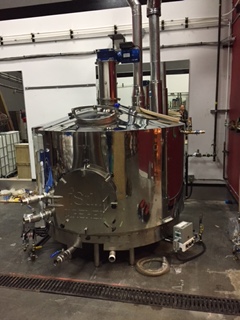
Read grain-to-water ratios before planning the mash load. Liquid volume, grain displacement and mixing all affect the working process. The whisky production guide connects those choices to fermentation, new make and cask filling; the current Masher page explains the equipment.