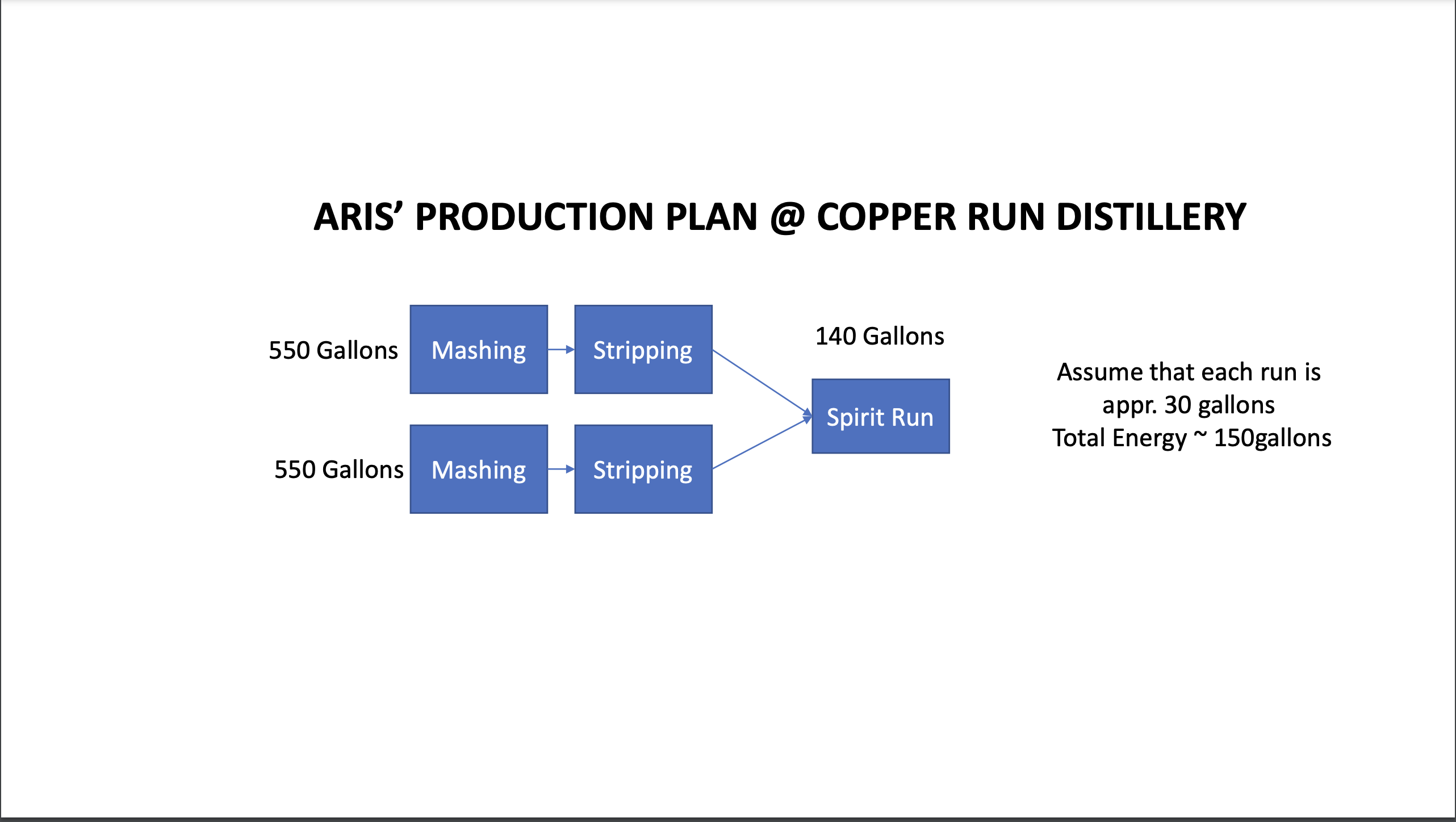
Distilling 1.5 is Odin’s name for a run strategy in which low wines from a stripping run are combined with fresh fermented wash for a finishing run. Some of that finishing charge has already passed through the still; the fresh wash has not. The name describes that combination. It is not a measured number of equilibrium stages or a guarantee of a particular strength.
What changes in the process?
In a separate stripping-and-finishing workflow, the finishing charge is assembled from low wines. In the method described here, part of that charge is fresh wash. The wash contributes additional alcohol and material that has not undergone the stripping run. Charge composition, rather than the name of the method, is the useful starting point for comparing the resulting new make.
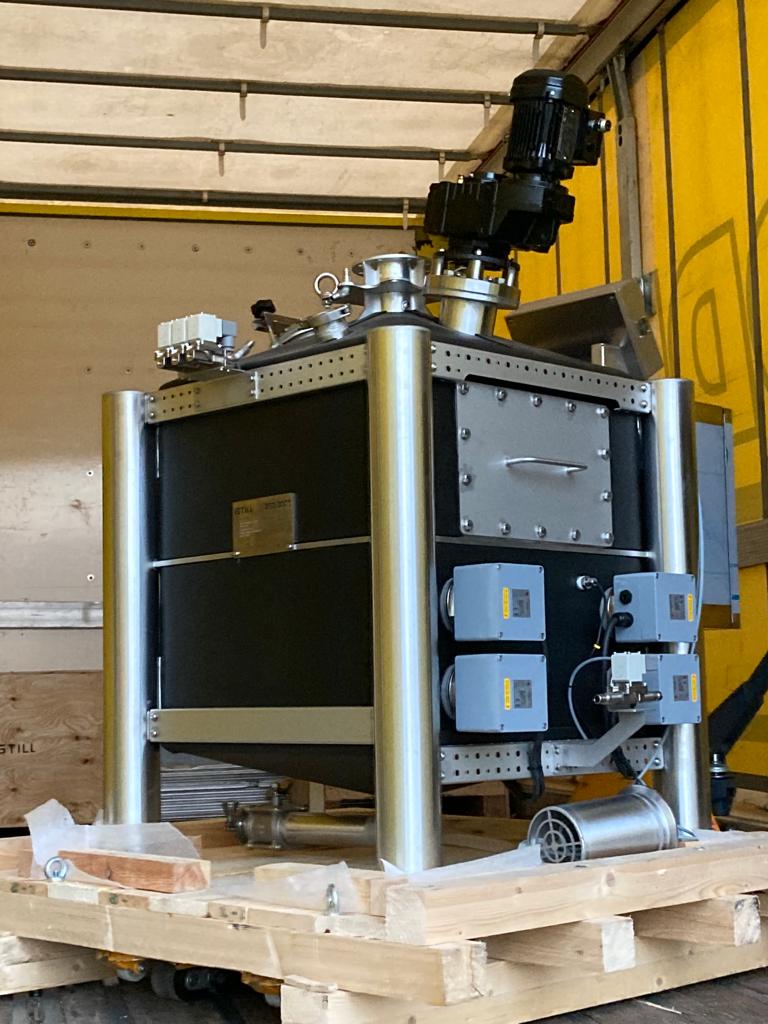
The sequence is to make low wines from one batch, prepare the vessel for the next charge, and combine those low wines with a documented amount of fresh wash for finishing. The actual working fill, charge-strength limit, heating arrangement and controls must suit the equipment. The 2015 source used an iStill 250; its temperatures and power settings are not universal settings for current models.
Calculate the finishing charge
Add alcohol volumes, then divide by the combined liquid volume. Do not add ABV percentages. As a planning approximation for the source’s stated example:
- 50 liters of low wines at 40% ABV contain 20 liters of pure alcohol.
- 200 liters of fresh wash at 8% ABV contain 16 liters of pure alcohol.
- The combined 250-liter charge contains 36 liters of pure alcohol: approximately 14.4% ABV.
Those are illustrative inputs, not a prediction that a stripping run will recover all of the alcohol in a starting batch. The original article rounded the combined charge to about 15%. Use measured volumes and strengths for your own comparison; temperature and mixing also matter when measuring the actual charge.
What should a trial compare?
Compare the approaches against the same product brief. Record feedstock, fermentation, charge composition, heating, run time, collection decisions and accepted output at a stated strength. Keep the fractions and assess the developed new make at a comparable tasting strength. For whisky, include the intended cask and entry-strength strategy.
A stronger finishing charge alone does not establish a better spirit. The original account argues for flavor retention and operating efficiency, but does not provide a controlled comparison establishing a universal percentage improvement. Dilution changes concentration; the amount of water added is not, by itself, a measurement of sensory flavor lost. Likewise, fewer named runs do not prove lower energy use: compare the complete process and accepted output.
Where does it fit alongside other run strategies?
Treat Distilling 1.5 as an option to evaluate alongside separate stripping and finishing, and a suitable single-run process. Choose around the spirit you want, the material you handle and the controls your equipment provides. The whisky production guide places that choice alongside grain, fermentation, cuts and casks. The muscovado rum account records a historical application of combining low wines and remaining fermentation.
Study the explanation and its original context
The University lesson on Distilling 1.5 teaches Odin’s reasoning through examples. Read its numerical flavor comparisons as the instructor’s argument, rather than measured universal outcomes. This written reference distinguishes the procedure, charge arithmetic and evidence needed to evaluate it.