Introduction
Homedistilling gets legalized in more and more countries. And since many of todays Craft Distillers started out as homedistillers, we want to make our equipment and our technology available to amateur distillers as well.
The iStill 50 Manual is the first product that we specifically designed for homedistillers. It is easy to operate, affordable, yet brings superb performance within reach. This third post about the iStill Base will dive deeper into the technology part of what we offer.
More posts on the iStill 50 Manualcoming up? Yes! Do you want to know when that next post will be? And what it will be about? Okay, here we go. Expect another post tomorrow. In it, I will tell you how to use our new entry level iStill to make great whiskey. That's tomorrow. For now ... let's dive into technology!
Technology from the 21st century
The iStill 50 Manual gives you a few technological break-throughs:
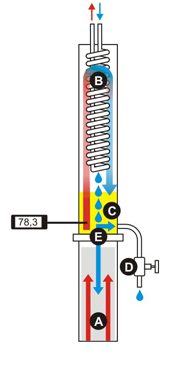 A. Hot gases rise up (see the red arrows?);
B. The column cooler cools all gases down to liquids (liquids in yellow!);
C. Part of these liquids are taken as product: they enter the needle-valve section;
D. If you open the needle-valve completely all liquids are taken as product. If you partially close it, a progressively bigger part of the liquids (E - in blue) gets redistilled in the column for a higher alcohol percentage.
Summary? Our 21st century column management design gives you total control over the column you work with and the product you want to make. Close the needle-valve and the output becomes higher in proof, open the needle-valve and the output lowers in proof.
In practice? All you do is turn the needle-valve (D).
Packing, plates, redistillations
Managing a column without packing is useless. Imagine that you return part of the destilate to the column ... and this destilate (called "reflux") just falls back into the boiler. That is not good.
Instead, we want parts of the liquids returned down the column, because we want to be able to redistill them in that column. To get a higher proof and/or to concentrate Heads and Tails better for a bigger total Hearts cut.
There are a few options to redistill reflux in the column. Usually, the reflux is collected on plates, where it mingles with rising gases and gets stronger in proof. Plates, being a 19th century invention, have a few draw-backs, though. They are heavy, they are permanent, they are not very flexible or versatile.
The iStill solution
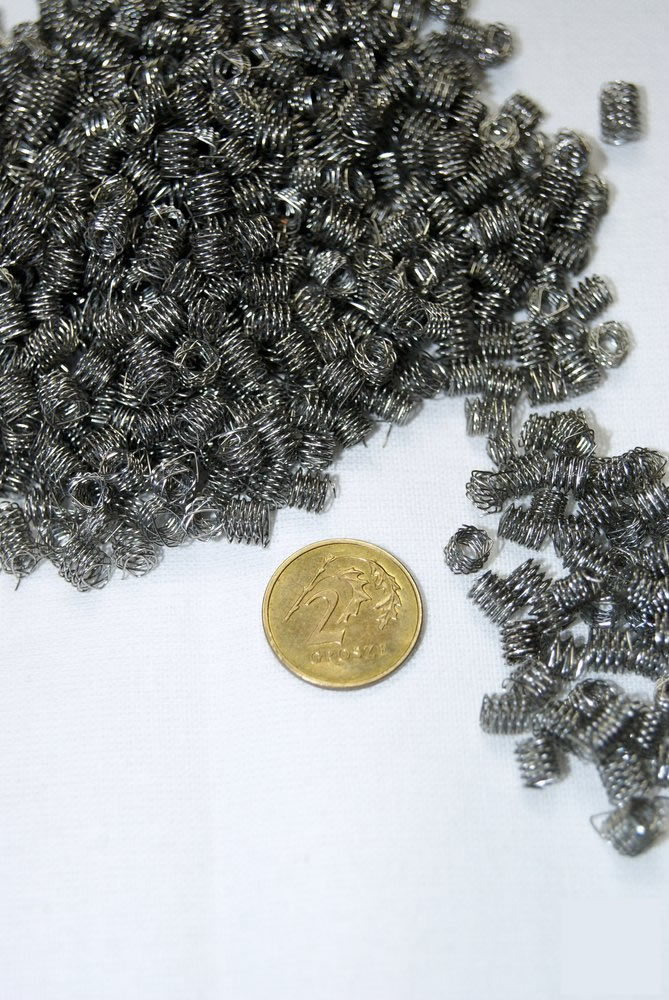
We wanted more versatile packing and found so in SPP. SPP stands for Spiral Prismatic Packing. SPP packing consists of small concentric rings that are designed to function as small micro-distilleries on themselves. They hold a druplet of reflux and redistill it. Envision what we did as follows: we filled the column of your iStill Base with thousends and thousends of small distilleries. When these micro-distilleries receive reflux, they start to redistill ... and when they don't receive reflux they remain passive.
By designing the best possbible SPP and by filling the column of the iStill Base with it, we revolutionized professional distilling. We intend to also revolutionize homedistilling with it.
By packing the iStill Base's column with SPP, we all of a sudden have almost unlimited versatility. If you decide you want high proof product, like vodka, you turn up the reflux (by closing the needle-valve), so the micro-distilleries get activated. And if you want to make taste rich product, you open up the needle valve. In this case, less reflux is sent down the column, so the packing is not activated and the proof stays lower.
The combination of a world-class column management system for reflux with the amazing SPP column packing, gives the homedistiller anything from 1 1/2 to 50 distillations! And that's why our iStill 50 Manual, like no other homedistiller rig out there, can help you make any product from whiskey, rum, brandy and gin to vodka or neutral. Just boost the reflux amount for more purity, or lower it for more taste!
Here is a picture of the revolutionairy iStill 50 Manual's SPP:
A. Hot gases rise up (see the red arrows?);
B. The column cooler cools all gases down to liquids (liquids in yellow!);
C. Part of these liquids are taken as product: they enter the needle-valve section;
D. If you open the needle-valve completely all liquids are taken as product. If you partially close it, a progressively bigger part of the liquids (E - in blue) gets redistilled in the column for a higher alcohol percentage.
Summary? Our 21st century column management design gives you total control over the column you work with and the product you want to make. Close the needle-valve and the output becomes higher in proof, open the needle-valve and the output lowers in proof.
In practice? All you do is turn the needle-valve (D).
Packing, plates, redistillations
Managing a column without packing is useless. Imagine that you return part of the destilate to the column ... and this destilate (called "reflux") just falls back into the boiler. That is not good.
Instead, we want parts of the liquids returned down the column, because we want to be able to redistill them in that column. To get a higher proof and/or to concentrate Heads and Tails better for a bigger total Hearts cut.
There are a few options to redistill reflux in the column. Usually, the reflux is collected on plates, where it mingles with rising gases and gets stronger in proof. Plates, being a 19th century invention, have a few draw-backs, though. They are heavy, they are permanent, they are not very flexible or versatile.
The iStill solution
We wanted more versatile packing and found so in SPP. SPP stands for Spiral Prismatic Packing. SPP packing consists of small concentric rings that are designed to function as small micro-distilleries on themselves. They hold a druplet of reflux and redistill it. Envision what we did as follows: we filled the column of your iStill Base with thousends and thousends of small distilleries. When these micro-distilleries receive reflux, they start to redistill ... and when they don't receive reflux they remain passive.
By designing the best possbible SPP and by filling the column of the iStill Base with it, we revolutionized professional distilling. We intend to also revolutionize homedistilling with it.
By packing the iStill Base's column with SPP, we all of a sudden have almost unlimited versatility. If you decide you want high proof product, like vodka, you turn up the reflux (by closing the needle-valve), so the micro-distilleries get activated. And if you want to make taste rich product, you open up the needle valve. In this case, less reflux is sent down the column, so the packing is not activated and the proof stays lower.
The combination of a world-class column management system for reflux with the amazing SPP column packing, gives the homedistiller anything from 1 1/2 to 50 distillations! And that's why our iStill 50 Manual, like no other homedistiller rig out there, can help you make any product from whiskey, rum, brandy and gin to vodka or neutral. Just boost the reflux amount for more purity, or lower it for more taste!
Here is a picture of the revolutionairy iStill 50 Manual's SPP:
 System integration
A great column management system is one thing. And world-class column packing is another. But they don't mean much without what we call "total system integration".
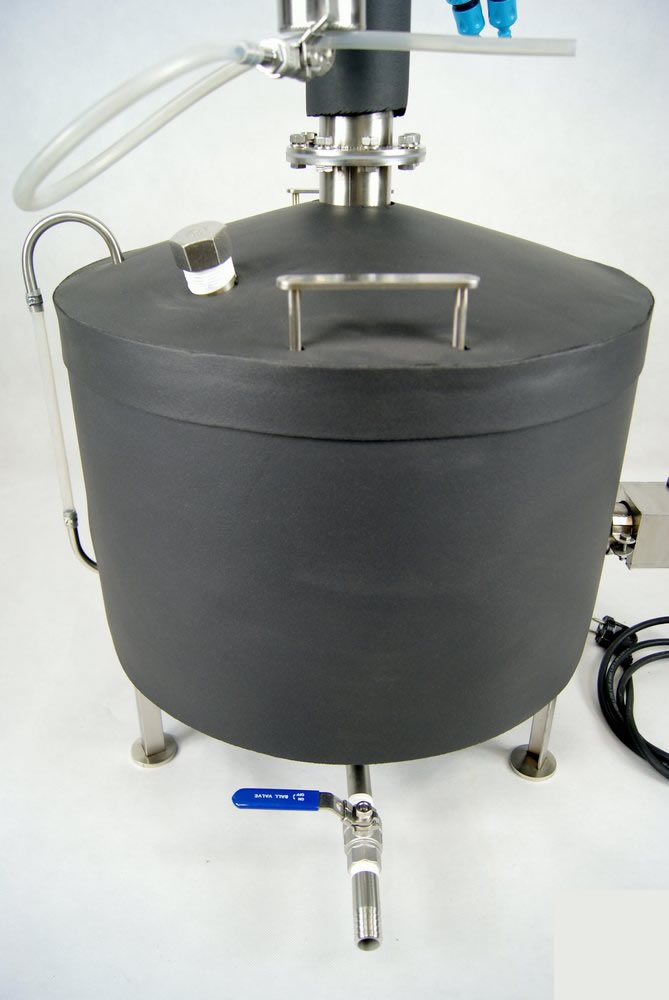
We design all of our stills optimally. In such a way that the boiler feeds the column in the most efficient way. In the way that both column and boiler are insulated to improve performance while lowering total running costs. The heating system is part of the total system integration as well. It has predefined power settings for heating-up (4 kw) and the actual run (2 kw).
Our approach is to optimize all parts of the still to work together as efficiently as possible. This design philosophy translates into a performance boost of around 30%!
Here is a picture of the insulated boiler:
System integration
A great column management system is one thing. And world-class column packing is another. But they don't mean much without what we call "total system integration".
We design all of our stills optimally. In such a way that the boiler feeds the column in the most efficient way. In the way that both column and boiler are insulated to improve performance while lowering total running costs. The heating system is part of the total system integration as well. It has predefined power settings for heating-up (4 kw) and the actual run (2 kw).
Our approach is to optimize all parts of the still to work together as efficiently as possible. This design philosophy translates into a performance boost of around 30%!
Here is a picture of the insulated boiler:
 Pictures
- Column management;
- Packing;
- System integration.
A. Hot gases rise up (see the red arrows?);
B. The column cooler cools all gases down to liquids (liquids in yellow!);
C. Part of these liquids are taken as product: they enter the needle-valve section;
D. If you open the needle-valve completely all liquids are taken as product. If you partially close it, a progressively bigger part of the liquids (E - in blue) gets redistilled in the column for a higher alcohol percentage.
Summary? Our 21st century column management design gives you total control over the column you work with and the product you want to make. Close the needle-valve and the output becomes higher in proof, open the needle-valve and the output lowers in proof.
In practice? All you do is turn the needle-valve (D).
Packing, plates, redistillations
Managing a column without packing is useless. Imagine that you return part of the destilate to the column ... and this destilate (called "reflux") just falls back into the boiler. That is not good.
Instead, we want parts of the liquids returned down the column, because we want to be able to redistill them in that column. To get a higher proof and/or to concentrate Heads and Tails better for a bigger total Hearts cut.
There are a few options to redistill reflux in the column. Usually, the reflux is collected on plates, where it mingles with rising gases and gets stronger in proof. Plates, being a 19th century invention, have a few draw-backs, though. They are heavy, they are permanent, they are not very flexible or versatile.
The iStill solution
We wanted more versatile packing and found so in SPP. SPP stands for Spiral Prismatic Packing. SPP packing consists of small concentric rings that are designed to function as small micro-distilleries on themselves. They hold a druplet of reflux and redistill it. Envision what we did as follows: we filled the column of your iStill Base with thousends and thousends of small distilleries. When these micro-distilleries receive reflux, they start to redistill ... and when they don't receive reflux they remain passive.
By designing the best possbible SPP and by filling the column of the iStill Base with it, we revolutionized professional distilling. We intend to also revolutionize homedistilling with it.
By packing the iStill Base's column with SPP, we all of a sudden have almost unlimited versatility. If you decide you want high proof product, like vodka, you turn up the reflux (by closing the needle-valve), so the micro-distilleries get activated. And if you want to make taste rich product, you open up the needle valve. In this case, less reflux is sent down the column, so the packing is not activated and the proof stays lower.
The combination of a world-class column management system for reflux with the amazing SPP column packing, gives the homedistiller anything from 1 1/2 to 50 distillations! And that's why our iStill 50 Manual, like no other homedistiller rig out there, can help you make any product from whiskey, rum, brandy and gin to vodka or neutral. Just boost the reflux amount for more purity, or lower it for more taste!
Here is a picture of the revolutionairy iStill 50 Manual's SPP:
 System integration
A great column management system is one thing. And world-class column packing is another. But they don't mean much without what we call "total system integration".
We design all of our stills optimally. In such a way that the boiler feeds the column in the most efficient way. In the way that both column and boiler are insulated to improve performance while lowering total running costs. The heating system is part of the total system integration as well. It has predefined power settings for heating-up (4 kw) and the actual run (2 kw).
Our approach is to optimize all parts of the still to work together as efficiently as possible. This design philosophy translates into a performance boost of around 30%!
Here is a picture of the insulated boiler:
System integration
A great column management system is one thing. And world-class column packing is another. But they don't mean much without what we call "total system integration".
We design all of our stills optimally. In such a way that the boiler feeds the column in the most efficient way. In the way that both column and boiler are insulated to improve performance while lowering total running costs. The heating system is part of the total system integration as well. It has predefined power settings for heating-up (4 kw) and the actual run (2 kw).
Our approach is to optimize all parts of the still to work together as efficiently as possible. This design philosophy translates into a performance boost of around 30%!
Here is a picture of the insulated boiler:
 Pictures
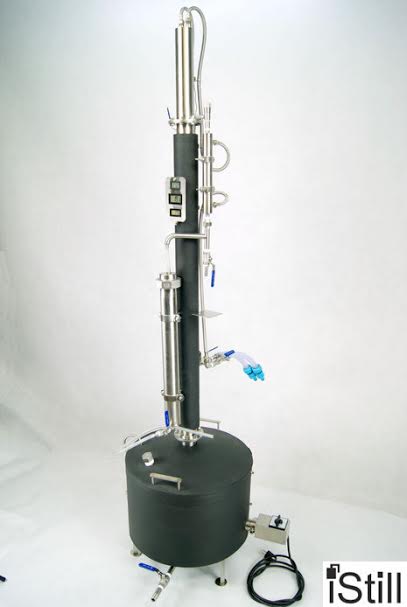
The iStill 50 Manual ...
www.iStill.eu