Let’s start with an introduction! Who are you, what are you doing and how did you come to the distilling world?
The distillery of Soligny was created in 2019, I think, because I went to do the training at your place in 2019. When I took over from my father and started running the farm we own in Champagne in France, we thought we had to diversify the portfolio and to produce something that could be sold directly to the end users. On the farm we were mainly producing grains, rapeseed and sugar beets, but we sold them only to transformers and not directly to consumers. We studied different plants that are included in the process of producing beer or are dedicated to wine production, because we are also winemakers in Burgundy. That’s how we ended up thinking about barley first, as we are in a place where there are lots of malting companies, including the number one and number three in the world that are producing malt nearby. We thought using malt from our own barley could be an idea. At this point in time, we had never distilled any product, so we met with various companies that are building distillation plants specifically in the Cognac region, some in Germany, and we had previously visited Japan and Scotland as well. We got a lot of questions about what we want to distill and how, but since we had no experience apart from growing barley and aging wines, we just ended up with more uncertainties every time. It was a difficult period for me, because we couldn't find a solution for all of our concerns. Coming back from Cognac for the third time, I jumped into this article in the Whiskey Magazine France about iStill, and the next day I was already in contact with you guys. The next practical course was actually scheduled for the following week, but it was full. On Friday I got a call back from the team that someone canceled at the last minute and there is a spot for me if I am interested. I said of course, and booked the flight immediately!
Cool story, I am glad you read that magazine back then! Your goal was to make single malt whiskey. How is the distilling experience now?
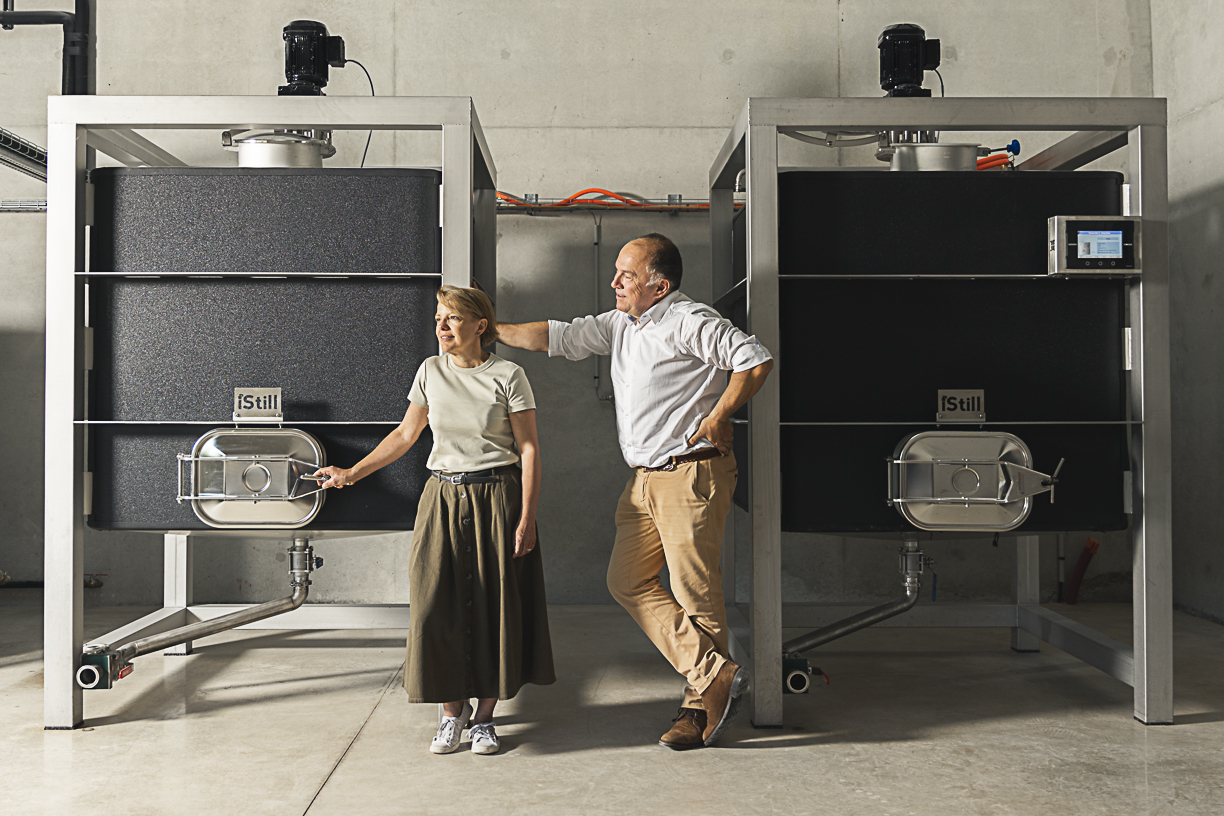
It is great! What seduced me first is the fact that one machine can do every process from mashing to distilling. Initially, I did not realise that for big scale production, it is not the most time efficient way to do it, but it is definitely a huge advantage to have complete control in just one still. Now we use only our grains and we don't only have malted barley. We also do barley, wheat, rye and buckwheat. We run the distillation every day, four days a week, as we expanded our operations during the last couple of years. Most of the fermentation is done during the weekend, so it is ready for Monday morning. The old iStill that we started with became a masher, we have four fermenters, and one iStill for distillation.
What are the sizes of these machines?
Everything is 2000.
Wow, big operation indeed. How many liters of end product does it mean per week?
Hmm good question, I don’t actually know. Let's say we produce about 220 liters of distillates per fermentation around 62%-64% ABV. Our casks are 228 liters, because they come from Burgundy. One fermentation makes one distillation makes one cask, so we fill four casks a week.
You must have a lot of casks. For how many years do you leave the whiskey in there?
At least three years, so now we have probably over 350 casks full in the distillery.
Are you running with the same intensity throughout the whole year?
We stop the distillery from the end of June to mid-September because it's the time for harvesting the grains. After that it's the harvest for the grapes and then we do the winemaking. Depending on how the other processes go, we usually restart distilling slowly around the end of September and run full speed between October and the end of April.
How is the reception of the whiskey? If you started putting it in casks in 2020, I assume you made your first sales in 2023. What is the feedback?
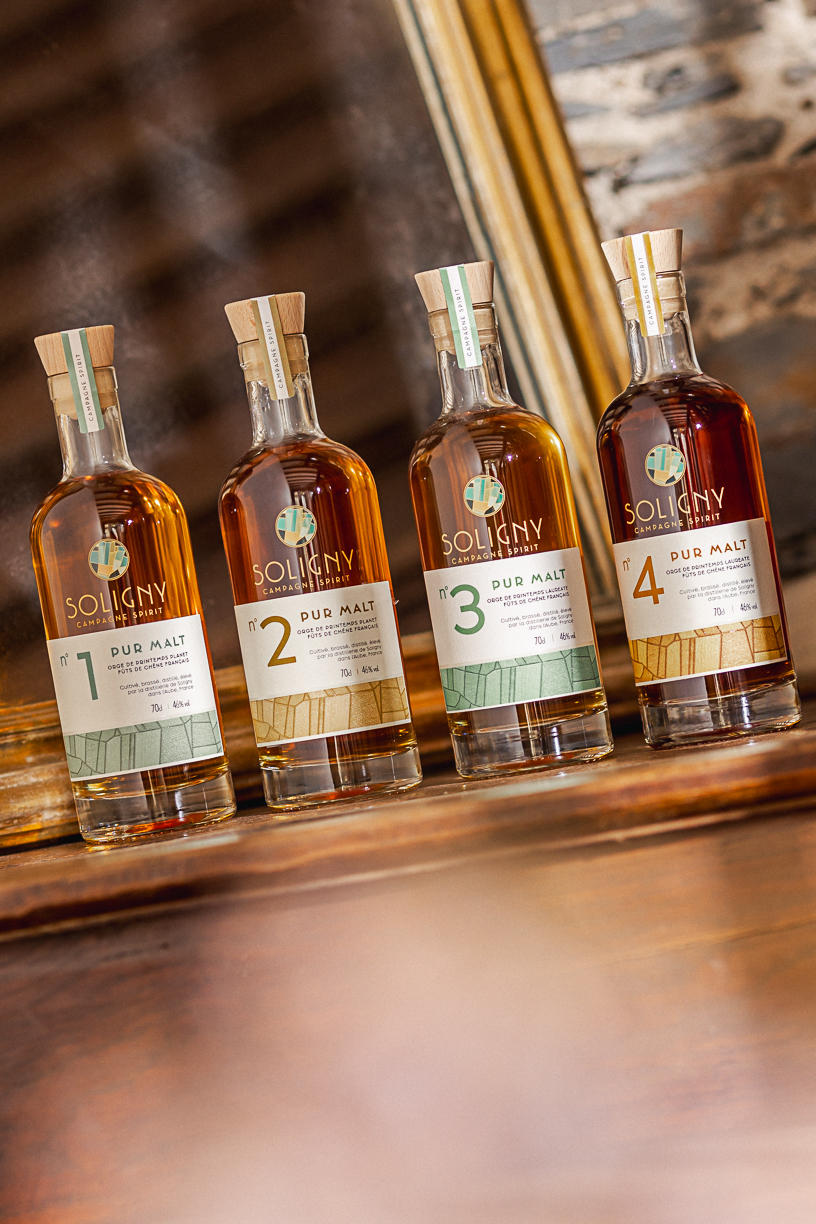
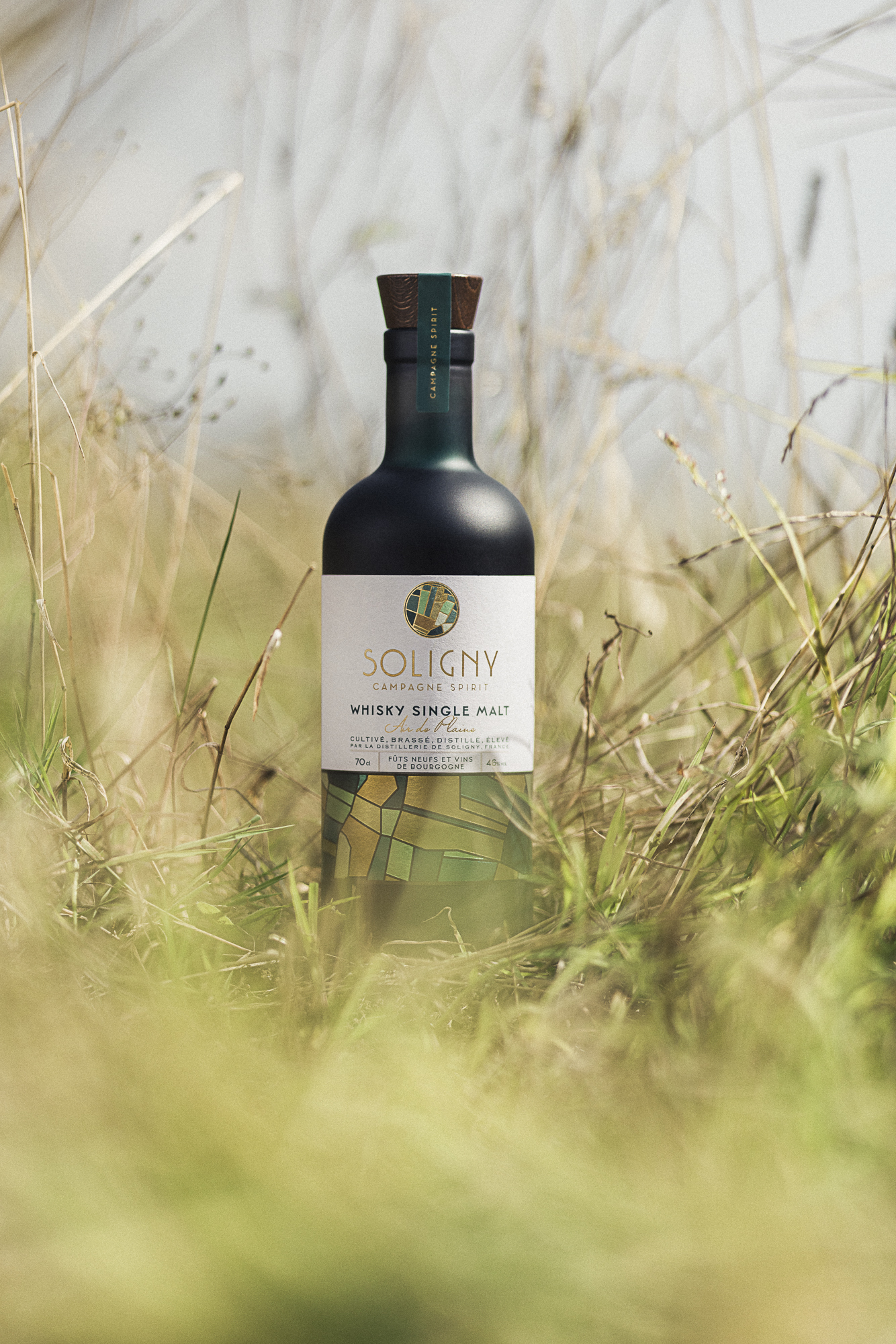
We already started sales after one year. It was basically aged moonshine, 1 year in the cask and people loved it. We had four different batches produced, because we wanted to show what fermentation does during the winter and what it would be during the summer, or at least the difference between cold times and hot times. The way the young alcohol is interacting with the wood is quite different during the summer and during the winter. You don't get the same alcohol after one year. Even using the same cask, it does not give the same profile. So we had four different batches of one-year-old whiskies and we launched our first whiskey last year with just four casks. It sold almost immediately and we launched a production of what we call the permanent brand. This one is called Air de Plaine. It is a green bottle and we are gonna be producing it constantly. It is a different way of organization because you make sure you have a constant taste, a constant color that your customers are getting more and more used to. Additionally, we produced one single cask in September, which is sitting in a cask that was used initially for our wine. We produced our Burgundy wine in the cask and the same day it was emptied, we refilled it with the production of the day in the distillery, so it was a very fast transfer and the cask was still wet to keep the flavours of the wine. We kept it there for 3.5 years and that’s what we are selling at the moment.
It is a great idea to reuse a cask that way. I can imagine it adds a unique kick to your whiskey. Where are you selling your products?
We have an online shop. We don't have any physical shop ourselves, apart from the distillery, but we also sell them to a few small local boutiques and liquor stores. We had a distributor for France, who was in charge of selling our products, but we decided to take back full control of our distribution. We also export to our wine customers in Asia, because they are interested in the fact that we are reusing our casks from Burgundy to age our whiskeys. They are customers of both products.
Perfect, you have a wide distribution network I see. How is it working with the iStills? Any remarks for us?
It is just humor, but I always say that the iStill is frustrating, because it is so easy to use. There is almost never any issue with it, but if there is, I can get in touch with your help desk quickly and get it solved. The after sale relationship with iStill is great, because you don’t need any relationship basically. No need to chase you guys with problems. The machines are running well and if I have a question, there is also a big social network where I can reach out to people. If we were to develop a new product, I think we would be in contact more to make use of your expertise.
Have you experimented with other products already? Anything in the plans?
I think it makes sense for us to really dig further into the grain and to do our own grainy products. We like to experiment with different grains, even mixtures for new whiskey flavours. We are sugar beet producers, so I am doing tests on making vodka from sugar beets. Although, it is less interesting, because in the end the goal for it is to have no taste at all. The gin market is very exciting and it feels like there are new developments every hour, but it does not really fit our profile. There are vague ideas for some other products, but nothing serious at the moment.
Do you have any achievements or milestones that you accomplished and are proud of?
I am not a fan of medals for the time being. We get some local recognition based on the fact that we are working very locally and help developing a community. Another nice thing is our exports to Asia. Also, French whiskey is developing very fast. We are part of the Whiskey Producers Association in France. We are just at the beginning of the journey, so being proud is a bit too early for us.
These are already things to be proud of, you are on the right track for sure! What is ahead in the near future?
The next achievement will be volumes. The storage will be full in a few years, so we really want to focus on marketing and selling. It is a major goal to have our whiskies on the table of the large restaurants and bars, hotels, etc., and that's a very long process.
Thank you for your time and answers, that was it from my side. Do you want to add anything else?
I just want to say that each time I'm tasting an alcohol produced with an iStill, I think there's a style, there's a pattern, there's something that makes it quite unique. It would be great to have a certain association or a common e-boutique for producers that use iStills. Although, that would potentially raise competition among us, if we were displayed on the same platform, so there are pros and cons to that idea. All in all, it is an amazing product and I like working with it. I think there is great potential in iStill and there is a lot to discover even for us still.