Let’s lay your distilling background out first. How did you end up in this profession and at what point have you met with the iStill brand?
Like most people, I started distilling as a hobby. I had an interest in spirits from my experience in bartending, and that grew to the point where I asked myself; why am I not trying this out? So, I started experimenting with just a small, cheap copper still. At the beginning, I used cheap vodka with cheaper botanicals and was making really shitty, terrible spirits, but I enjoyed the process so kept on practicing and reading. Forums provided a great source of information, and I was teaching myself as I experimented. iStill came into the picture when I decided to make the transition from something I did for fun to an actual career.
When did you make this switch exactly?
About 5 years ago.
What made you choose us over other manufacturers?
When I decided to start the business and I was shopping around for stills, iStill was the only company that I found who were straightforward in what they offered and what they charged. There was no barrier in getting into a discussion, and no haggling over quotes. It was straight-forward, like this is what you get and this is the price. I really appreciated that simplicity.
Yes, we believe that transparency serves everyone’s best interest. How did you find us?
Just a lot of Googling.
What spirit(s) are you making currently and in what quantity?
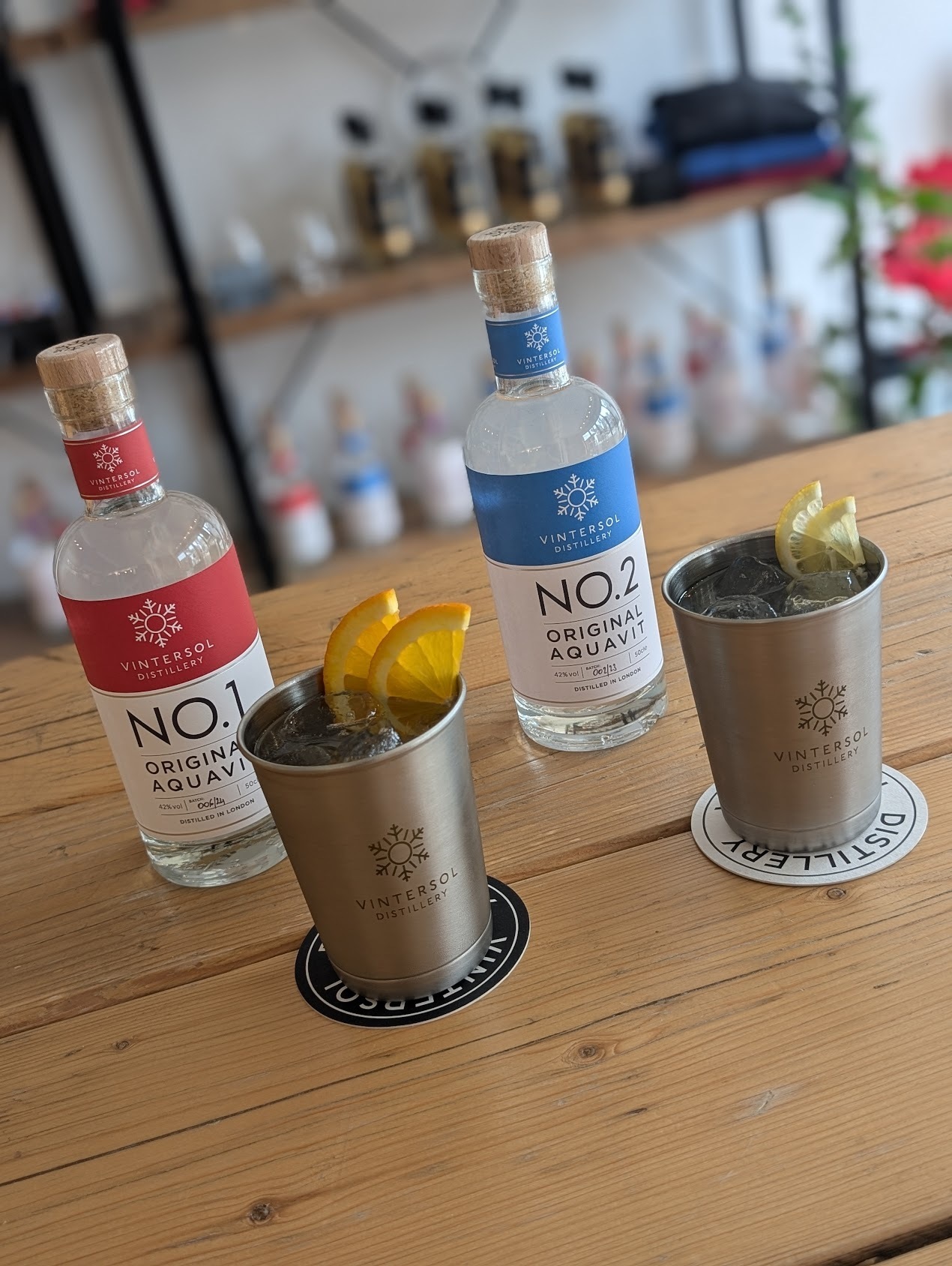
We are making aquavit as our primary spirit, but also some gin. Then next year we'll be progressing on to doing brandy or eau de vie as well. We are doing fairly small quantities, as we are only running a 200 litre iStill, and a Mini for testing and for little custom runs for clients. At the moment our output is maybe a couple of thousand bottles a year.
Do you have constant production throughout the year or is it more seasonal?
It is more seasonal, and it is more just in time. When we draw down on stock on a particular product and reach a certain level, we'll queue up a run and replenish.
Yeah that makes sense, since you don’t have to bother with aging your products. What does your distribution look like?
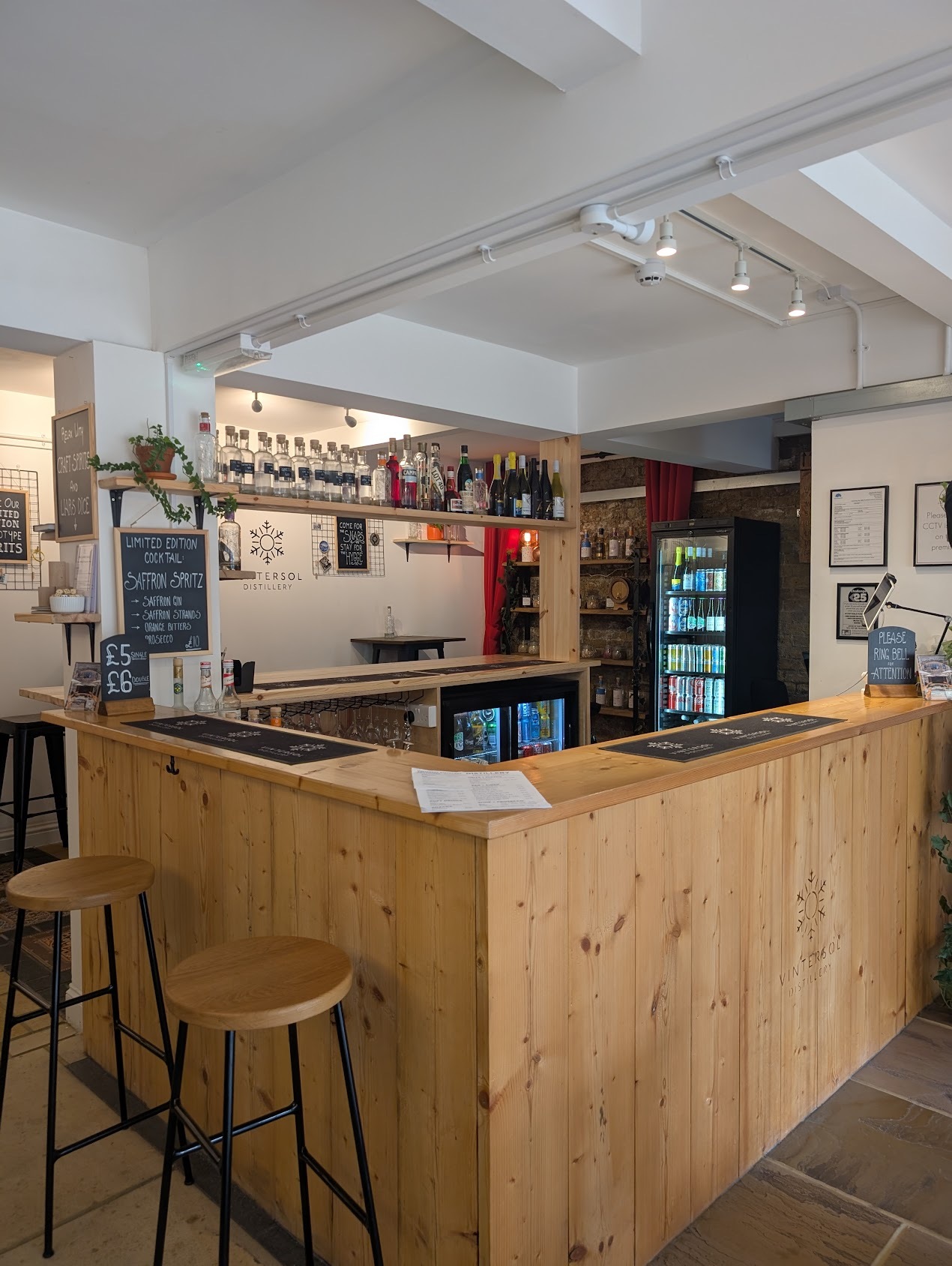
We do a lot of direct-to-consumer sales through both our webshop and our distillery shop. We offer tours and tastings, host distilling workshops, and run a bar every week as well, which gives people more opportunity to buy directly. We do have some B2B customers including one of the major distributors in the UK, as well as number of smaller, predominantly Scandinavian outlets, given that we produce aquavit. We are looking to expand, but the problem that we run into is that a lot of the bars and pubs in the area are tied, essentially meaning that they are all part of a chain, and so have centralized purchasing and stock lists. Unfortunately, they can't take on small producers like us.
That’s a pity. You mentioned that you have a bar yourself. Could you talk a bit more about that?
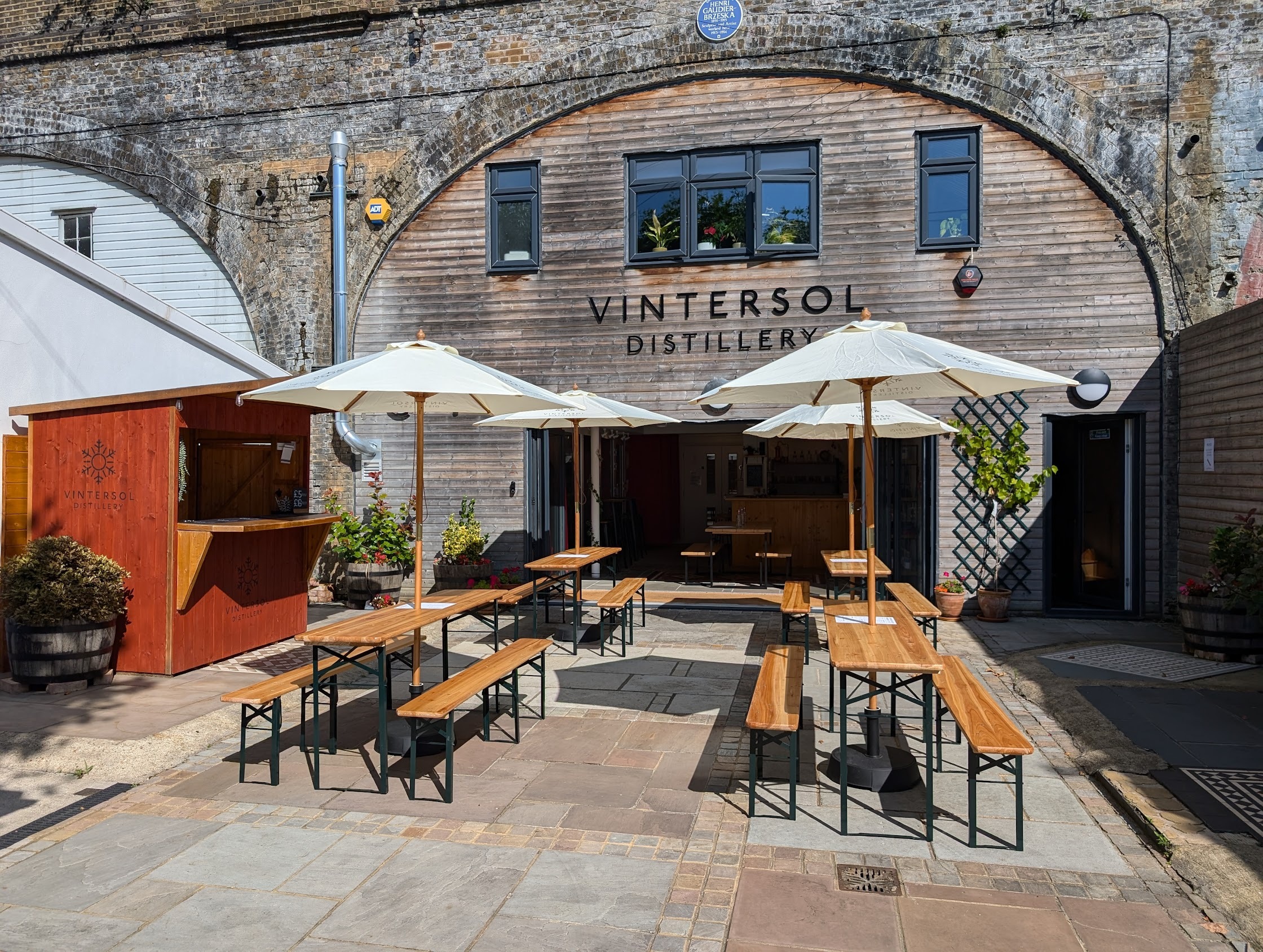
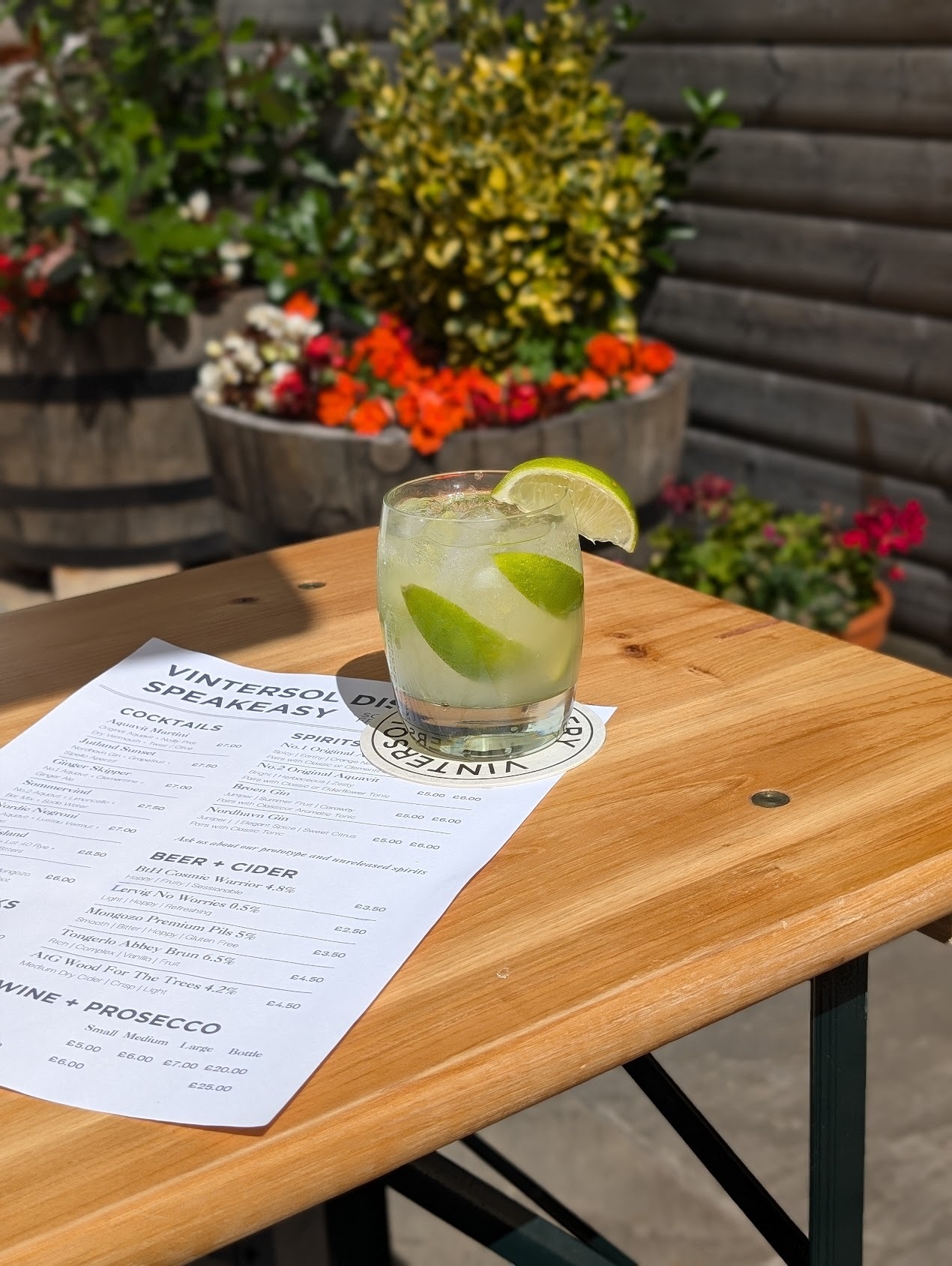
Yeah, so every Friday night the distillery becomes a bar. During the winter we’ve only got space for about 20 covers, but during the summer we use our yard, which adds another 30. It’s mostly cocktails and mixes made with our spirits, and then a small selection of beers and wine. It’s been a really good way to add a little bit of extra cashflow to the business, showcase our products, and get people into the building. ‘Cause once they are here, there's a greater chance I can sell them something else.
Sounds like a great combination with your distillery for sure. Why the decision to only have it open for just one day per week? Why not run it five, six days of the week?
Well, I am the only full-time member of staff, so I’m responsible for all the production, marketing, paperwork and so on. I get family and friends in to help on things like bottling and labelling, etc. when I can, but at the moment I have time for only one bar night a week. I am also running the tours in the evening, and some nights I just need to have a little time for myself.
I understand it completely, then it is basically a one-man show. It is impressive that you can manage such a wide range of activities mainly alone. What about the tastings that you mentioned? Are these kinds of short courses or more of a customer experience type of thing?
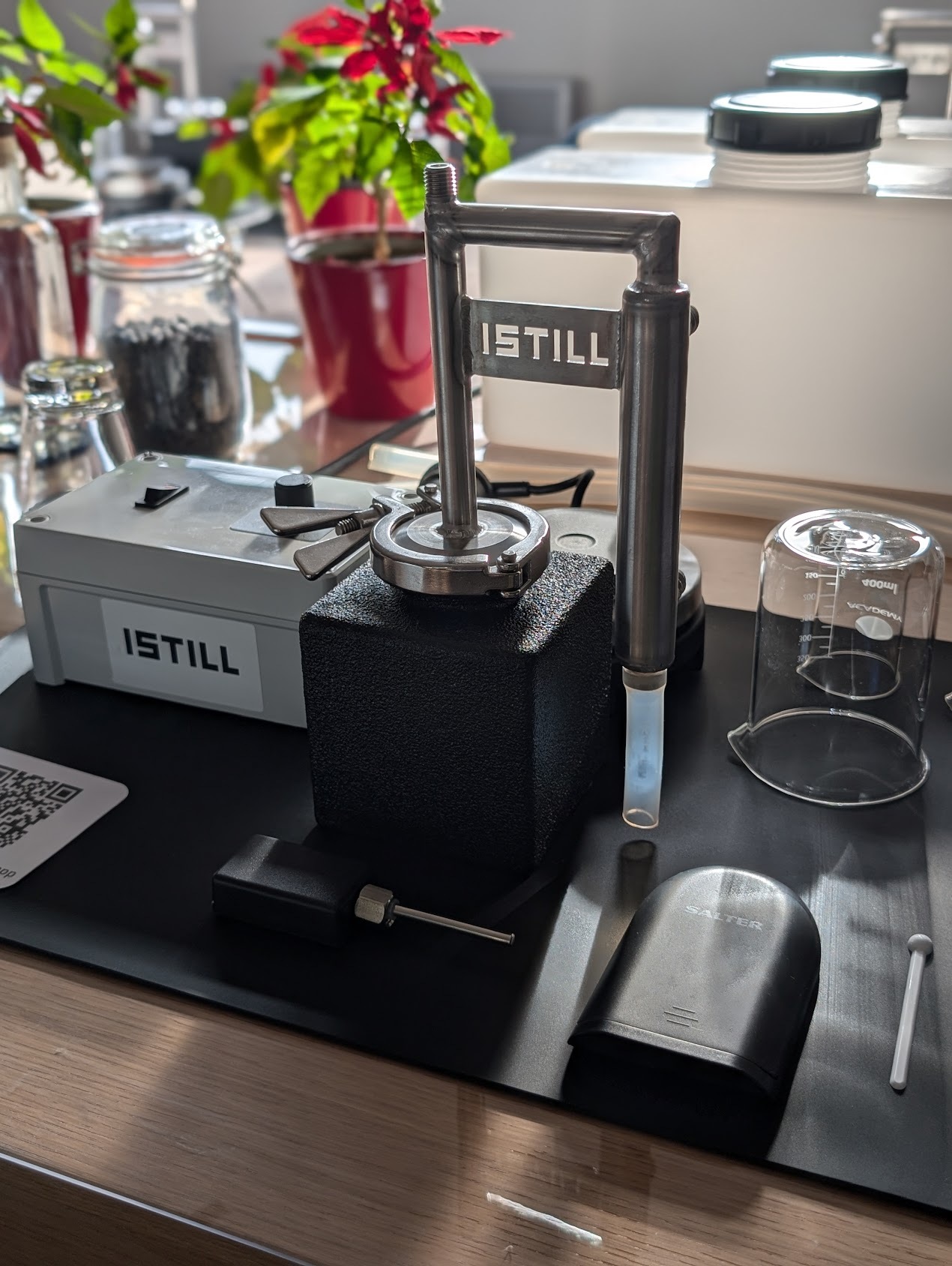
The tastings are an opportunity for us to show off our distillery, spirits, and equipment. We talk about aquavit predominantly, because that's what makes us unique, and we offer customers samples of pretty much everything we make. We also highlight the iStill, because most people haven't seen a still like it, and it’s fun to take them through and explain how it's different from a traditional still. It’s become a little bit of a centerpiece in the distillery, but we had to situate it in an enclosed area. However, we constructed one of the walls from heat resistant glass, so people can see it whenever they come in, like a showroom. We also run distilling workshops using the iStill Nanos, so people can make their own aquavit or gin. We find that guests have often never tried distilling, or even imagined that they would be able to do it, which makes the sessions a really fun teaching experience. It wasn’t our intention, by the way, to set up a total bar within the distillery, or offer such extensive customer events. But, because we found that we weren't able really to sell to the trade as much as we'd hoped, direct consumer sales became a much bigger part of our business plan. It therefore makes sense to show people what they can do with our spirits, and give them the opportunity to create their own.
Exactly. It is also very easy to work with the Nano, just like with the Mini or with our other products, but it allows you to bring your business closer to the customers and give them hands-on experience. What were your initial expectations before purchasing your first still from us?
I'm not sure I had any expectations as such, because I hadn't ever worked on a professional still. From the marketing that I'd been provided, I expected that it would be able to do the automated cuts, that it would be able to connect to our Wi-Fi, and so on. That’s the bill of goods that I was offered, and yeah, it's done everything that it says on the tin. Again, it's a one-man show here, and I'm able to run the distillery by myself, from production to breakdown, to cleaning etc. I wouldn’t have been able to do that with a regular still. I can't imagine it being any easier than what I've got here, plus the fact that it is hooked up to the Wi-Fi does mean that I can be doing a million other things whilst a run is ongoing, and can have complete confidence that I know exactly what's happening in the still room.
Indeed. If you compare it to a traditional still, what are the biggest advantages that you see?
The technology side is definitely the main consideration, but the other primary advantage is actually the breakdown. Being able to finish a run and to empty it, clean it, then reassemble it within an hour saves a lot of time.
Anything that you miss or would like us to improve on?
Nothing off the top of my head. In my opinion, a lot of the stuff that's missing is not anything to do with the product necessarily, but is mainly to do with the onboarding process. For instance, it would have been great to have particular recommendations in the documentation as to how to clean the still. It’s probably very obvious, but, for example, I’ve found that a pressure washer turned out to be a really useful, versatile piece of kit, though it took me about a year to come to that realization. For me, if iStill potentially provided extra tips to avoid some of those rather basic subjects, it would help to fill in some of the gaps and make our lives easier. With that said, you guys must be busy with plenty of other things, and it’s is not a priority.
The thing is that distilling is a very broad subject and we cannot cover everything. We already provide more support than anyone else in the industry. Also, most of the knowledge is there online, you just have to look for it on forums, discussion boards or on the iStill blog with close to 2000 articles aimed to provide extra information. The people that ask basic questions in the Facebook group are mostly those who did not follow the practical course. We see that those who actually come here are the ones that we rarely hear from again - only when they share a medal with us. A service can always be improved of course, there is never a point where everyone is happy, and we are coming up with new ideas regularly.
Yeah, that’s understandable and it is not a big problem. I appreciate what you guys are doing. I haven’t got any issues with the product itself and never ran into any troubles while using it, but a general setup/maintenance guide would be helpful. Similarly, assembling the still the first time wasn’t difficult, but it would have been nice to have some extra guidance, just for that extra level of security so I could be sure that I wasn’t messing something up.
We do actually have services that can help with that. We just extended our list of support services recently, and now you are able to request startup support and run support as well, if additional assistance is needed. What was your timeline with iStill? Which still did you start out with?
I bought the 200 and the Mini at the same time, coming up on five years ago, but I did the practical course before starting to work with the stills. We then purchased six nanos more recently, so we could run the workshops.
That’s great, you timed it right then. Any personal accomplishments or official recognition that you would like to mention?
People really enjoy the distilling course, and it’s been a great experience for us as well. Imposter syndrome is an ongoing concern, but the fact that we are able to teach complete novices how to make a great gin or aquavit in just a few hours, and for them to actually understand the science and art of the process, helps reaffirm to ourselves that we do actually know what we are on about. We’ve won some awards as well, like IWSC, World Drinks Awards, Michelangelo Awards, but I’ve personally gone off the professional accolades as a measure of quality or achievement. It’s definitely more of a marketing gimmick than an objective assessment, and having met a lot of judges, I don’t believe they necessarily know much about the spirits put before them. For me, the most gratifying thing is actually running the bar on a Friday, and seeing people come back week after week for our spirits. We've got people who return every Friday, because they love what we make.
You don't need a better compliment than this, right?
Yeah, exactly. They come to our bar to have our drinks. That for me is more important than any of the awards. It’s a great validation of what we do, of the equipment that we use, the spirits we create, and at the end of the day it's the sign of a good business.
That’s the ideal scenario I wish for every one of our customers. What are your plans for the future? Is there anything that you are working on at the moment?
Absolutely, there’s always something going on. For instance, I’ve partnered with a wine importer who had a batch of wine which had gone a little “mousy.” Essentially, the flavour wasn’t quite right. They have 840 bottles, but rather than dump it, we’re going to see if we can turn it into brandy or eau de vie by redistilling it. From there, I want to build a little more on this idea of recovering or reusing alcohol. For example, we've got plenty of breweries in the area, some of which have contacted us in the past saying that they have a batch which hasn't gone quite right, hasn’t developed the right flavour and so on, but maybe we could distill it into something. We've recently gained the licenses necessary to distill or redistill these alcoholic products, and can hopefully transform them into something new, interesting and different. Meanwhile, on the product side, I’m looking to release another gin made with local botanicals, which is a little bit weird for London, and an aquavit that uses predominantly Danish botanicals.
What are those botanicals?
For the gin, I’m experimenting with some really interesting and strange stuff, like nettle leaf, blackberry leaf and gorse flower. There’s a heath near the distillery were the plants grow wild. They’re all edible, and while there is at least one gin which uses the same or similar botanicals sourced from other areas, nobody's actively foraged and distilled them from here before, as far as I’m aware. As for the aquavit, I’m looking at incorporating Danish seaweed and sea buckthorn, and finishing the spirit with marsh salt.
Creative times ahead, I see. I like all of these ideas, they seem like super fun projects to work on! Anything else that you would like to add to our conversation?
All I would say is that given the situation in the craft distilling world right now, I think it’s increasingly important for distillers and distilleries to be looking at new and alternative sources of revenue, rather than just straight up selling spirits. That specific part of the business is getting progressively more difficult. Beyond the rise in the number of genuine craft distilleries, a growing number of the larger producers are taking a leaf out of the breweries’ playbook and releasing mass produced “craft spirits.” To clarify, I don't know how it is in Holland, but in the UK at least, a lot of the so-called craft beer that you see on the shelves now is produced by multinational brand, but packaged up nicely and labelled as “craft.” A similar process is occurring with spirits here, and I think it’s only going to intensify. We can’t compete with that sort of scale of production, or the marketing behind it, so we need to diversify.
That’s true. Competition is increasing, while inflation is rising as well, so it is a tougher decision to enter the industry. Although, I believe distillers with a real passion and creativity will always find their market. They will never compete with big alcohol on market reach, but good flavours will always attract enough customers to run a successful business - just like in your case!
Absolutely, and thank you!