Thanks for taking the time to answer my questions. First, I would like to ask for an introduction from you. Who you are, from where you come to distilling, whether you had any background in it before iStill, stuff like that.
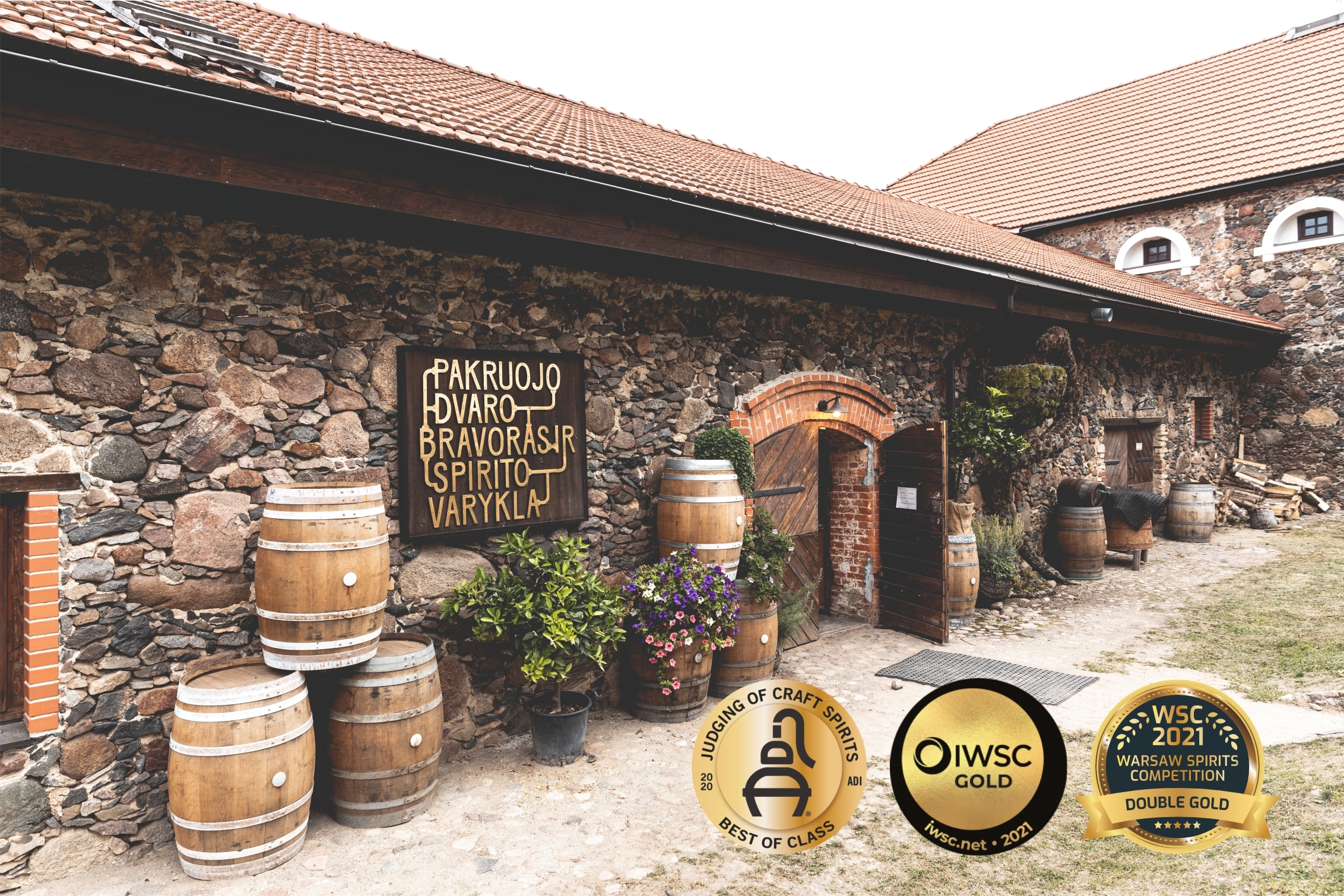
My name is Sarunas and we are the first craft distillers in Lithuania with my team since the end of 2019. Our country is pretty small and we have very strict laws and regulations on distilling, so it was pretty hard to get all the paperwork, but me and my partner decided to go and break the wall and somehow we succeeded. We started the first distillery in Lithuania and we are based in the Pakruojis manor, which is like a historical estate park with lots of historical buildings. The reason why we started here is that there was a distillery operating here a couple of hundred years ago, but after that closed down it was silent for a long time, and having that history we decided to bring it back to life. At the moment we have a couple of buildings and we know that it was an operating distillery and brewery back in the days, so it's very nice to be in such a historical place. When we started, we were using a very historical and old distillation pot, for which we make steam by running wood fire. Later on we purchased an iStill.
Are you still using both the old and new technologies or you have made a complete switch?
At the moment we use mixed techniques for a couple of our products. For example, when we make new make whisky, the first distillation we do on the old school distillation pot, then follow up with the second on the iStill. Actually, that's the idea I like very much, to connect something very ancient, very old, and something very new. Sometimes you can get very interesting and quite unique results. Regarding our gin, it is distilled purely on the iStill. We started making gin maybe four years ago. First there was our original version and the second one we made is rose. Now in our portfolio we have whisky, gin, different liqueurs that I like to call botanical infused spirits, some bitters, vodka and so on.
You mentioned that you are the first approved craft distiller in the whole country. How did you manage to arrange that?
By now we have a couple more, but yeah, distillery life is still pretty small, because of those regulations. Even in our surrounding countries like Latvia, Poland, there are much more and I think it is because of our regulations. It is really hard to open something here.
I think that's also your uniqueness, right? You cracked the code. You found a way in a challenging system and now you are one of the only distillers in your country. That must provide a unique edge also for people that are looking for some local spirits.
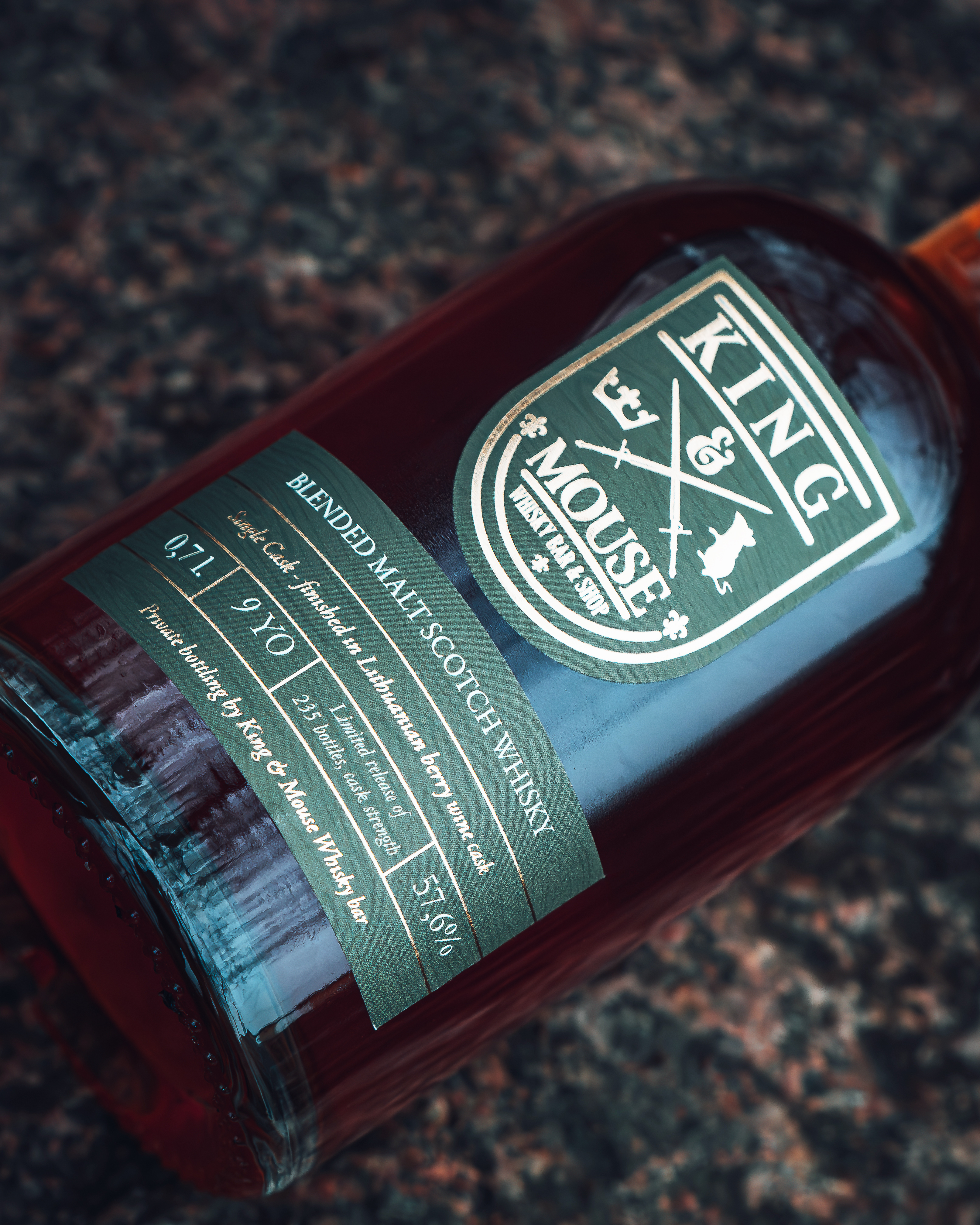
Yeah for sure. Oh by the way, I haven't mentioned my earlier experience. Actually, my experience is coming from the whisky world. I started to work in horeca maybe like 15 years ago, but after some time I opened the very first whisky bar in Lithuania, that was in our second biggest town, Kaunas. After that I moved to our capital, Vilnius and opened whisky bar King & Mouse, where we started to do private bottlings. You can visit this bar on your trip to Vilnius. Purchasing the cask and the whisky from Scotland and with every release I was trying to bring something Lithuanian into Scottish whiskey. For example we did use Lithuanian berry wine casks for finishing and so on. I was travelling around to see what's happening in the country and in surrounding countries. That’s when I started thinking about making my own new make spirit. I met a guy who I knew from before and he was running that historical estate park. He also had the idea to start a distillery and that's how we got together. I have all this passion coming from the whisky world and at the moment I'm working on all our recipes together with our technologist, Ruta. She's pretty experienced with working in breweries.
How big is the team that you are working together with?
At the moment it is around 10 people. We have two guys doing distilling and brewing. We are also a small brewery, but all the beer is sold on the site during events in our historical state park. Besides that, a couple of guys are working on the bottling and labeling, so that's around 10 people in total.
That’s quite a scaled operation then. What size of distilling equipment do you have exactly?
Not as big as it may seem. We have a 500 liter iStill. The old ones are even smaller. Our capacity of production at the moment is around 50.000 liters per year. We are still growing every year.
Walk me through your products a bit more, because I think there are some interesting and unique concepts there. What are the markets you are selling to? Only domestic or international as well?
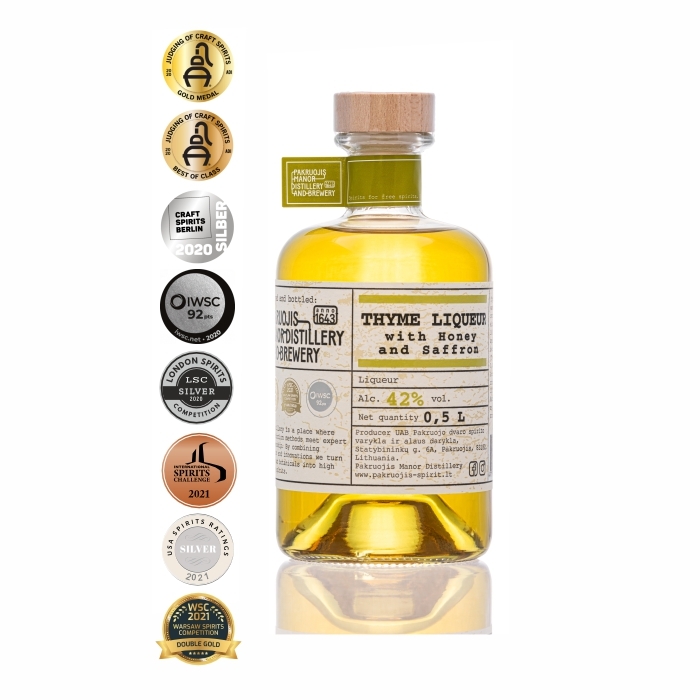
Our history of whisky started when we began to distill our beer. It is very close. It is almost a whisky, but still not a whisky. So yeah, actually we have a couple of pretty nice releases while we are working on our own whisky and my idea is also to add something Lithuanian. Actually, I just came from the distillery and we received two Lithuanian oak casks, so besides having whisky maturing in the oloroso sherry casks, we are also trying out some Lithuanian oak casks. We are very curious about the results. Our gins are available in our home market, and also in Poland and Latvia. A couple of years ago we started looking into Asian markets and I was pretty happy that this was a version of gin, which just got a gold medal. It helped us to secure all three big Asian markets. These are Japan, Taiwan, and South Korea. Our most popular product is the thyme and honey liqueur. It involves just a little of redistillation, but it's also a very unique and very local product, because the thyme we grew ourselves near the distillery. That's the best quality you can get, when you do everything yourselves and we are very much into the quality.
Yeah it cannot get better than that. What are your distribution channels? How do you get in contact with buyers from abroad?
We have an online shop, which I can’t say would be very well known in Europe yet, but we have some small distribution deals in a few countries, like Denmark, Spain, Poland, Latvia and we are working on Sweden and more continuous export to the UK at the moment. Anyone can contact us directly and we are more than happy to sell our products to any other countries. We have private customers everywhere around the world, starting from the States, Singapore and some other countries.
Wow, that’s impressive. Usually I hear from other distillers that shipping alcohol to other countries, especially overseas is a really tricky one, because there are different taxes involved and you have to obtain certain permits. It is great that you guys have found a way and have it under control.
Right, I would like to use your phrase that you just said earlier; we always try to crack the code. We learned to adapt from the very beginning. Some countries are very strict indeed and some are easier, but there is usually a way to do it.
It is good to show a good example like you, which proves that everything is possible if someone really wants it. Is the distillery also acting like a showroom? Do you have tours there embracing its history?
We started in the old buildings which are in that place, so it's a group of historical buildings and some of them are very old, like a couple of hundred years old. It is quite inconvenient to start production in some historical buildings, because it looks nice and fine, but you need to add some gear. Then you realize the doors are too small and you cannot break them, because the walls are made of stone and so on and so on. Now we're partly operating in that historical area, while also having a pretty nice, about 1000 square meters building closeby, so we have modern parts and old school parts. That old school part is open for visiting, just like the Pakruojis manor in general. It's on the road from Vilnius (capital of Lithuania) to Riga (capital of Latvia), so anyone traveling by car is more than welcome to stop by and spend the whole day here as well as visiting our distillery.
That’s a really good location indeed. You mentioned it earlier that you had a whisky bar. Is that still active?
Yeah, the whisky bar is in Vilnius, also everyone is welcome to visit. We have around 400 kinds of whiskies and of course we have all the products which we do while waiting for our own whisky. All the beer distillates matured in the casks. We are also showcasing some distilleries, even some upcoming whisky from Poland is on the menu now. It is a great place to be for anyone who is really into whisky. You can try some good Scottish bottles as well as experience the products of local distilleries.
Sounds good. I would love to visit one day. Do you get any official recognition for your products?
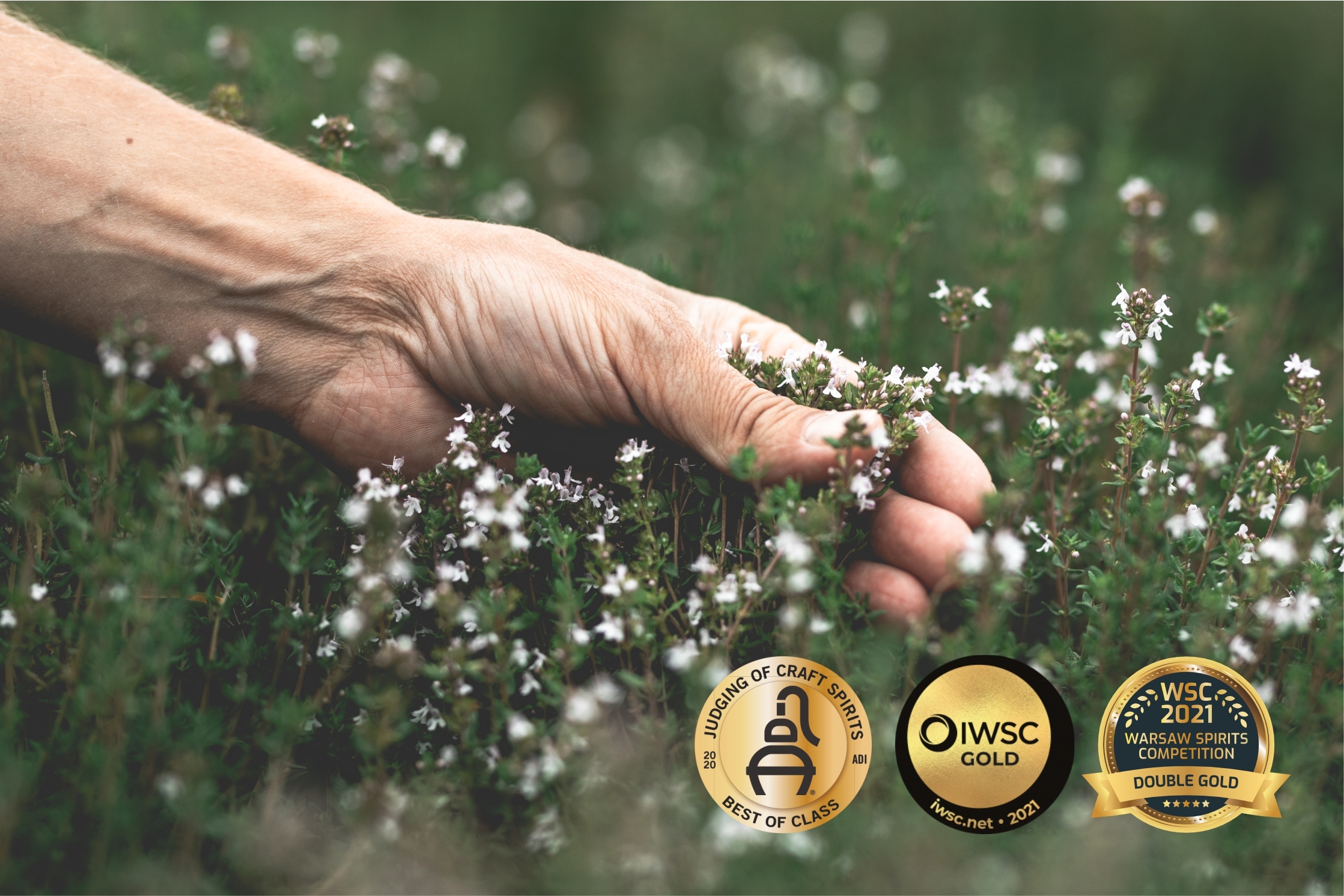
I cannot tell you that it was easy in the beginning and that we got every help needed, but I knew a lot of people, managed time and resources well, and never did anything based on blind instinct. For now I can say that we are covering pretty much the whole domestic market and have successes abroad. It was my idea to test what the reactions could be to our products in different countries. That's why we started to send out our products to different competitions, where they were doing pretty well. We won some gold medals, for example at the International Wine and Spirit Competition and we even won a Grand Prix in America, in a competition by the American Distilling Institute. We were also successful in Poland, at the Warsaw Spirit Competition and in Tokyo at the Whisky and Spirits Competition. Of course, when you get some awards, it doesn't mean that everyone will start calling you and place orders, but it proves to you that you have good quality. It is nice that we are getting recognition. We have some new instruments for marketing and we are trying to get into some new markets.
Well, it all sounds pretty good, you got me hyped up for these drinks I have to say. Have you already sent some over? I don’t recall seeing your bottles in our bar.
Hahaha not yet, but I will send a few bottles of gin with some tonic and cocktail recommendations. We have a huge list at the bar with various options, I am sure you will like them as well.
Amazing, thanks! I can tell that you really put in a lot of thought into the whole brand and it took quite some effort to build it up as it is now. It is just good to hear when our customers are happy and doing well. I would like to switch now to the iStill side of the conversation and ask you about your experience. What do you like? What do you not like?
We are happy about the distilling, and also that we have the small still for doing some demos. Distillation can be pretty tricky, like sometimes you are amazed and sometimes the smell and taste is a bit different. Usually we do like our first distillation on a very small copper potstill. If we are happy with the result, we move to the Mini iStill. Only after that, we move to the 500 liter iStill. It is a pretty long way, but when you go all the way through, you can expect that there are not going to be bad surprises. Everything is working pretty precisely. That's why we like your gear very much.
That's good to hear. Is there any improvement that you would like to see in the future or any feedback that we can use and incorporate?
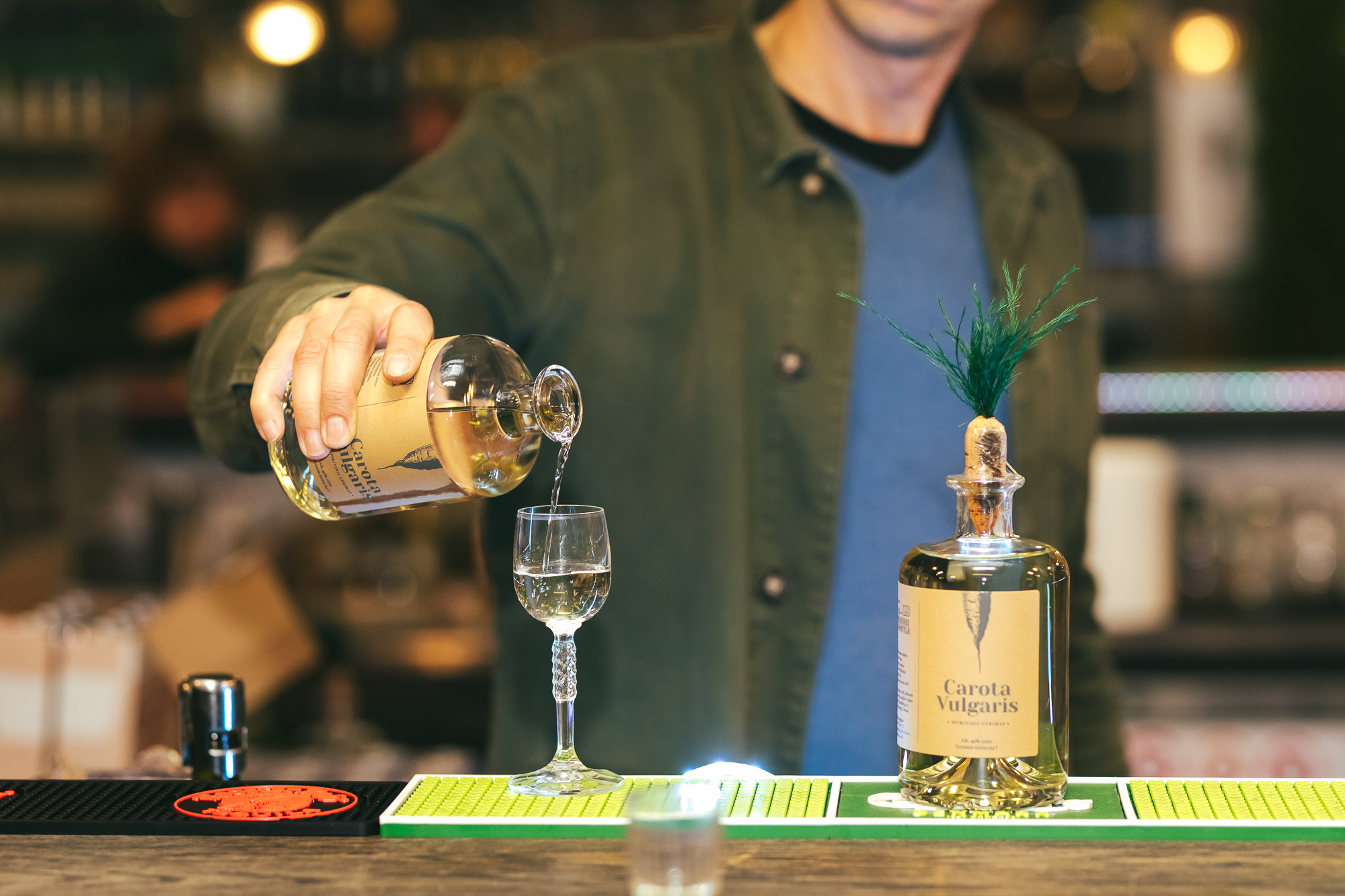
Actually, everything is pretty good. We also use the still for redistillation. We do a lot of maceration with different herbs, even vegetables and redistill that with the iStill as a second step. That final part can usually be very powerful in smell and taste. We do horseradish for example, so-called horseradish schnaps. We just put a lot of horseradish inside and pour some mixture of water and spirit over it, then do the distillation. Everything is going pretty well, no complaints.
Oh, wow. That's a creative spirit. I’ve never heard of horseradish schnaps, but it can work. Why not? What are some other botanicals that you are using? If you can share them.
Yeah of course, our idea is to be very open, so even on some releases we put the whole list of herbs we use. We grow a lot of the herbs on a small farm which is 20 kilometers from the distillery. For both of our gins we use two types of juniper berry, which is one of the only imported botanicals. One is coming from Italy and it is a little bit sweet, but very powerful. We also use some juniper coming from the Balkan, so usually that's maybe grown in Kosovo. The juniper and coriander base is the same for both gins. As for coriander we usually try to get the Ukrainian one, because we like how that compliments the final mix. For our rose gin we use some special species of geranium, which is a kind of flower, and we also grow it ourselves. There is actually a funny story about it, because this rose gin was released maybe one year ago and our original gin was released like three years ago, but the rose was supposed to be the first one. We were growing some of the herbs, did some tests and it started to look good, but we didn’t realize first how many herbs we actually have to grow ourselves. I was contacting some suppliers in Germany and nobody had what we needed, so in the end it took us two years to grow the amount needed for production. We also use some local herbs from the forest and fields of Lithuania, which is called yarrow. My idea is to incorporate as many local herbs as we can, but the juniper growing around here is very poor quality. The berries are very small and not very tasty, so unfortunately we cannot use Lithuanian juniper berries, but everything else that can grow here successfully, we source locally.
That’s dedication, especially with the rose gin! It makes your drinks unique for sure. What comes next for you? Any special plan for the next 5-10 years?
I think the product of the future is going to be the whisky, which we are working on at the moment. As for more expansion in the portfolio, our capacity is pretty small, so we need to keep making the products we have at the moment. Now what we do is single malt whisky, but maybe I would like to look more into working on rye whisky. Also, we have a drink, which has origins in Lithuania, but it is not produced here anymore. I think some Polish companies maybe do, but it's also very, very difficult to find. It's called Starka. The history of Starka is that it was produced maybe three, four hundred years ago from rye spirit. Usually it was distilled on the birthday of the son in the family. This rye distillate was put into the cask of Hungarian wine. After that, the cask was dug into the earth and kept there until the marriage of the son. That’s something we may do our version of in the future.
Sounds like a cool tradition which you can put your own spin on. Are you also doing the mashing and fermentation of your whisky?
As we are a small brewery as well, we do the whole process in house. At the moment, we are experimenting with different types of malts. Of course, I like smokey whisky as well. We are going to decide which way to go next and what markets to approach.
Any new countries on the horizon that you can export to?
It doesn’t go as fast as you would like, but we just changed distribution to Poland, which is our neighbour market and pretty big, so maybe I would like to keep focusing on that. We are also almost in agreement to start distribution in the States and maybe some Scandinavian countries, so that's gonna be a big step. Anyone who would like to taste our products and discuss distribution are more than welcome. Please contact us! You are also welcome to follow our Instagram page: https://www.instagram.com/pakruojis_manor_distillery/.
How can you keep up with the demand? There are so many countries you export to and you still have only 500 liters of capacity.
We do not do full containers, just pallets. We just want to grow our distillery organically, not really chasing anything. So far we are doing that pretty well. I just checked it recently and we have something like 37% growth over the first half year, which I'm pretty happy about.
Awesome results indeed. The sky is the limit. Well, you know who to contact if you grow out of that 500. Thanks for sharing your story!