Let's start at the beginning. Where did the idea to become a distiller come from and how long is it going on? Were you already living in Japan when you started?
I’ve been living in Japan for 30 years already. For me, COVID was a catalyst to start the business. For some reason, I just came up with the idea of having my own gin brand. Being British, there's a lot of gin on the U.K. market, so it's always very exciting when I go back home and I see all the new gins. I did some research and I discovered that Japan was a growing market for gin, so I thought maybe this is the right time to do this business. That's basically how and when I started. Why gin? I'd never distilled before. I've made wine before. I used to work for a well known chateau in Bordeaux, making wine so I have experience with fermentation and some knowledge of fermentation science, but I had never actually distilled spirits. Gin didn't seem like a complicated drink to distill with zero experience. Now I know that for sure, but the Japan National Tax Agency (NTA) thought otherwise at the time. It was very, very difficult, almost impossible to get the license. I did a lot of research for equipment and information about distilling. I had two choices back then: either start my own gin brand or build a distillery. Anybody who knows me knows that I love DIY, I love planning, building and creating things, so it didn't take long before I decided that I was actually going to challenge building a distillery. Crazy idea when you think about it, but I tend not to think too much about things like that, because I know I may talk myself out of it.
What was your profession before? How was the transition into the role of being a distiller?
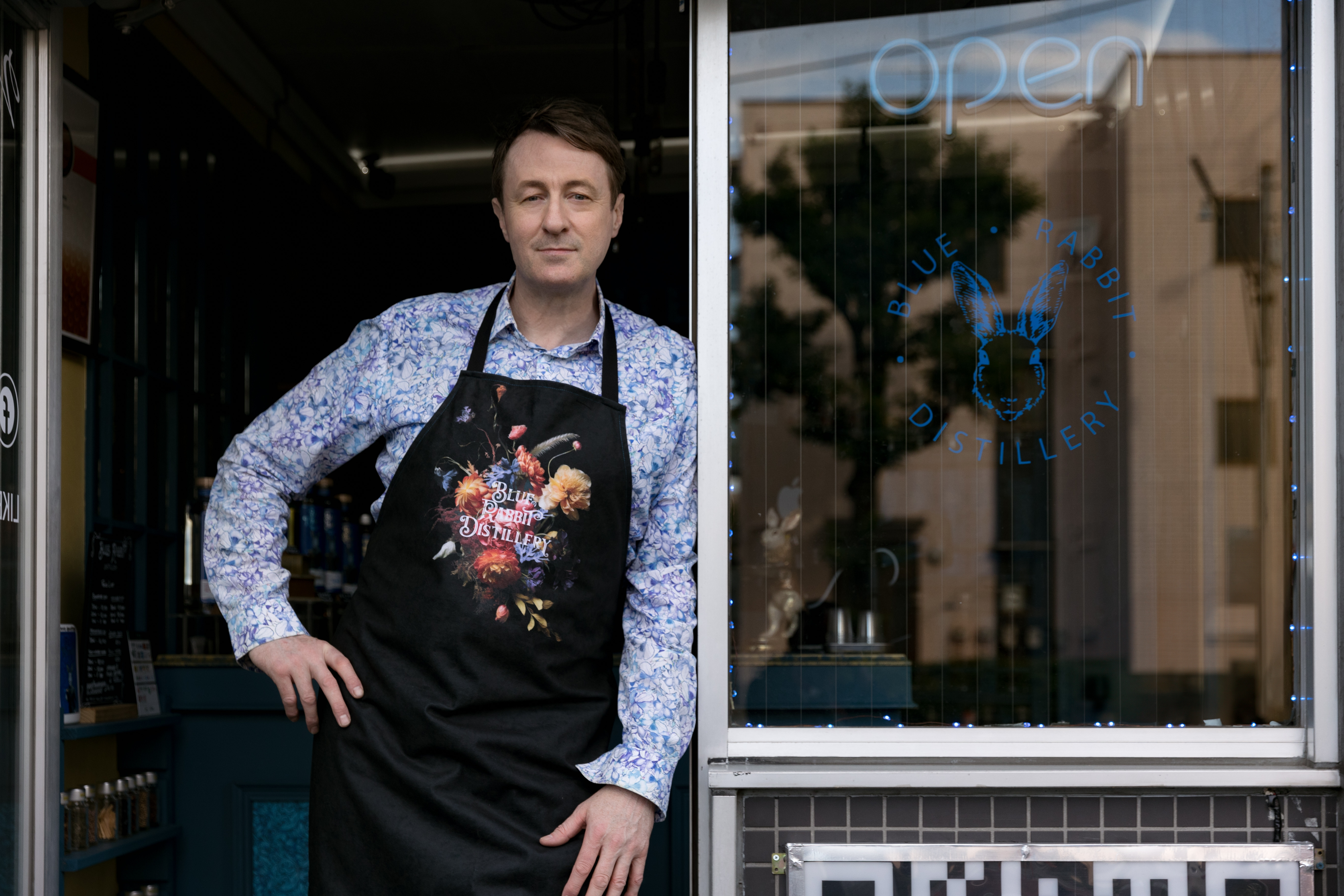
Until COVID hit, I was actually a Business Consultant. I was working with a lot of foreign investment banks and consulting firms for post-M&A training and development, so a completely different environment. I'd been doing that for 17 years, visiting various clients uptown, using different trains every day and experiencing hot and sweaty commutes in the summertime. It is a completely refreshing change to that. That's where my problem came in with getting the license. Back when I applied for the the license, it would have been about six months after I started planning and stuff, but the tax agency required quite a lot of information from me and proof that I could handle the business and I could distill. Since I had no actual experience, they weren't very happy with that fact but I kept fighting for three years until they eventually granted me the license. That was actually big news for the local tax office as I had just become the very first distillery in the tax district. So the President wanted to formally present me with the licence himself. I opened the doors at the end of 2022. During the struggle with the NTA, I gained some qualifications in craft distilling as that was one of the criteria for being awarded the licence, so I had to have at least some theoretical knowledge. That was the time I discovered iStill alongside all the other equipment suppliers, and things that I would need to build a distillery. It was quite a journey, but it was very exciting for me, because I like doing those things. I enjoy planning too, so it was almost natural for me to create such a massive project for such a small place.
It is impressive for sure. Tell me a bit about your products. I checked your website and I saw that you have a blackberry cinnamon gin for example, and other really interesting flavors that I've never seen before and I would love to taste. How did these spirits come to be? Did you experiment with a lot of combinations or you had a clear idea in mind for the products?
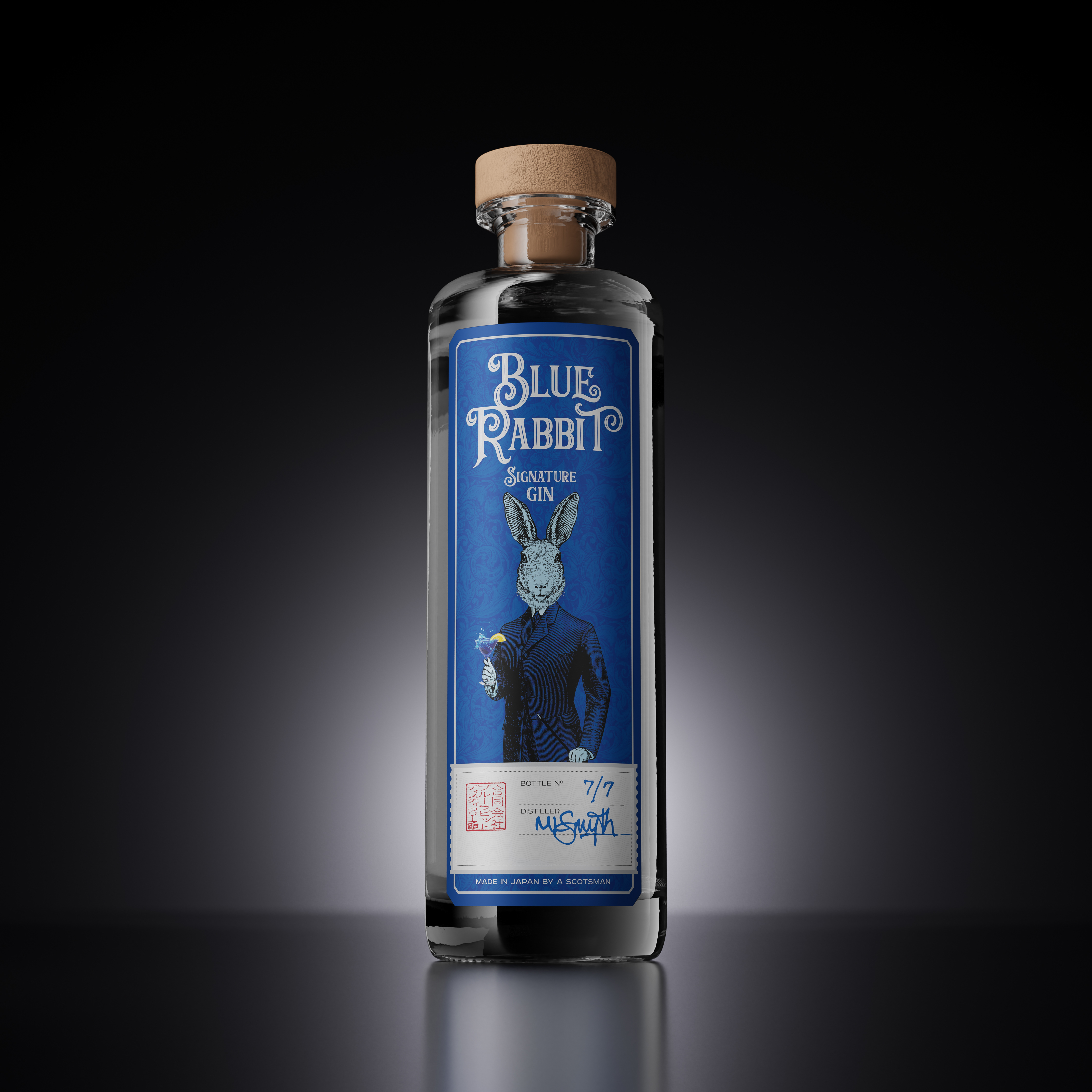
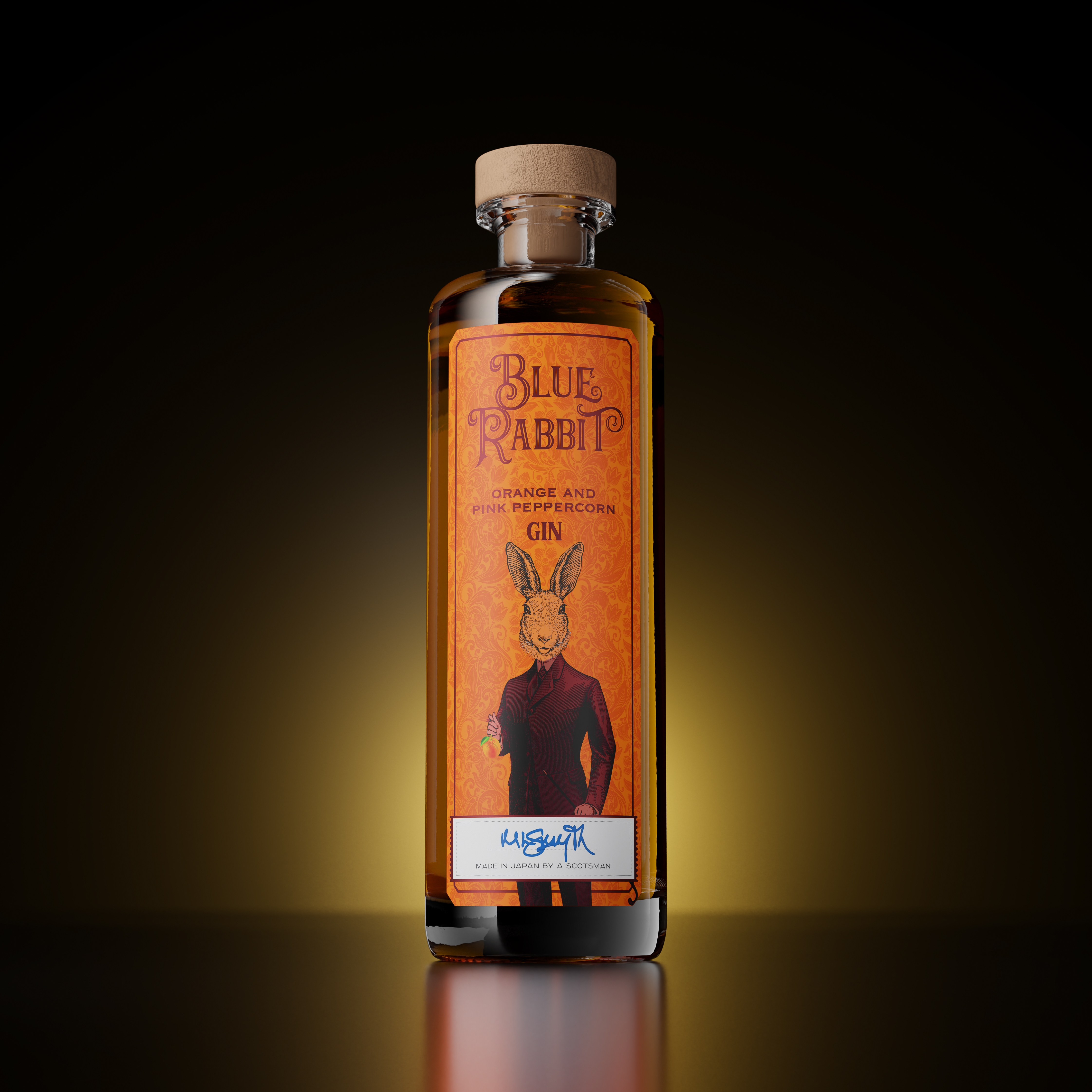
That's a very good question. When I was deciding what I should distill, I looked at the market here in Japan. I thought the obvious choice was to create a signature gin that would be clear, easy to drink, and of the highest quality I could produce. To my surprise, I won an IWSC bronze with my first batch and having never distilled before in my life, that was a real confidence booster. Then I made more of this one plus a premium blue.These were the first two gins I actually distilled. The Signature is based on yuzu peel, hinoki, which is Japanese cypress, and a couple of other ingredients. The blue one is based on French lavender, hinoki and sansho pepper. Because it is a growing market and as I was becoming more well known in the local area, I was starting to increase my sales. Then, some months later, I thought it was time to introduce new gins and the third one I introduced was an orange and pink peppercorn gin. This style of gin was an inspiration from the UK market, because it is of course long established, but also there have been a lot of trends evolving over the years. A few years ago, infused gins were quite popular in the market and I liked that idea and thought I'd try to introduce some infused gins here. They're not completely infused gins though. They’re not bathtub gins, but rather distilled gins with added flavor, which is infused into the spirit post-distillation. I don't make bathtub style gins, and I'm not sure I ever will.
Are you doing simple boiler infusion then?
Yes. I started with, for example, blackberries and cinnamon. I put both the blackberries and the cinnamon in the still. As you may know, cinnamon carries very nicely in the vapor column, but blackberries are molecularly heavier, so flavour didn't carry across very well. They're also very expensive in Japan, so to make better use of them, I reserved a percentage of them to add to the final spirit. It added colour to the spirit and it worked very well, complimenting the cinnamon flavour. Unfortunately, these three (pomegranate- raspberry, blackberry-cinnamon and orange-pink peppercorn) in this market are not terribly popular. Japanese tend to prefer the drier, simpler style gins. It's interesting, because every time I have an overseas tourist in the shop they usually choose the infused ones but most of my Japanese customers tend to opt for the dry styles, so I have different styles on offer.
I would try everything, these botanical combinations are making me curious. I see in the background behind you that you also have a bigger still that's more of a traditional still. Am I right or is that just some tank?
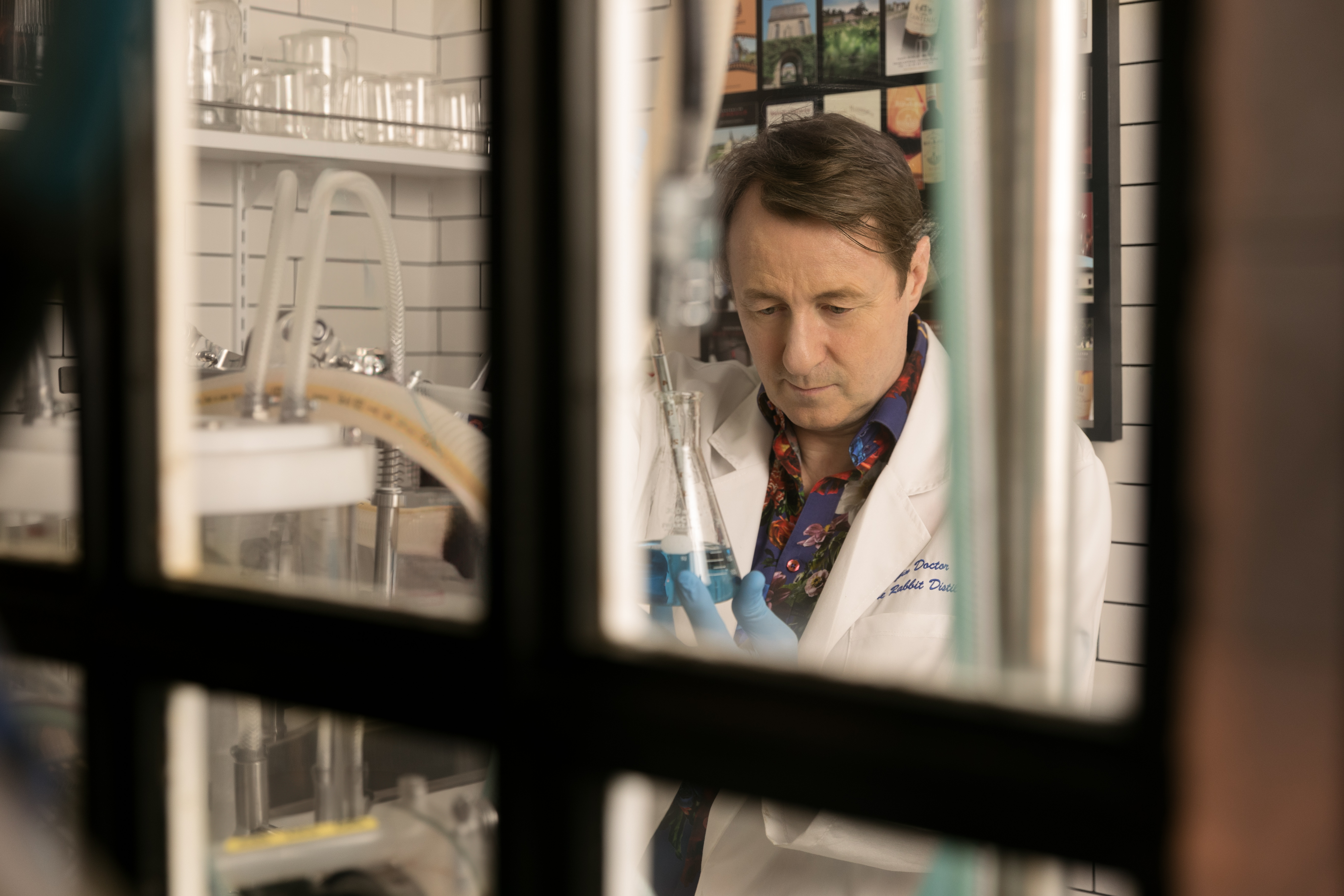
No, that is one of two fermentation tanks I have. I only have a 100 liter iStill, I am not working with traditional equipment. I see why it may look like a still, because it does look a little coppery through the window with the lighting in the room.
Yeah it does. Then basically you do everything with the iStill from the very beginning. What’s your setup?
Yes, I have the one production still of course, plus I’ve got the 5lt Mini and I have two fermentation tanks for making rum, because I do that as well. Unfortunately, I cannot get anything taller than the 100lt in here. I couldn't get a 500lt. No way. The one I have is 265 centimeters tall and it's almost touching the ceiling. That's the max in this place. The building had previously housed a pharmacy.

I see the place is quite small in general. Your options are limited but you made the most out of it. Is the quantity you get out of the 100 enough though? Can you keep up with the demand?
At the moment, yes, I can. I mean, it's just a matter of doing more distillations. Of course, it’s better if I had, for example, a 250lt or 500lt so I would not be distilling so often, but then I would have a storage problem for finished products. It's like cash flow in a business. I've got to get some kind of production flow going in and out.
Makes sense. Also, if you need more capacity, you can simply upgrade the Mini’s boiler to 50 or 100 liters and use the same column. No need for a larger production unit. Do you have a team that helps you, perhaps family?
Well, I should give credit to my wife and daughter. My wife is very busy, but she does help me on the Japanese side with the tax agency mostly, because they don't speak English.They don't use any English on their forms or admin processes, so it is very complicated. That’s one of the most challenging aspects of the business. Obviously I have become familiar with some processes on my own now. But if there are any problems or I need to schedule a consultation with the NTA, I need to ask for my wife’s help. Also, if any wholesalers have complicated situations or requests and can only communicate in Japanese, I have to ask my wife. My daughter often helps with bottling. Other than that, I'm doing absolutely everything on my own. I don't have any professional help. I don't outsource anything. I don't have any staff. I just do everything myself, from bookkeeping and production to marketing and label/packaging design.
That's impressive. A crazy idea during COVID times became your full time job.
Oh, yes, absolutely. More than full time. There aren't enough hours in the day. It's wonderful running your own business like that, but it's also very tough. I recognize the fact that I really need to have at least one or two staff members, but the business is not ready financially to support that yet as there are so many capital costs to deal with. So yes, it's a hard time. I do my best. The passion is definitely there, but to be honest, if I knew back then what I know today, I probably would have done something completely different. That's not a regret in any sense of the word, that's just me reflecting on my journey. You have to have passion if you’re going to enter the market with something that you make yourself and it's a brand you want to be recognized. So of course, you have to believe in it. I do very much believe in my products. I also believe in my equipment as well. All my equipment, not just my still, but all my equipment I very carefully selected, so that it works reliably and productively for me.
Yes I can imagine it is not easy. Being a foreign distiller alone on the market of a different continent is quite a challenge. What sales channels do you use? Do you have distributors or do you have direct contact with restaurants, bars, clubs, or maybe private people? I saw that you have a webshop, but I assume only people in Japan can order.
Not through the website, but I have had a few international orders. Although those have to be done on a direct basis. I have basically what is termed a ‘Spirits License’ which allows me to make just gin, vodka and rum. I am not permitted to make whiskey with that license nor any liqueurs or brandy for that matter. I can’t even bottle and sell the methanol as hand sanitiser without obtaining a quasi-pharmaceutical license. My license has extensions which allow me to sell wholesale, online, direct to the public and at events as well. These are separate additions to the manufacturing license. Japan is a country steeped in bureaucracy, so practically everything from banking to official reporting is a troublesome, time-consuming process. One key difference in Japan is if you want to do business with a supermarket, for example or a fairly large operation, you can't sell directly to them. You have to go through a wholesaler. The wholesaler will then take a large chunk of your sales price, but you have no choice. It's just the way things are done in Japan. I have to have three or four wholesalers who basically don't actively market my products. Rather they tend to activate sales after being approached by a buyer.
Do they help at least with marketing your product? Do they help to get your product to more places that you otherwise maybe couldn't by yourself?
There's a huge question mark on that to be honest. The quick and easy answer is not really, but I think some of the sales reps I'm dealing with have a portfolio of so many spirits and products, that they're not really committed to any particular brand. Having said that though, one of the key things in doing business in Japan is to create and maintain personal relationships. When you develop a personal relationship and your brand gathers attention, then you're more likely to have that key person promote your brand. Although that doesn’t mean they proactively market your product all the time. You just have to wait and see what comes through. Fortunately, because it's a growth market, I amincreasing wholesale revenue streams. It sounds like big business, but the wholesalers at the moment are, for the time being at least, the smaller buyers. My largest revenue sources are the smaller buyers are the smaller places who are more likely to have a vested interest in my brand and a passion to sell craft gin. Cocktail bars, for example, gin shops that are specializing in craft distilled products and hotels, restaurants. Recently I've gotten into one of Japan’s largest supermarket chains. That sounds fantastic, but they don't buy a lot of stock, at least for now. They did a trial in one store, which was very successful and then moved on to another store and that’s how caution moves here. There are about three or four stores at the moment, but they've got a lot of other spirits on offer so it's not a huge sales platform, but it's good to get my foot in the door. Other customers I have, for example, customers that come into the shop, are also growing. As more and more people know about me, I’m getting more customers coming from much further away now to experience tastings and to talk with me, which is, I guess part of my Unique Sales Point (USP). They can see a micro distillery, which is quite a rare opportunity. I do some marketing, networking and contacting perspectives, but a lot of people are coming to me because they’ve heard about me either from friends, social media or magazine interviews. That's enough work at the moment for one person. Of course, I’m also pursuing revenue growth.
It's great that you are present through many different channels and it will only grow with time I think. Tell me about your experience with the still. How is it working out for you?
When I started off, I was trialing on the Mini and I decided on my cut points for the first couple of spirits. Becoming consistent in what you're producing is one of the great benefits about iStill. I have no experience with any other still, but from conversations I've had with other people and seeing some other processes on copper stills, I think this is really a breakthrough. It produces excellent spirits and obviously I've got some awards, but it's easy to work with. It is very easy to clean, which really impresses people, because a copper still can take 2-3 hours to clean. The iStill takes only three or four minutes. You just flush it out, so it's very good to work with. The fact that it's hybrid is highly valuable to me too, because I create three different spirits and by just swapping out the column and removing the reflux packing I can do a pot still run when making rum. Most of the time I leave the packing in, so it's refluxing incredibly well for vodka. It’s not even necessary to use charcoal filtration afterwards as it comes out the other end so well-filtered. For the gin, I'm using shochu. It's not my favorite drink, because it has a taste that I don't want in the gin, but after stripping the tell-tale character from the shochu, it pairs perfectly well with the botanicals. A lot of shochu makers in Japan started making gin, but it was not good. It was strongly tainted with shochu and consequently nothing like you might expect from tasting a gin. People have been surprised that I actually use shochu as the base spirit for my gin. I think that’s a challenging thing to do on a traditional still.
I am glad to hear you are satisfied. Good to know this use of shochu, probably not many people have tried it before. Any drawbacks of the machine or the user experience that you would like us to improve on?
Actually, there is one point that I would love to see change. I mean I've got the 100 and the boiler is I think 80 by 80 centimeters, so it is not that big, but actually you can just about get a full botanical bag in there and hang on the gin hooks. By the time you finish distillation and the tails have cooled down, trying to remove the bag can be very difficult, so a larger porthole would be nice.
Well, I think that’s the size limitation of the boiler unfortunately. I know that the larger stills also have larger holes. Although, the new 100 liter boiler for the Mini might receive a porthole upgrade in the near future and that could be bigger. The model that you have was discontinued.
Other than that, there isn't really anything I could think of. I'm just so very happy with it. To be honest, there is no room for comparison either. There is one other thing that would actually help a lot. The exit port for getting rid of the tails is awfully low to the ground. It would be nice to have that a little bit higher, so I can actually empty that for example into a bucket, because now I'm emptying it down the drain. I guess it is not really a problem for other distilleries though, because they can easily lift the still and place it higher, but I have this ceiling issue here that limits me in that respect.
Yeah we also have the Minis in our facility a bit elevated. It makes every other process with the still easier when it is more aligned to your height. That’s the price you pay for living in a country with short people I guess. Their ceilings are also low… We got in contact due to your recent awards actually. Can you please tell us a bit more about those and any other great achievements?
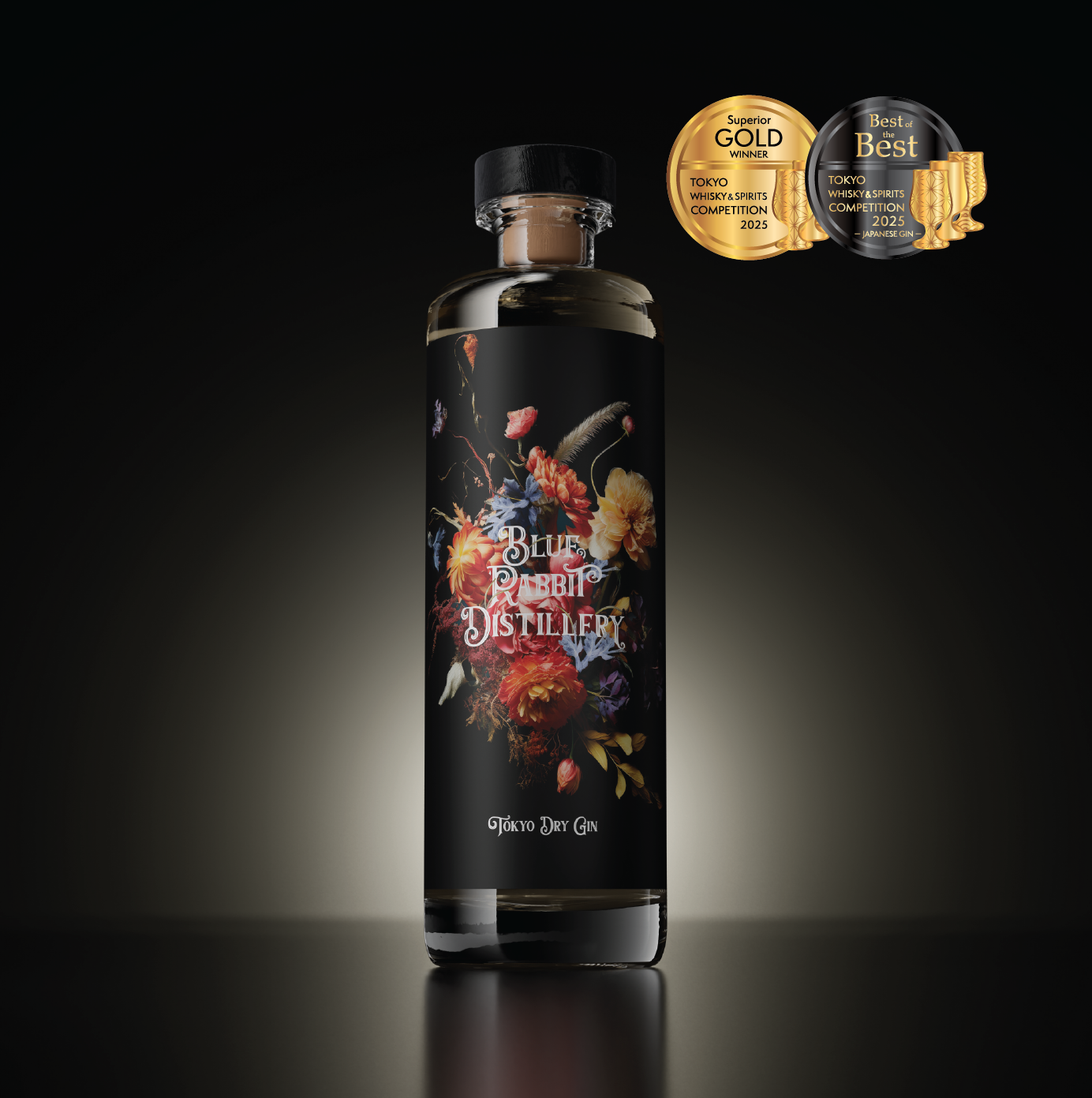
Well, three things come to mind. The first thing I was proud of was actually getting that first medal I mentioned for my signature gin. Not a big medal, but just to get that for my first batch was amazing to me. The second of course was being awarded a superior gold and best of the best for my Tokyo Dry Gin, which essentially means it's the best gin in Japan as judged by the TWSC this year. I would never have imagined that in a million years. It's a bit of a kick in the pants for the big guys, because they also entered some of their gins but they don’t have the same level of passion and commitment that we craft distillers can distill. Most of the other distilleries are notably larger than mine, with teams of people, and yet this single foreigner actually got the Japanese gin of the year. I think this is also an inspiration to other one-man operations, that it is possible to compete against big alcohol. Another achievement is that I'm just really proud of myself. I have done absolutely everything in this business by myself. I've got eight of my own brand gins on the wall, that's my complete range at the moment. There are some new gins coming very soon. I never create deadlines. It's just impossible. I've got a vodka and a rum as well at the moment. I currently have 27 different gin brands on the market, because most of those are collaboration gins I produce for other people.
Oh wow. You make gins for private orders, limited edition batches for companies or contract distilling for businesses?
Yeah sometimes private people, sometimes somebody who has their own gin brand and need to ask a distillery to help out as they don't have a manufacturing license. Actually the very first one I created was with Yukimasa Matsuda who owns the Noto Gin brand and who did the master distillers course with you recently.
Oh yes, I know him. I did the course as well and even made a gin together.
Nice! He approached me and asked me if I could make a vodka for him, so we collaborated on this vodka brand, called Victory Vodka. It is green, because it' is coloured with bay leaves from Noto Peninsula. Noto Peninsula is where the earthquake was a few years back, so people were suffering there, but they survived and this is why it's named victory vodka. This was my very first collaboration project, which is still going, so he's still actively marketing it. Unfortunately, vodka is not such a big market in Japan. I have also produced a cacao gin, which won double gold at the World Gin Awards. It was a collaboration with two new friends I made in the gin business; an Armenian artisan chocolate maker and a Russian bartender and gin bar owner. The other gold I got was for a collaboration blueberry and kawachi bankan (a kind of Japanese grapefruit). It is an unusual combination, but it won gold at the Tokyo Whisky & Spirit competition as well.
Amazing results and great creativity. People must like working with you. What is in the pipeline for the coming years? I am sure you are full of new ideas.
Well, I can't be specific, because that's a secret of course, but I can tell you that there are some exciting new gins coming out. The iStill allows me to express myself like an artist to use botanicals and create amazing flavours and experiences for people. I always like to think about creating something a little bit different or unusual. A lot of other distillers in Japan are making gins from Japanese botanicals from their local area. Well, I'm in the middle of Tokyo, so that would be very difficult to do and I can’t imagine a gin made from glass, steel and concrete taking off! I don't want to do what others doing. I want to think a little bit differently, so I am always thinking of what gin I could introduce onto the market here that would be different and that would get people really interested. So far, that's how I've been fairly successful with releasing new gins and I want to continue that trend. Of course, as the market changes and adapts, people's desire and flavour experiences may change as well. I want to see how that goes. It is an exciting adventure.