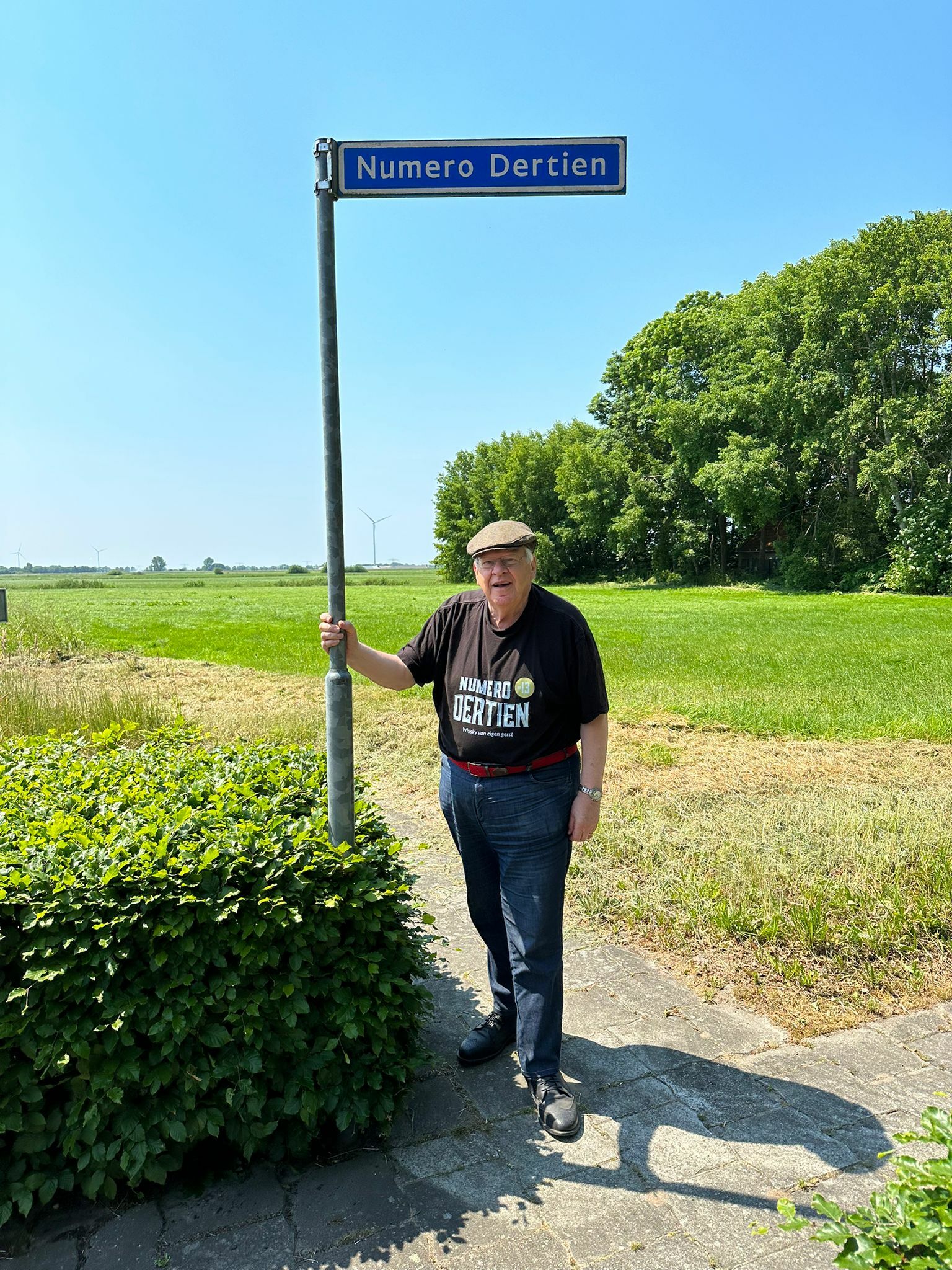
Last week we visited Wieke Distillers and had a great chat with Arend van Nieuwland, head of operations.
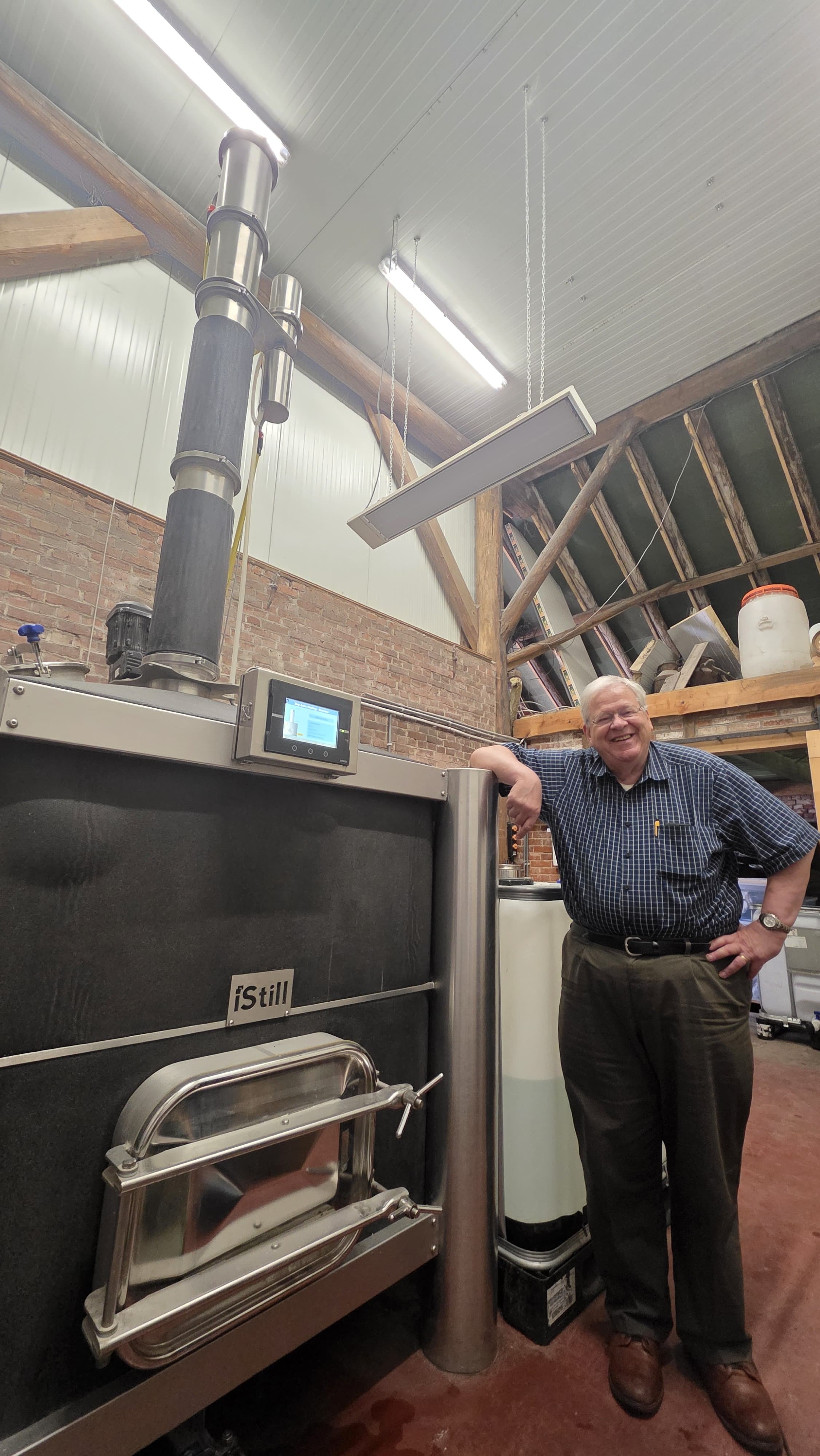
First of all, thank you for the warm welcome in your distillery, it is great to be here and do this interview in person. I would like to begin with your journey from the beginning. How did you start as a distiller? Did you have any background before coming to iStill?
Yes, I have worked in the Middle East and got a small taste of this profession. There you learn how to distill for yourself, because it is not widely known. I learned how to distill using fermented sugar. I bought 50 kilos of sugar, 2 big waste bins, threw some baker’s yeast in, then after a week or so I could distill it. We called the end product “whites”, which was basically pure alcohol that we would distill 4 times. At the end, after the fourth time, it came over at 96% abv. Then we would dilute that and it was mainly used for mixing. That was my introduction to distilling.
When was that?
I think it was in 1982.
Wow, that’s a lot of experience since then.
Well, I only did it there for one weekend, so it really was just an introduction, laying the foundation and the interest for what eventually came to life with Wieke Distillers.
What did you do there if not distilling was the main goal?
I was working as a chemical engineer in the oil industry. I always had a thing for distilling, and I had the chance to try it there.
What was your introduction to iStill?
We visited Gert from Drentsche Schans, who has an iStill and showed us around. We saw that as a good fit to our plans. The idea was to make whisky from your own grains, because that's how you can make a difference. Everybody can buy malts and go with that, it is not that special. A lot of people are attracted by the idea that you're using your own barley to make your own whisky. It's the single estate idea, that everything I create from scratch is 100% mine. We already had the grain fields, so adding a distillery was the next step in our operations. I discussed it with my son and son-in-law and made them enthusiastic about the idea. I wanted to make it a family business. It is mostly for them, because at the moment we start making real money, I won't be here anymore. The main drawback of making whisky is that the really expensive ones are at least 10 years old, so in the beginning it is a lot of waiting.
Yeah, you have to be patient and trust the process. 2020 was your first year of operating the distillery, right?
We went to the course in 2019, then we decided that it is actually something for us to pursue and we bought our 3 stills from you. In the beginning, we felt like the malting process was too much for us, as we were a small team, so we outsourced it to a local company in Winterswijk. They do small batches, like 2000 kilos in one go. Now because we have so much in stock, we can even let them do 6000 kilos. They do floor malting, which takes about a week. This is a large portion of our costs, because everything else is done in house. Unfortunately, an investment in a malting machine is not an easy one, so at the moment, we do the malting outside. There is also another malting company in Denmark, that does 6000 kilo batches, so we gave them some as well to compare the results.
Do they use a different malting process to the one in Winterswijk? So you can make two distinctly different whiskeys from the two types of malts? Or is it perhaps a mix of the two?
They use a different technique indeed, but how it reflects in our final product we don’t know yet. In Winterswijk they make it unpeated, because of the whole drying process, but in Denmark we can choose if we want peated or unpeated. We currently have the peated version from them in casks since last year and we have been working with both of the companies’ unpeated versions. I am curious how all these types will taste once they are ready and whether there is any noticeable difference.
So your first batch, that you have on display here and sent us a bottle from, was put in cask in 2020 and made from the unpeated barley from Winterswijk?
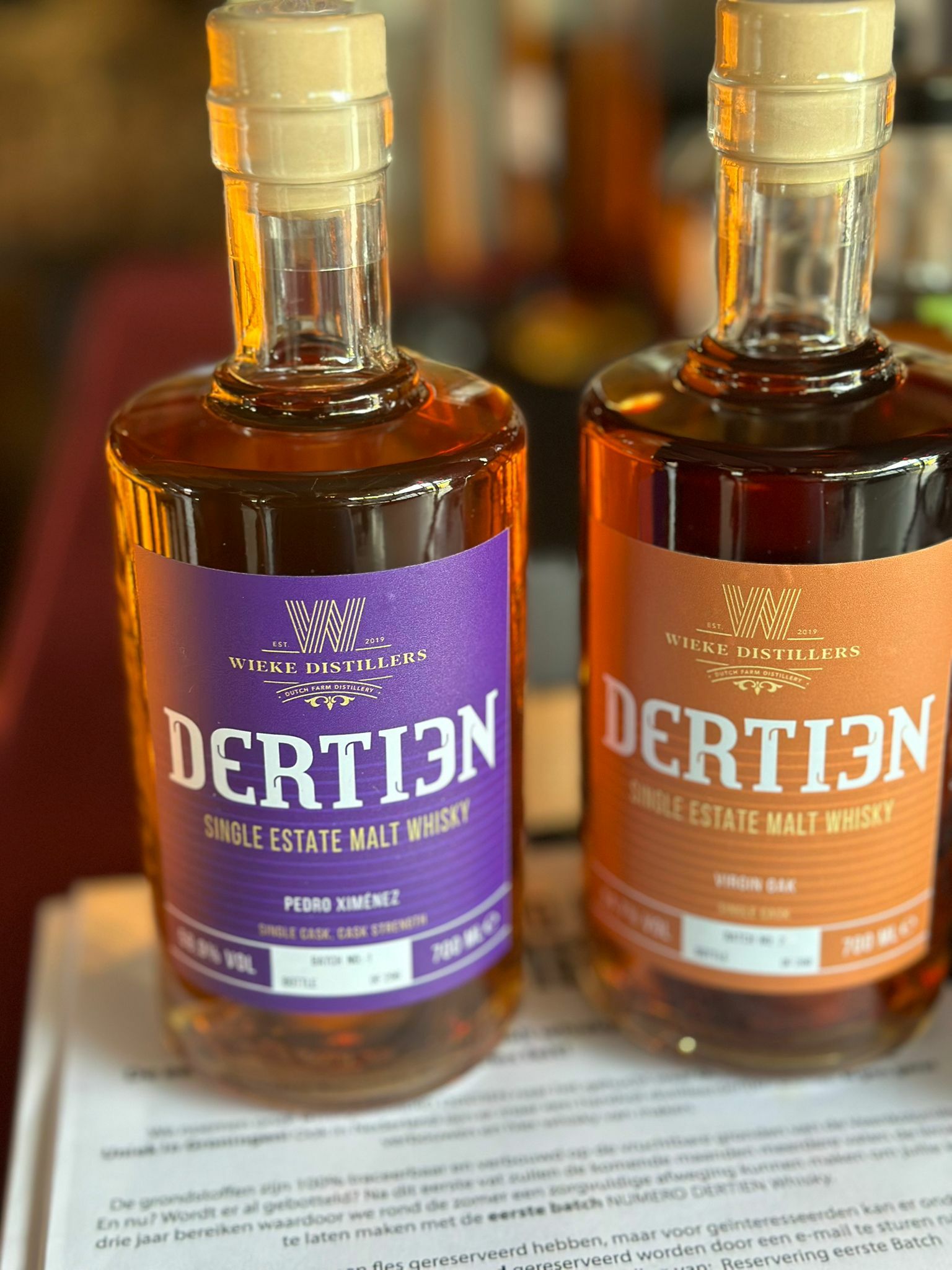
Exactly. That’s what we began with and it turned out pretty well I would say. There is a whisky club a few kilometres from here and they were very interested in us from the beginning. Before releasing our two whiskies that are on the market now, we let them try it and give feedback. We are also working together with a whisky expert from Belgium, called Mark Dermul, who we send our products and samples over to have a taste and see what he thinks. He even showcased us on his YouTube channel.
Nice, then you get some extra coverage and feedback from him. Where are you selling this first batch? Can people buy it somewhere else or only here at the distillery?
We can’t sell it here, because we don’t have all the permits for that yet. It is a work in process and we hope to open to the public soon. Currently we are approaching liquor shops and restaurants in the area and trying to sell it to them. Marketing is not our strongest skill and we probably need to spend more in that regard, because we should be in all the liquor stores at least around Groningen by now, but we’ve only managed 5 so far.
Yes, or maybe find a distributor that could bring it to other cities in the country. Although, until you have most of your product in barrels, it makes sense to focus on local sales.
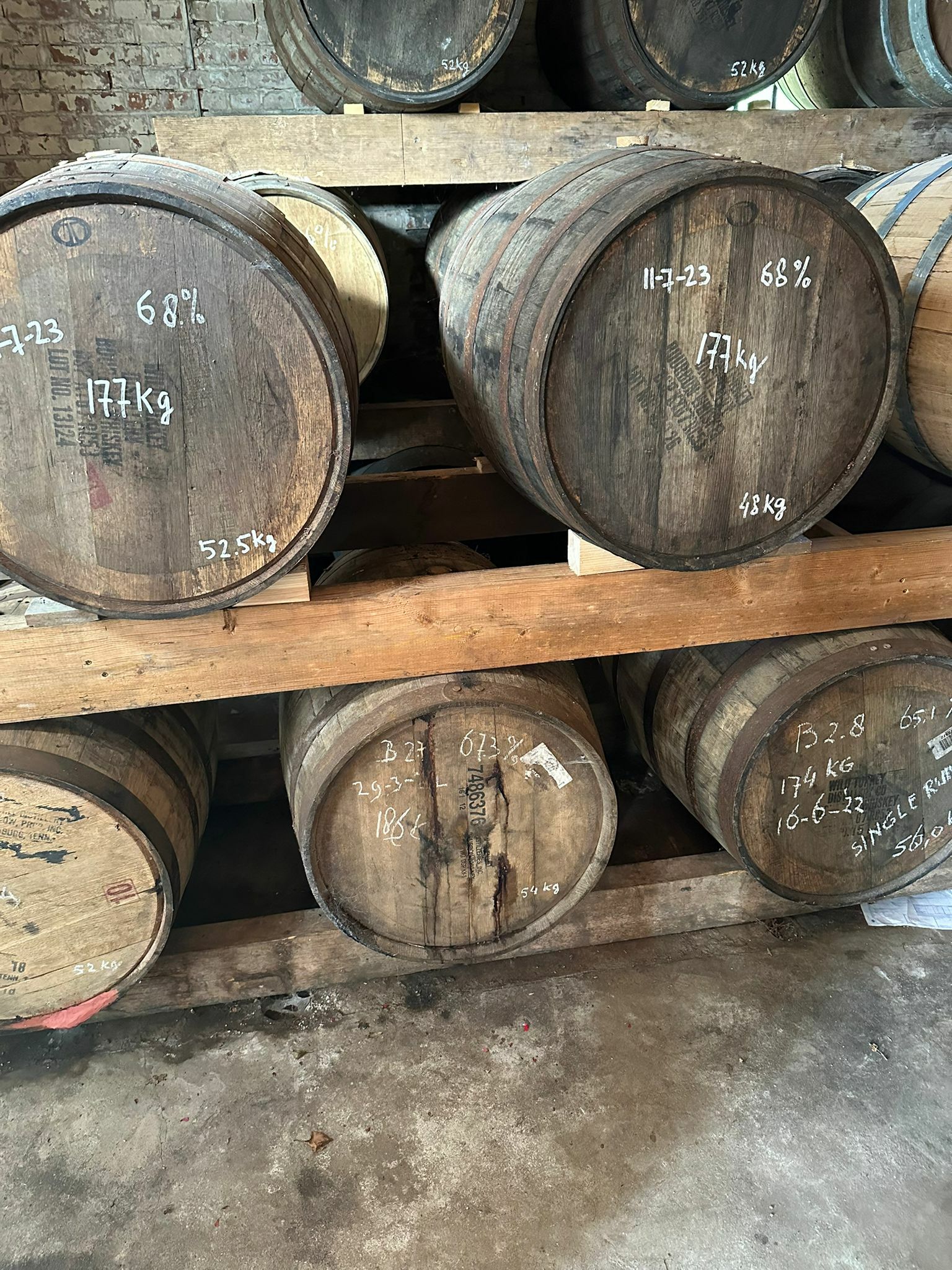
Yeah, we are building out a network now that we can use when we have more bottles to sell. We don’t only have whisky, so some of these relations have been there for years now. Our gin and rum are available on the market for a longer time, since they were not sitting in casks for so many years. The rum is cask-aged though, mainly in cognac casks. We don’t sell white rum. We put a big emphasis on using different types of casks to create unique products. We have ex-bourbon, ex-sherry, ex-port, ex-moscatel casks for example, 6-7 kinds in total. It is never the same.
These are more like limited edition batches then, right?
Yes, one batch is one cask basically and then it is out. The next whisky we are planning to release will be about 46-48% abv. We ordered 120 liter oloroso finishing casks from Spain and we have high hopes for that to turn out to be amazing.
I saw that you also have quite a few smaller casks and you said earlier that those are for specific clients, kind of like special orders. Can you tell a bit more about that?
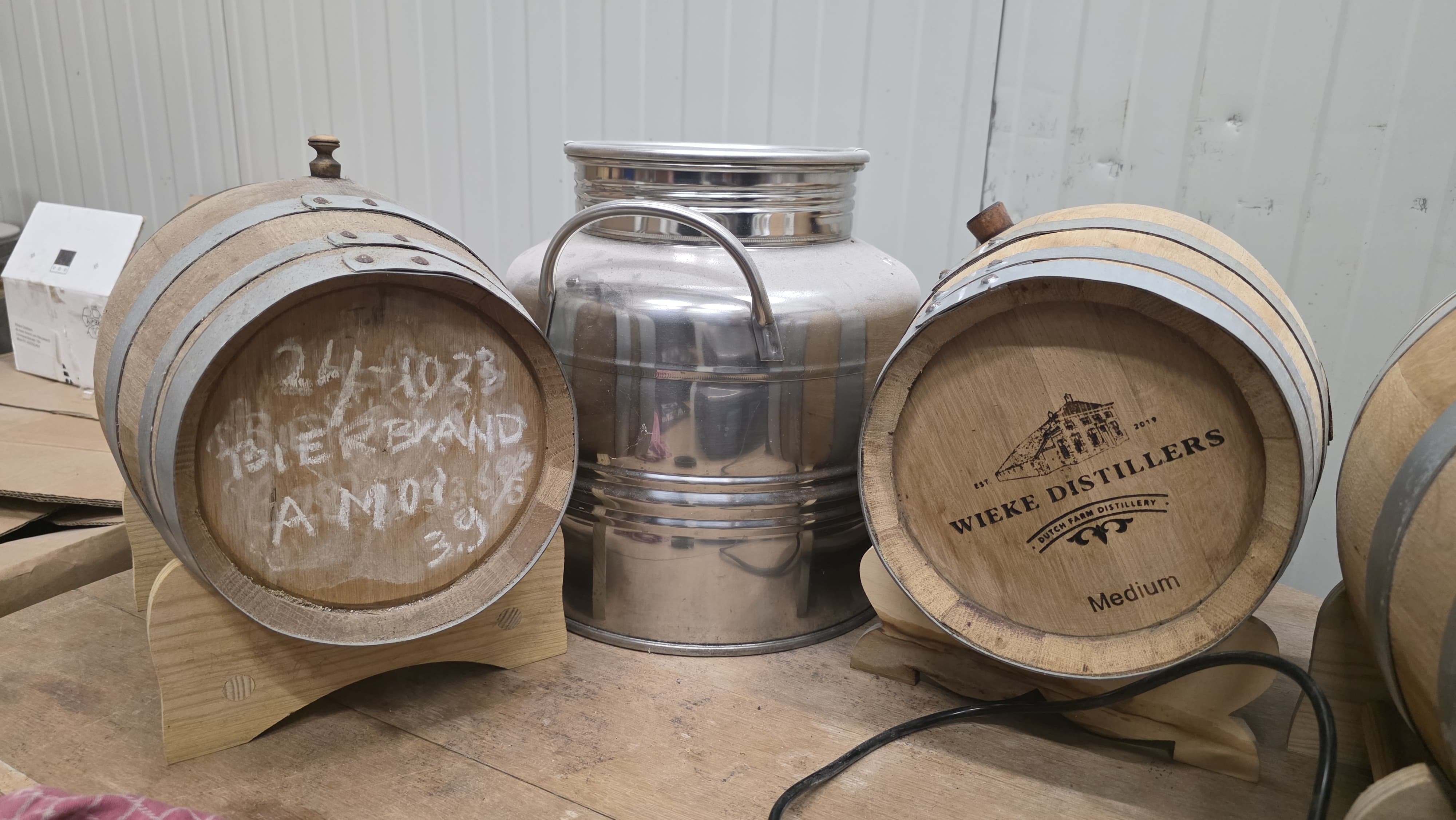
That is something we are very successful with. We sold two 50 liter casks and a couple of 30’s and 20’s, but mainly 10 liter ones. Sometimes we have different casks to choose from and clients are welcome to come by every year or so to have a taste from theirs and see how the flavours develop. It is also possible to pour some of our peated whiskey that has been in a cask for 1 year already into a different, 10 liter cask for them. This way the waiting time is lower and they get a unique taste due to the switching of the casks. People love this service, we only have recurring customers. I think there was only one guy who didn’t come back for a second order.
That’s a great business idea. Are these mainly private people, purchasing your products for their own enjoyment or also businesses, like restaurants and bars?
Usually private individuals and friend groups. It is easier for 4-5 people to join forces and order a cask together. Whisky lovers also like to have a bigger variety in their cupboards, and with us they can really go for distinctive flavours that they technically develop with us in a sense.
They have their own small whisky clubs. Where can people find your portfolio to choose a cask for themselves?
Yes, everything can be found on our website. We have a standard cask and also a cask program, where occasionally we have something special. Now we have a few 30 liter old wine casks, which are of great quality.
Do you ship these casks or do people have to pick them up at your place?
They come to us and we always have a little chat about the process. It is more personal. Later this week there are two friends coming by to pick up a 10 liter cask of whisky and another one filled with rum. The whisky was already 3 years old when we put it in their cask, so I am very curious about how that developed.
That’s a great flexibility you offer. With the variation of casks and spirits, your customers can really tailor the end product to their taste. On another note, I saw that you made a gin for Easy Toys. What’s the story behind that? Have you done other collaborations like this?
We did only a couple. There was a special label gin delivered to the Round Table, which is a service club. I don’t remember exactly how the Easy Toys collaboration came about, but their headquarters is located very close to us, so probably that’s how they found us. It was a small order of 30 bottles or so. I think they drank some themselves and gave the rest away, but it was not for reselling to their customers. Essentially, it was our own gin tweaked a bit with some pink colouring added.
It is cool, hopefully more requests are coming your way later on. Let’s switch over to iStill. How do you find the distilling experience with the equipment that you have? Especially compared to the still you used in the Middle East.
Well, that was very primitive of course. Way outdated technology if I look at it from today’s perspective using the iStill. It is all great, I think we only had a small issue with it once. There was a leak at the manhole and the vapours were coming out there. The column was probably stuck somehow and we had to pour cold water down it based on your support advice and that helped. Most likely there was a bit of overfilling and the barley got into the column, because we lowered the amount of barley we put into the still afterwards and we never had this problem again. We always did 16 bags, then I thought 18 is also fine based on the capacity of the boiler, but seemingly it was too much, so we are sticking to 16. It doesn’t make sense to push the limits, because we are not super busy anyway. We do around 20 runs per year on the i2000, so we have plenty of time.
You do mashing and fermenting in the same still as well, so that must take about 20-25 weeks in total then, right? How long is your fermentation cycle?
4-5 days. In total, it takes about 7-8 days to finish a complete cycle of all processes, including cleaning.
20 runs altogether with gin and rum or is that only for the whisky?
We are not making rum at the moment. We only did that in the beginning and we still have enough of it in barrels. The plan is to get back into gin right now, because we are completely sold out, so it is time.
What botanicals do you use for the gin?
It is actually Odin’s recipe. When we did the course, a discount for us was discussed, because all 3 of us participated from the same company. This discount was €2.000, but Odin smartly offered a gin recipe instead and we took that. It has juniper berries, coriander, peppers and a lot of other things. I don’t know it by heart, it is a very complex recipe. People really like it, so we are happy with it.
That’s the true businessman thinking from Odin. It was a good choice, that recipe is really nice indeed. Do you have any feedback for us on the products or services? Anything you would like us to implement or change?
I am fine with what we have at the moment and I am not looking to improve efficiency. In the beginning we were measuring the abv at various stages of the process manually. Although we are not doing that anymore, it could be of interest. Sometimes we have to dilute the end product with a bit of water before putting it in the cask, because it is too strong. It would be good to see it during the process.
There was an iStill parrot in the plans a few months back, but probably it was shelved because of other projects that have our attention outside of distilling. Hopefully it will be released one day and then you can get it. Have you received any official recognition for your spirits? Apart from the praise of the whisky club.
We haven’t sent out our products to competitions yet. Maybe we will do that in the future. What we are doing is going to festivals. There is an organization called Whiskyteers, who are presenting Dutch whiskies at festivals. We went to the ASAF Festival and two smaller ones here in Groningen with them. It is an interesting and tiring experience, but also very fun of course.
And I assume you get good feedback from people that try it there.
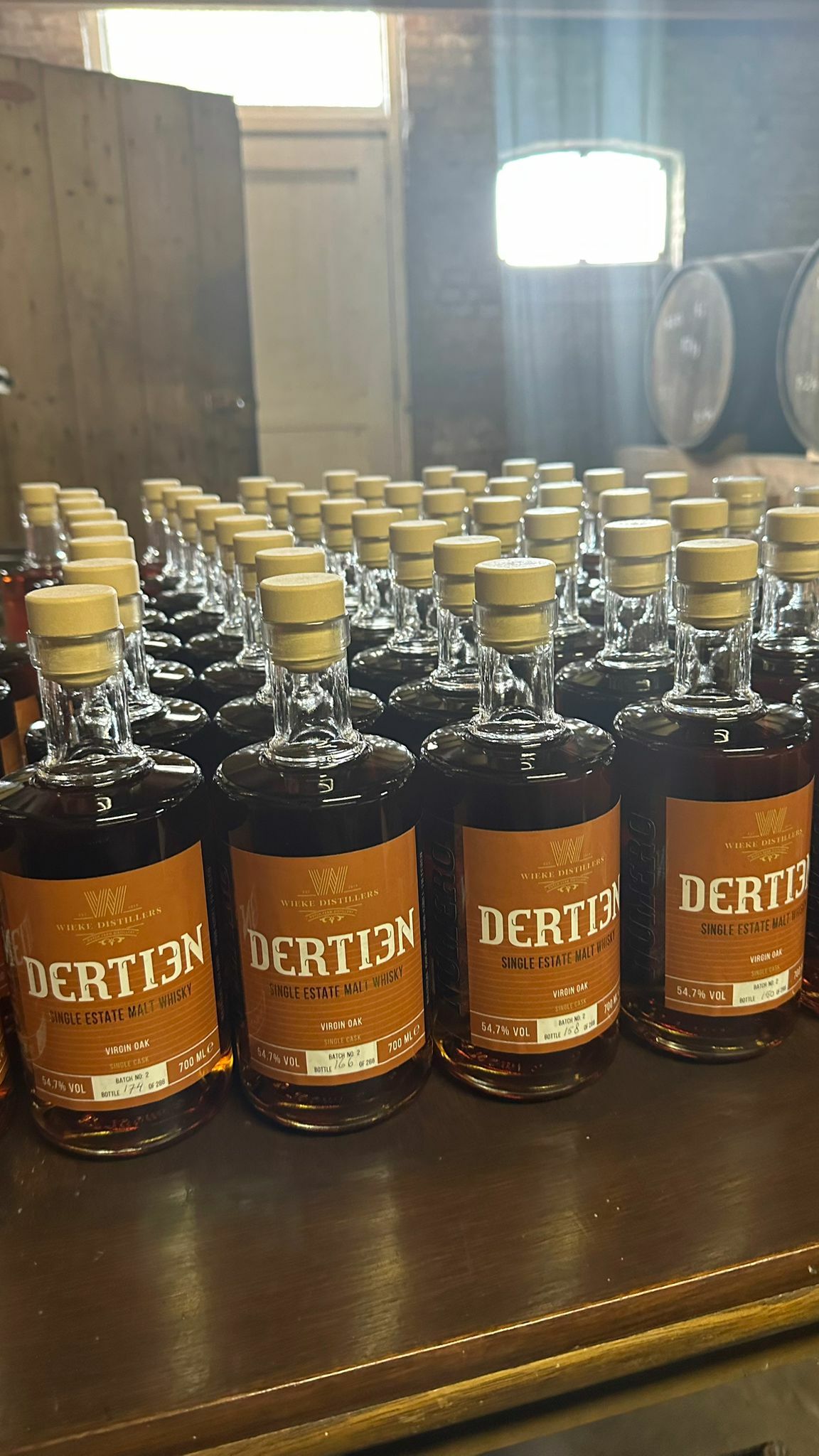
Yes, people love our products. Some find it a bit expensive, because we ask €85 for a bottle. I always say it is better to get something expensive than hearing it is not for sale.
Also, they get more value from your product, since it is stronger than whiskies normally.
Indeed, if you compare it to the price of a 46% whisky that has a half liter bottle, it is already not expensive. Many producers use half liter bottles and ours is 0.7 liters, but people only look at the unit price and not the price per liter. We are also thinking of having a half liter version that we can sell for less, just to win people over more easily.
Yes, that’s a good idea. I forgot to ask earlier, but can you please tell the origin story of the names behind the distillery and spirits again, for the record?
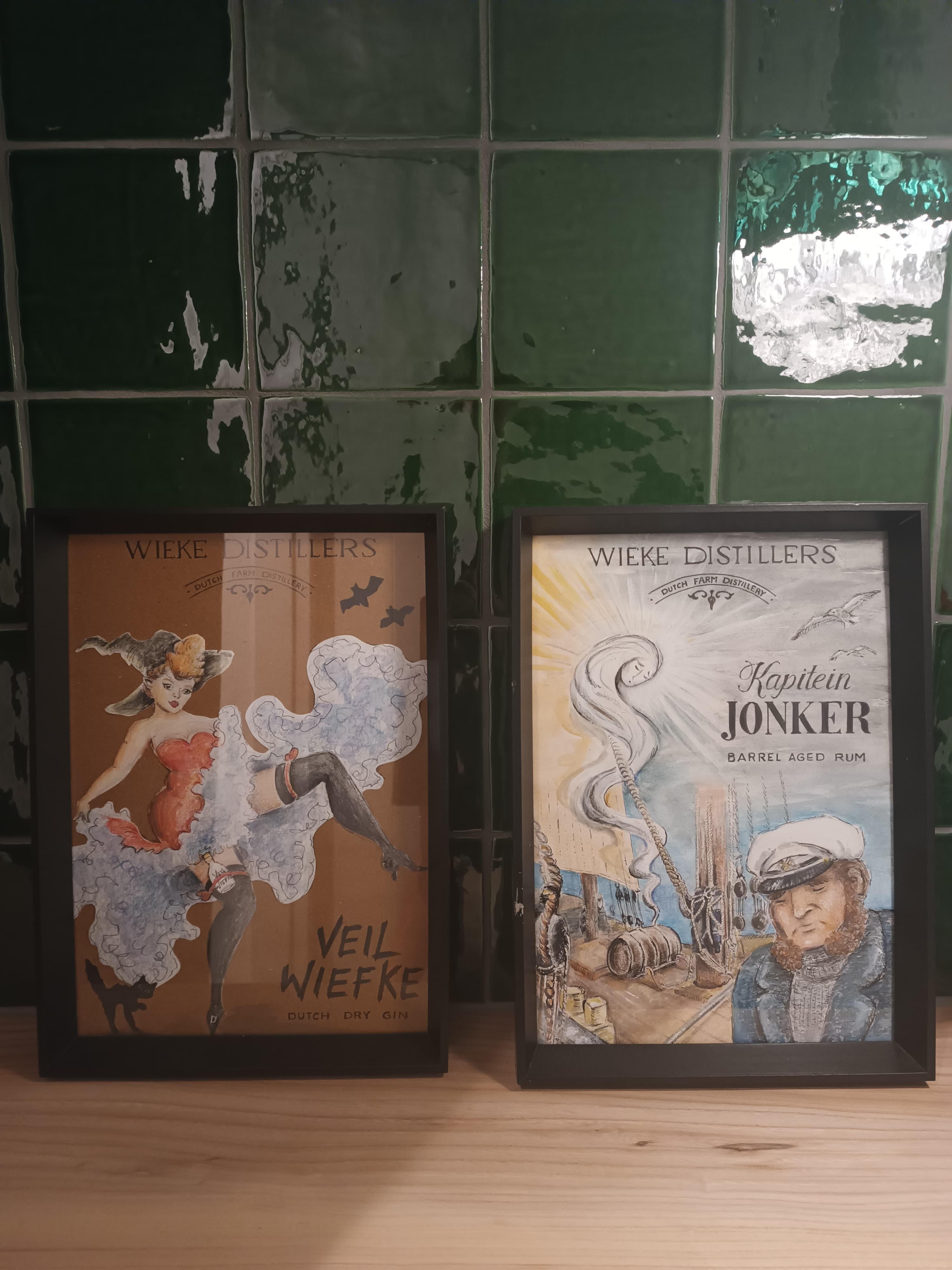
We are called Wieke Distillers, because the area here is called Ommelanderwijk and that is too long to say all the time, so everybody just calls it the Wieke. The rum is called Kapitein Jonker, because he is a famous historical figure in Veendam. He was a ship captain back in the 1800s, sailing around the world. One day he took his wife with him, but she died during the trip. He didn’t want to put her in the seamans’ grave, so he took her home to have a proper funeral in Veendam. He put her body in a barrel of spirit on the way back. Her gravestone tells the story, which can still be found in the graveyard of Veendam. It is also written there that she hopes to be revived together with her husband at the end of times, but this cannot happen unfortunately, because Kapitein Jonker is not buried next to her. He didn’t make it and drowned on his last trip. Our gin is called Veil Wiefke, also linked to the history of Veendam. The whisky is called Numero Dertien. There is a small street next to us, which used to be a canal, mainly for peat transportation. There are 16 small ports on the side and are all numbered. Nowadays only Numero 1 and 13 are used. Weirdly, they have the “Numero” name instead of “Nummer” which would be the correct Dutch term. I don’t know why they were named like that, but I found it funny and we chose the name of the whisky after number 13. We don’t look very far when coming up with product names, everything is local.
I like that, it gives your products personality. What are your future plans with the distillery? Besides the rebuilding that is happening now and aiming to open the doors to the public.
We don’t have any big plans, just want to continue what we love doing and to grow our customer base. There were discussions of contract distilling for a distillery that recently closed, but I don’t yet know if they want to go with us or not. Next to that, I am always looking into casks to find good deals and experiment with new exciting flavours. There are 3 companies in The Netherlands that can deliver casks and we bought from all 3 of them already. Also from Spain, but that is usually very expensive, especially the transportation costs. We can sometimes place an order together with Gert or there is another small distillery in Zwolle that is interested. There is a great community of craft distillers here. We are going to see if reusing a cask for the second time yields any different results to the first time. We just filled some of the casks for the second time, so I am interested to find out how the flavours will develop in those.
The experimentation is what keeps it interesting. Do you want to add anything else?
The world of distilling is really fascinating. I am also a member of the whisky club, which is a great group of people.
It is essentially research and development going to those meetings, right?
Exactly. I was asked to do a presentation of single estate distilleries, so I am looking for more of that now. I am also surprised at how many small distilleries are closing. It is not easy economically to run one nowadays. Luckily, we don’t have much operating costs, since everything is done in house and it is a family business. We own everything here and use solar panels for generating electricity. We only distill when the sun is shining. Creating liquid sunshine.
That would be a cool product name. Thanks for showing us around and for the interview!