Introduction
How layering a drink, shot, or cocktail works? There are basically two things you need to know! First, we need to dive into drink-specific density. Secondly, we want to discuss how to apply the various layers. Inspired by an article from SmartBlend, let's learn how to serve your customers a more interesting and better made layered drink!
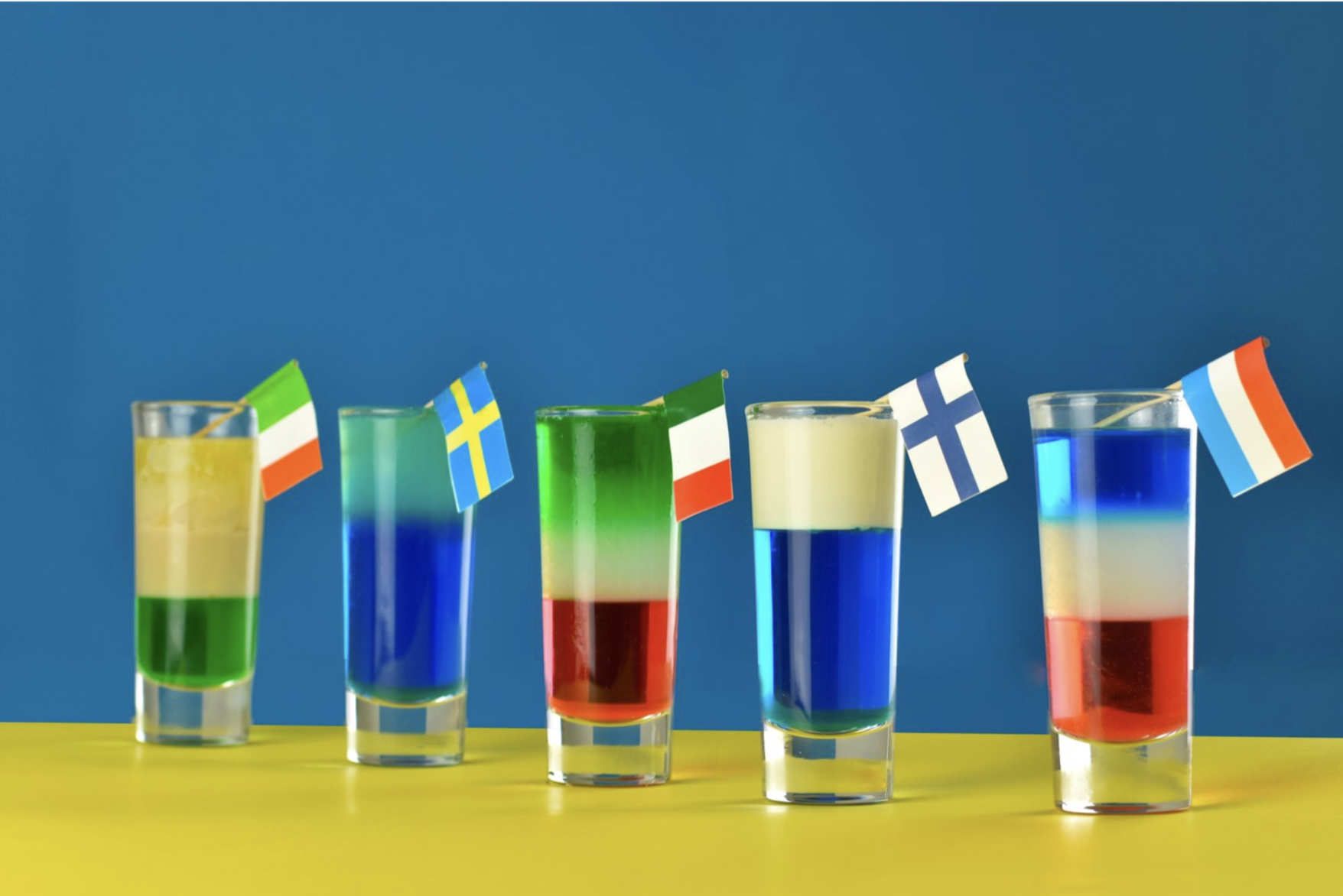
Examples of layered drinks ...
Density
Not all drinks are created equal. They differ in color, in alcohol percentage, and - in this case most importantly - specific gravity. Why gravity matters? Well, the more sugar is added to a drink, the higher its gravity. And the higher the gravity, the bigger the density.
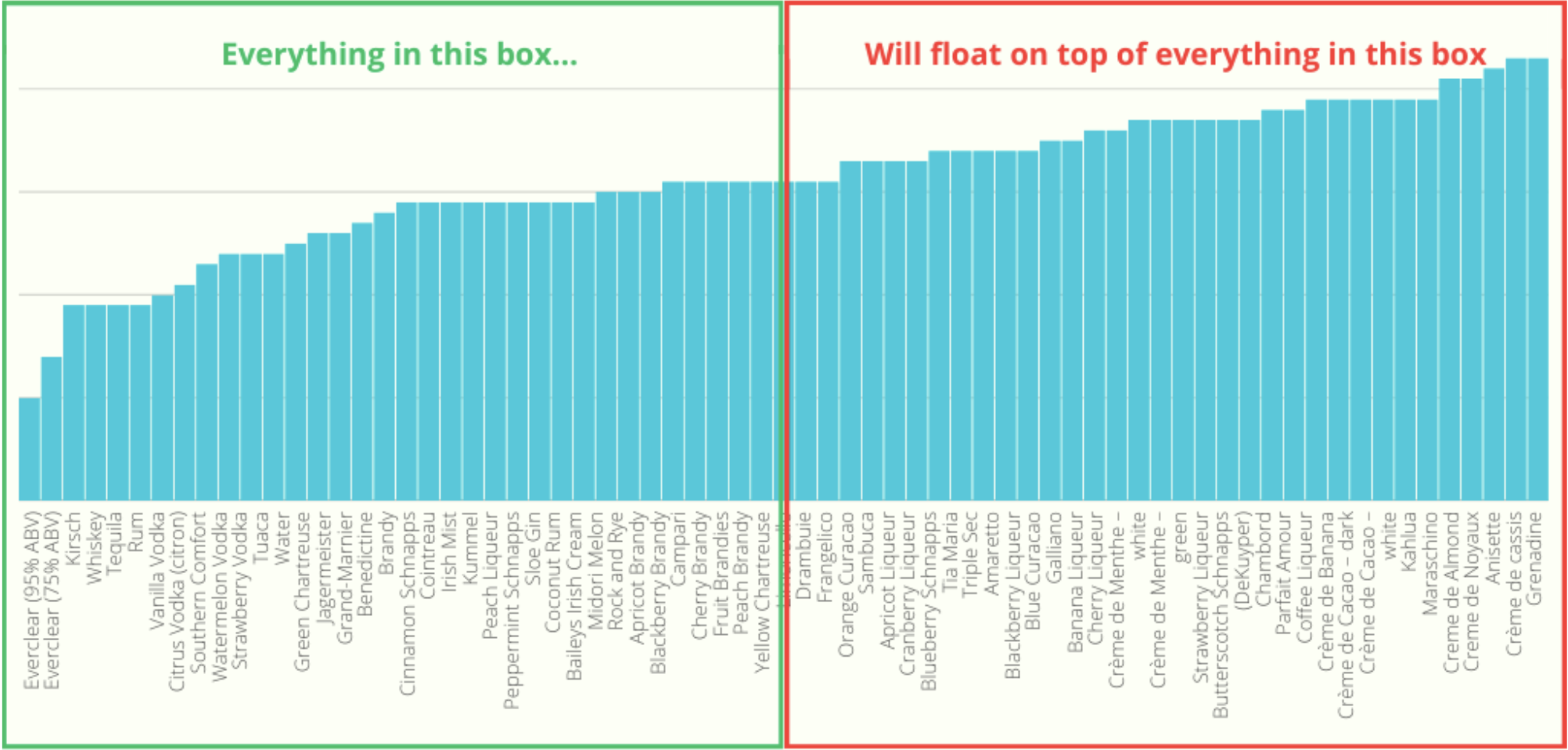
Why this matters? Because lighter spirits tend to float on top of heavier ones. Higher density spirits sit at the bottom, and one can add lighter density spirits on top of them. The bigger the difference in density, the crisper the layer. The closer the density of two liquids are, the easier they meet and mingle ...
What influences the density of a specific drink? Two things, basically. A higher sugar content makes a drink denser and heavier. Sugar adds weight. Secondly, as alcohol is lighter than water, higher proof spirits are - generally speaking - lighter than low proof liquids.
SmartBlend's Layering Table ...
Layering
"Layering" is the technique used to apply the different layers of liquids to a shot of cocktail. The process is quite simple, but may need some practice. First, add the densest liquid to the glass and then put the lighter one on top. Adding the second layer less dense liquid needs to be done slowly and smoothly.
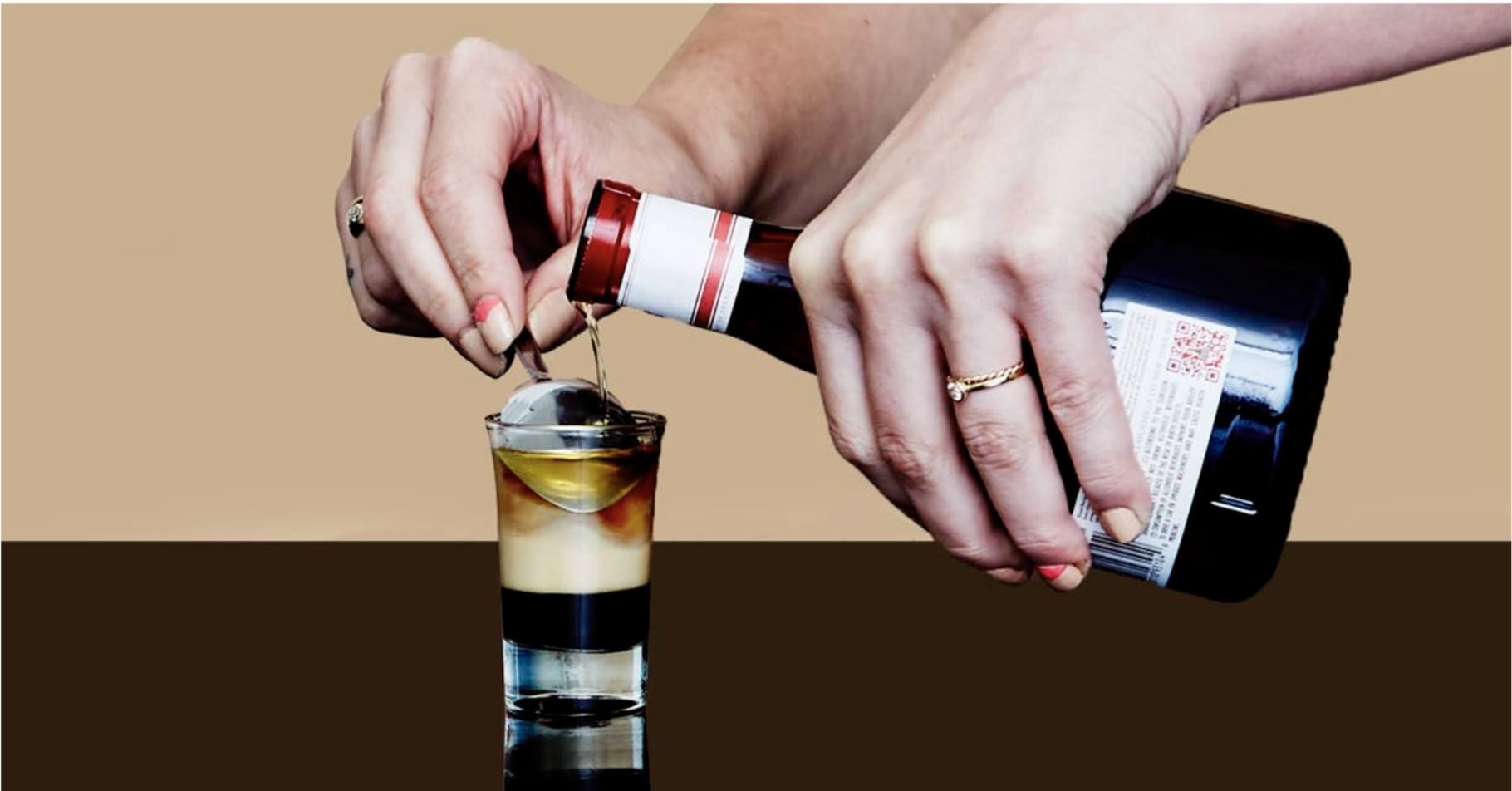
The less you disturb the bottom layer, the less the two liquids will mingle, and the more crisp and well-defined the layering will be. SmartBlend advises to use a spoon, in the inside up position, to help add the second liquid in such a way that it does spread slowly and evenly.
Use a spoon upside down ...
www.iStill.com