Introduction
In order to augment your company's value, you need to offer more valuable products or services. How does iStill increase its value? And is the iStill Way to Making Mistakes something other companies, craft distillers specifically, can learn from? Let's dive in deeper to find out!
Innovation
If value creation is based on delivering better products or services, what makes your company's offerings more valuable? Innovation. No more, but certainly no less either. A company needs to innovate on its products and services. Improved products and services are better and thus of higher value. That higher value is achieved through innovation, but how does a company achieve (and more importantly: maintain) an innovative mindset?
Culture
For a company to become - or remain - innovative, a culture needs to be established where the employees as well as management and owners can learn and grow. The wish and ability to learn precedes the ability to innovate, since innovation is basically this: lessons learned put to practice.
Mistakes are clumsy, aren't they?
For many people a problem or a mistake has a negative ring to it. "Oh, sh*t! I made a mistake ... I hope nobody finds out about it!". If you do your work "good", you do not make "mistakes", so if you make a mistake, that must mean you are not good at your job. If management finds out, you might loose your job as you have now become a liability. "Problems?" your boss may think or say, "I thought I hired you not to cause me any problems!"
The above is true. It is completely true in a fixed and predictable working environment. We are not farmers, but harvesting corn seems like a good example. You harvest when the corn is ripe. You use a combine-harvester to pluck and clean the corn. There is a truck somewhere that collects what you just harvested. If you use the farm's combine-harvester to try and harvest the potatoes, that's probably not going to be a success. The crop got destroyed and maybe the combine-harvester as well. What can you learn from it? Nothing valuable, except to fire the idiot that mistook a field of potatoes for an acre full of corn.
But, here at iStill, we do not operate a farm. A machine building company, maybe? Yes, maybe. We build a lot of machines, so that's what we are ... but only to an extend. Most of all, we are an innovation company. We established the iStill Technology Center so that we can focus on innovation ...
Why we love to make mistakes or encounter problems
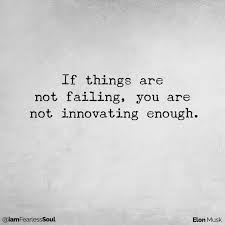
Mistakes that are swept under the carpet are no good, but mistakes that are discussed and solved by a team of engineers ... wow, these kinda mistakes are simply lovely! This is why we love making mistakes: a mistake creates an opportunity to learn and innovate.
If we design an agitator system and calculate that - given its unique design and strength requirements - one ball-bearing suffices, but we still find out that the agitator is the first part to fail? Well, we then immediately redesign the agitator so that it becomes the strongest part of that whole, complex distillation machine that we build. How about we give it three ball-bearings? Problem solved.
Without a mistake, you cannot learn from that mistake. So we cultivate a culture where we speak about mistakes. In fact, when we find a mistake, we'll put down our daytime jobs - basically all that work at the iStill Technology Center - and we start creating a structural solution to the problem encountered. Immediately! Innovating is about thinking up a new solution, producing that solution, implementing that solution, and then testing it and bringing it to full-scale production.
At iStill we cultivate this culture to the extreme. It allows us to go from problem identification to full-scale production of the solution in about one week. The mistakes we made are nothing new. I guess everybody makes them. The challenge is what you do with them. Do you foster a culture of perfection? Then nobody is allowed to make any mistakes. Mind you, the mistakes and problems continue, but they are not solved or innovated upon. Lessons lost instead of lessons learned.
For us, fostering a culture of learning and innovating from our problems and mistakes results in a faster learning curve, better products and services, and less follow-up problems and mistakes. This creates a faster and more effective sales, production, and delivery process, allowing us to grow, so that we can make more of the same or more of new kinds of equipment. The higher numbers and new equipment we design start another cycle of learning. Learning and innovating at the speed of thought, that's how we call it. An example of how we foster that culture? Here you go ...
Innovating at the speed of thought
As iStill's CEO I have an open door policy. My door is always open (or ready to be opened) for staff that identifies a mistake or problem or any other opportunity to improve and innovate. Literally always open! If I am writing an article and you - as an iStill employee - encounter an issue? You open my door and tell me all about it. When I am talking to a customer that wants to purchase five new iStills 5000, with all the bells and whistles on 'm, and you are that iStill employee with a problem? You open the door and tell me about it, so that we can assemble the rest of the staff and fix it right then and right there!
I remember that there was some opposition to especially the second situation. Not from my engineers, but from the staff like functions such as HR and Legal and Office Management. They were genuinely afraid of how it would look for a future customer to be talking to me ... and then me all of a sudden being confronted with an issue. How would that look? Bad, right? I explained them that this would just be awesome, instead. I'll give you an example of how that plays out in the paragraph underneath.
As I am speaking to a want to be iStill customer, that flew in all the way from Down-Under to meet with me, one of my engineers walks into my meeting and explains that we have a calibration issue with the new robot engine that we are testing. So I say: "Okay, great, let's assemble the team and meet downstairs to discuss!" I also invite the future customer to come with us to see how we do things. We check out the issue together, come up with a solution, and start testing it. This process takes no longer than 10 minutes. The customer comes back upstairs with me, back to my office, to continue his iStill purchase and he says: "Wow! Did I just see you guys innovate in real time? What an amazing experience! I am so happy that I could see that! I finally understand why you innovate so much and so fast!"
The customer wasn't dissuaded because of a problem. He was persuaded to purchase with us, because he saw how solution and innovation driven we are. And what a great team of engineers we have to pull that of.
Anything the craft distiller can learn from cultivating mistakes?
To me, what comes to mind, first and foremost, is how the craft distiller gains experience. With my mindset and background, it still took me two runs to make a near perfect brandy. With my experience in brandy making, it still took me probably three runs, before I perfected vodka. Even though, as I sample these ones, I now know I can still do a lot better. Rum? Maybe five or six runs. Gin? Pretty much great from the first run onwards, but that was with a lot, a LOT of distilling experience by then. On towards whisky ... oh, fr*k ... it took me over a year to produce anything even remotely close to acceptable!
It took me, with all my experience and award winning brandies, rums, gins, and vodkas, over a year to create a new make whisky spirit that was drinkable and maybe slightly enjoyable. Was that frustrating? No. As long as you learn from your earlier mistakes, you make progress. And as long as you progress, you become better at - in this example - whisky making. It was a long and arduous task. But when I learned how to do it, I learned SO much, that I can now teach it successfully to other distillers in a much shorter timeframe!
I hope that you see your recipe development trajectories as opportunities to learn. Yes, you can stand on the shoulders of the giants that came before you, but only to a certain extend. In the end, if you want to make YOUR whisky, you need to take a leap of faith forward. Change a protocol, or just a parameter, in order to create something unique and valuable. And nobody was ever worse off by many of us making ever better whisky.
So hone your qualities as a distiller by honing your qualities as an innovator. See that poor outcome as a challenge and opportunity to improve your craft. It is my mindset of cultivating mistakes and transforming them into learning opportunities, and then spreading what I learned to others in the industry, why people so often call me "Master" when I visit their distillery. Mistakes and problems are simply opportunities to learn. And when you learn something you can teach others and now the industry as a whole starts to innovate. Wanna be part of the craft distilling revolution? Learn how to cherish your mistakes and grow from them. If you do, you are on my team, by the way. Just so you know ... you are only now turning into a genuine master distiller!
www.iStill.com