Introduction
A new lead wants to start Bourbon production. He contemplates using the iStill for mashing, fermenting, and distilling. But - as it is a relatively new concept - how does it work? What are the pitfalls? And how do you prevent scorching?
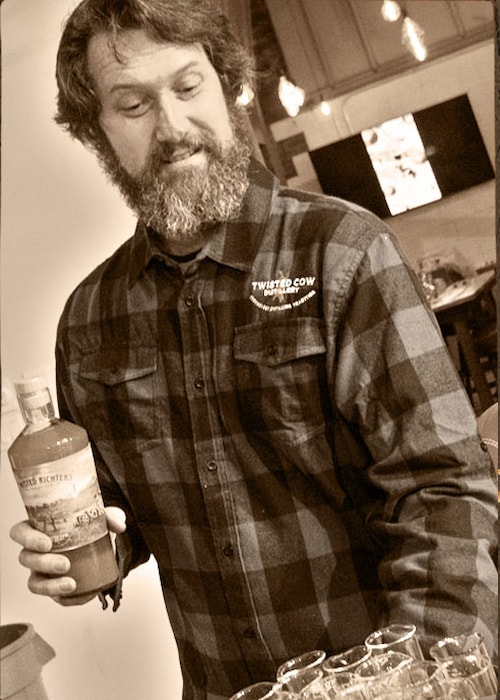
I decided to bring the lead in contact with the Long Island based, Twisted Cow Distillery's owner and master distiller John Pawluk. John reached out to them with an email that makes us proud and is worth sharing, as his experiences can help convince more new distillers that a modern take on distilling is a great way to start a company!
John's email
Good Morning,
Good to meet you.
I’ll be distilling a 3 part 100% heirloom corn bourbon Tuesday and should have some availability ~ 7 am eastern time for a video chat with you.
Some general commentary:
I’ve had a super successful experience to date with both my 5000 and 2000 l iStills & look forward to the day I place an order for another 5000 l machine.
Generally, my grain and molasses based batches are mashed, fermented and distilled in the 5000. I use the 2000 is for my lighter products and finishing runs such as apple brandy, agave, extractions (peach, gins) and vodkas (wheat, rye and molasses bases). Operationally, this production cadence works very effectively for me.
The iStills were first operational in August ’22. As time has passed, I’ve pushed them harder increasing efficiency and output
For example, I like to make my mistakes small, so my first batch of grain in the 5000 liter was ~ 800 kilos of unmalted rye for a vodka. Last month that same batch is 1400 kilos of grain.
I’m not sure what your product(s) are, however ~ 1400 kilos of grain translates into (4) 200 l barrels of whiskey or ~ 1300 bottles of wheat vodka (after a second finishing run) every 7-10 days.
At peak operations, I expect to shave 2+ days off this process, but need to implement some automation in grain milling / mashing and stillage treatment.
My fermentations are consistently have a final gravity of at least a negative -.5 plato, or at the very worst .7 final gravity, yielding as high at 12.5% abv with a flavor rich on the grain fermentation.
The stills are workhorses with no maintenance required to date.
They’re both reliable and absolutely stunning pieces of functional art that immediately start conversations when new guests arrive to my distillery.
I’ve had absolutely no issues with heaters and have literally done at least 40 batches of vodka, agave (tequila), rum, bourbon, rye whiskey, peach schnapps and others
Part of the beauty of this equipment is its functionality. I can literally produce any product I can imagine w/ the hybrid.
Cleaning protocols are simple, typically hot water or a semi-annual vinegar wash is all that’s needed. When I change products, for instance gong from rum to a bourbon, I’ll get a powerwasher on the inside (probably overkill, however they look amazingly clean after 18 months of near continual use). I use NO cleaning chemicals at all on the stills other than the above mentioned vinegar wash.
Happy to chat further tomorrow if you’d like.
Cheers,
JP
John Pawluk ...