Introduction
Over the last decade, I have put tremendous efforts into the development of an objective method to create drinks. A drink, in order to have certain flavors, must have been made in a specific way, where fermentation protocols, distillation equipment and procedure, and aging and maturation all play a significant role. Every decision has consequences, and this makes recipe development very complex. But if we learn to understand what consequences result from specific decisions and approaches, wouldn't that allow us a very, very powerful tool that can help us create any spirit profile we want?
My research has allowed me to do just that: create a very powerful and objective method that helps design spirits. Today, let's dive in deeper and introduce how it works and how you can apply it.
Today's guinea pig
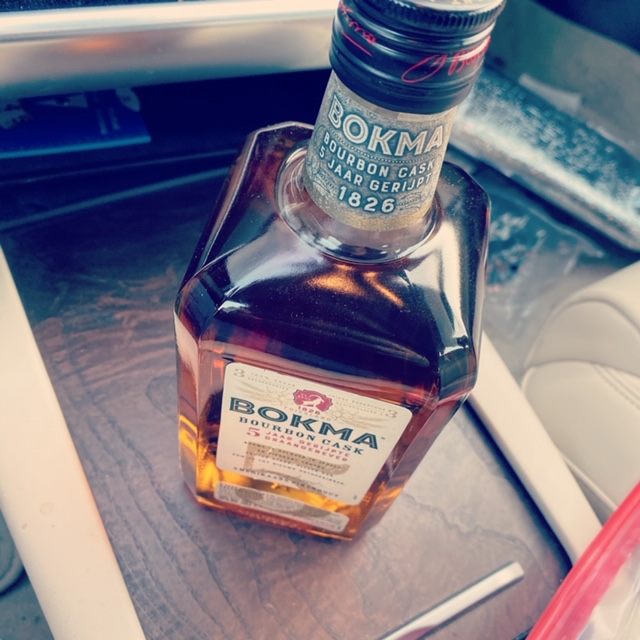
In this iStill Blog post I want to use Bokma 5yo Bourbon Cask as a guinea pig. Bokma is a well-known Genever brand. Genever is Dutch Gin. The drink is grain based and highlights the wood it is aged in, rather than traditional Genever herbs and spices. What that wood is? Well, ex-Bourbon barrels, made out of American white oak. As the name suggests, it has been aged in those barrels for no less than five years. It is bottled at 38%.
Let me start by expressing my gratitude to Bokma for taking this route. I think the combination of Genever and barrel aging is a good one, and the use of Bourbon casks is a nice innovation away from more traditional European oak wine barrels. To me it signals an open mindset and the willingness to innovate. And God knows Genever needs it, if it is to ever be a drinks category revived to its former "Big Three" stature (Brandy, Genever, Whisky). Innovation, that's what it takes. Innovation and a relentless focus on quality.
If the testing underneath does not give this Bokma Graanjenever a perfect score, please know I like the drink, and love the effort. The only aim I have is to explain how the Science of Flavor works. Something we practice, here at iStill HQ, on a daily basis. Not with this specific spirit, but when designing recipes for our customers. The reason we choose not to highlight a drink designed with/for iStill customers, but a more generically available brand (at least in the Low Countries) has all to do with confidentiality.
Tasting as a three step process
When we focus on the actual tasting of a drink itself, I want you to use a three step process. Each step consists of you taking a sip, closing your mouth, swirling the dink through your mouth, and then swallowing it, still with your mouth closed. Here is what you do in each step and with each sip:
- Focus on generic impressions;
- Focus on how long the tasting sensation lasts;
- Focus on where the tasting sensations hit.
- Lots of wood;
- Vanillins;
- Sweet and relatively light;
- Some acidity at the end;
- The wood and vanillin overpower the grain and juniper flavors;
- The sweetness at the front contradicts with the slightly acidic finish.
- Does anything happen in the first second? Do you get the fruity notes? How much? Nothing? A little? A normal amount? Or do you taste a shitload of fruit in that first second?
- How do you rate taste intensity from the faction between seconds 2 and 6 or 7, that happen in the middle of your mouth, on top of your tongue? No flavor? A little bit of flavor? Medium amounts of flavor? A LOT of flavor?
- Finally, there is the last phase of flavor: what happens at the back of your tongue and in your throat from second 7 onwards. Does anything happen at all? A lot? Only medium in taste intensity?
- The front of your mouth (lips, gum, tip of tongue), where fruity flavors may be identified;
- The middle of your mouth (on top of your tongue), where the base substrate of the spirit should be identified;
- The back of your mouth (back of tongue and throat), where earthy and rooty, nutty flavors can be found.
- No taste: 0;
- Light taste: 1;
- Medium taste: 2;
- A lot of taste: 3.
- The front has a little taste and scores a 1;
- The middle has medium taste and scores a 2;
- The end has little taste and scores a 1.
- Lots of wood;
- Vanillins;
- Sweet and relatively light;
- Some acidity at the end;
- The wood and vanillin overpower the grain and juniper flavors;
- The sweetness at the front contradicts with the slightly acidic finish.
- Tastes persist for 9 to 10 seconds;
- Identifying the drink as having a three-dimensional character.
- With 1, 2, 1 this Graanjenever has a very light character;
- Where the grains do not stand up to the (overpowering) wood and vanillin flavors.
www.iStill.com