Introduction
Irish whiskey is on the rise! But there are strict rules on labels and definitions. This iStill Blog post clarifies what's what in Irish whiskey and how you, as a craft distiller, can comply. Spoiler alert: it is more than just the geographical indication of it being made in the Republic of Ireland and/or Northern Ireland. You know what? As a little extra side-dish, this post also explains how iStills can help you out make even better Irish whiskey, both consistently and efficiently.
Categories of Irish whiskey
There are basically four labels of Irish whiskey:
- Irish whiskey;
- Pot still Irish whiskey;
- Malt Irish whiskey;
- Grain Irish whiskey.
- Fermentation takes place by yeast and natural enzymes only;
- Fermentation takes place at the same site where brewing and distillion happen.
- Maturation takes place in wooden casks no bigger than 700 liters;
- In a tax warehouse for a minimum time of three years.
- The mash bill contains malted cereals with or without whole grains added;
- The enzymes in the malt enable the saccharification;
- Synthetic enzymes are not allowed;
- Brewing, fermenting, and distilling take place at the same site.
- Must be distilled at less than 94.8% ABV;
- Must be double or triple distilled.
- All iStill equipment can mash, ferment, and distill Irish whiskey;
- Double or triple distillation is achieved by combining one bigger still with a smaller one or by using one still, first for stripping and then for finishing.
- The mash bill contains at least 30% natural, raw, non-peated malted barley;
- And a minimum of 30% unmalted barley;
- A maximum of 5% other unmalted cereals like oats or rye
- The enzymes in the malt enable the saccharification;
- Synthetic enzymes are not allowed;
- Brewing, fermenting, and distilling take place at the same site.
- Must be distilled at less than 94.8% ABV;
- Must be double or triple distilled;
- In a copper potstill.
- All iStill equipment can be used to mash and ferment;
- If you want to label your spirit as pot still Irish whiskey, use copper stills distillation;
- Double or triple distillation is achieved by combining one bigger still with a smaller one, first for stripping and then for finishing.
- The mash bill is made from 100% natural, raw, peated or non-peated malted barley;
- The enzymes in the malt enable the saccharification;
- Synthetic enzymes are not allowed;
- Brewing, fermenting, and distilling take place at the same site.
- Must be distilled at less than 94.8% ABV;
- Must be double or triple distilled;
- In a potstill.
- All iStill equipment can be used to mash and ferment;
- If you want to label your spirit as malt Irish whiskey, use our potstill design;
- Double or triple distillation is achieved by combining one bigger still with a smaller one or by using one still, first for stripping and then for finishing.
- Mash is made from maximum 30% natural, raw malted barley and other whole cereals;
- The enzymes in the malt enable the saccharification;
- Synthetic enzymes are not allowed;
- Brewing, fermenting, and distilling take place at the same site.
- Must be distilled at less than 94.8% ABV;
- Must be double or triple distilled;
- In a column still.
- All iStill equipment can be used to mash and ferment;
- If you want to label your spirit as grain Irish whiskey, use our standard column design;
- Double or triple distillation is achieved by combining one bigger still with a smaller one or by using one still, first for stripping and then for finishing.
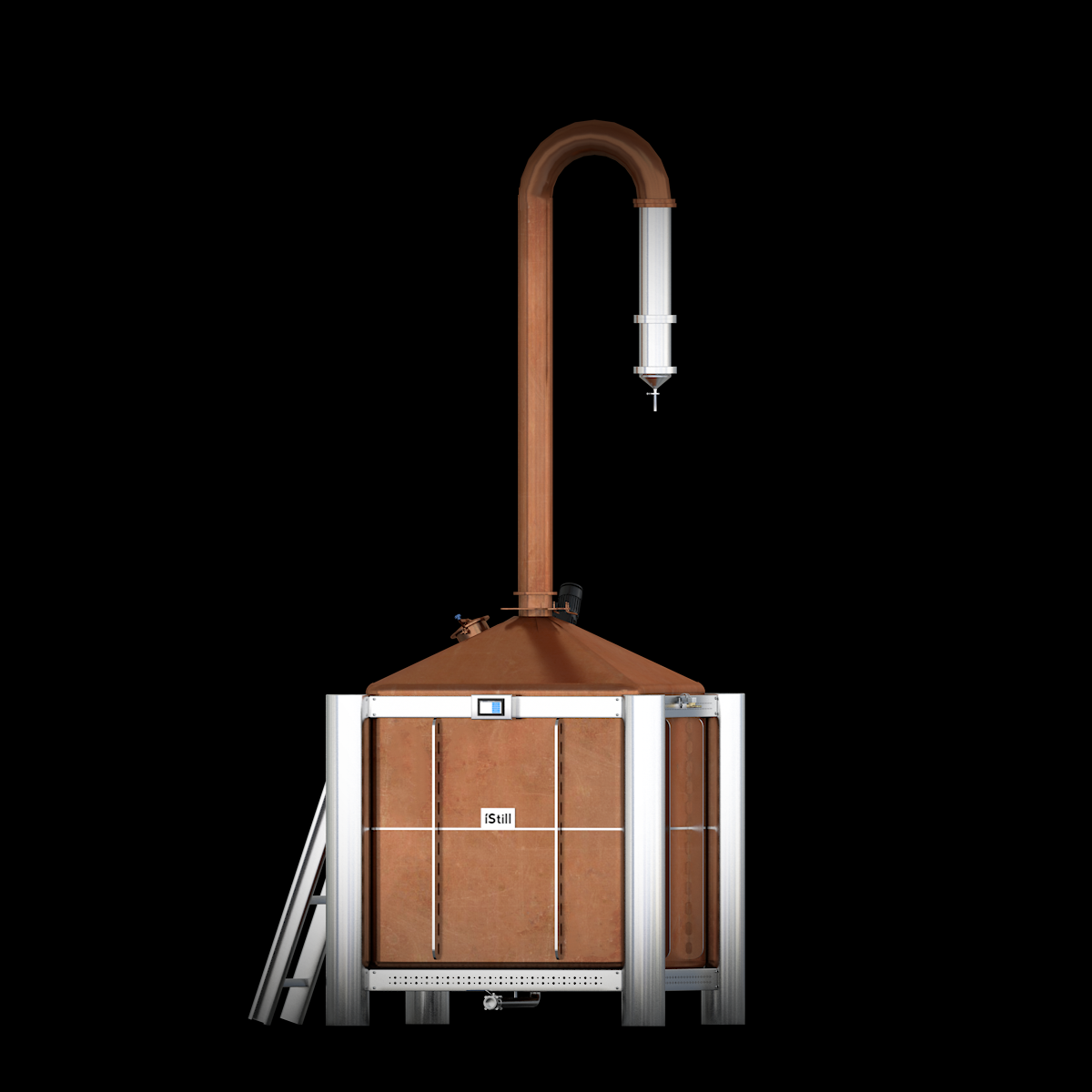
Pot still Irish whiskey iStill 5000 ...
www.iStill.com