Introduction
Another Tuesday Tech Talk post! This time about ... steady state distilling. What is it? Yes, some explaining is needed, especially since steady state distilling is not something that's standard procedure. In fact, it is a terminology that I introduce here and now, to describe a certain approach to designing stills. A quite interesting one, that we will put to practice on the iStill 100 NextGen we are about to launch.
iStill 100 NextGen design challenges
When I started designing the iStill 100 NextGen, I wanted it to be an affordable unit that the Craft Distiller can use for small scale production or product development. At the same time I wanted it to be a still we can use ourselves to train our customers in the basics of distilling, prior to them taking the next step: automated and robotized distilling.
Considerations
For the unit to be both "affordable" and "educational", I wanted to start with a unit that had only very limited automation and robotization. That beefs up the learning experiences, while cutting costs dramatically on the smaller unit the i100 NG is.
The focus then became something like this: "Yes, we can make a unit that is operated via a manual needle-valve ... but how can we design a unit that - given its size, column diameter, packing, power settings - can make both taste rich and pure product in the easiest way possible?"
The answer? Steady state distilling!
Steady State Distilling
Without all the automation and robotization in place to control and manage the iStill 100 NextGen, I had to come up with a solution that would make the unit as easy to manage and as good as running itself as possible. And that's where steady state distilling comes in ...
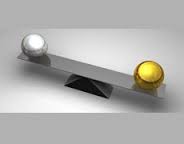
"Steady state distilling" is the situation where the rig, by structural design decisions, runs perfectly balanced as is, without any control action having to be undertaken, both when making taste rich and pure product. With the manual needle-valve now operating as a mere selector of the amount of taste versus purity the Craft Distiller wants.
What I needed to balance out, in order to achieve that steady state situation for the non-robotized iStill 100 NextGen, were quite a few parameters:
- Boiler size;
- Column diameter;
- Packing efficiency;
- Power input;
- Standard needle-valve opening.
- Net boiler content of 100 liter;
- Column diameter of 3 inch;
- A newly designed, slightly bigger SPP as column packing;
- A steady power input of 3.5 kW;
- A newly designed manual needle-valve with a certain maximum diameter and full 1080 degrees (3 full turns) rotational control.
www.iStill.eu