Introduction
Another more technical post. This time about gas pressure. Is gas pressure important? Yes it is! Why? Because gas pressure is inherent to distilling. Without gas pressure no distillation.
And - even though it is inherent to distilling - it is something you want to be able to manage. If you (or your still) do not manage gas pressure, you can create overpressure situations. In certain types of distillation equipment at least. Let's dive in deeper.
Two types of gas pressure
I distinguish between "autonomous pressure" and "overpressure". "Autonomous pressure" is the pressure that's part of the distillation process itsself. "Overpressure" refers to external factors that can cause gas pressures to rize above the autonomous level.
Autonomous gas pressure
Let me explain autonomous gas pressure first. Once a liquid (a beer or wine) is brought to a boil, most of the energy is then used to create gases. Since gases have a much bigger volume than the liquid they once were, pressure is created. Imagine, for example, that you boil off 1 cm3 of liquids in a second. The boiling action, in that same second, will expand that 1 cm3 of liquid into 1000 cm3 of gas. That's a lot of gas. Like 3.6 m3 per hour! And that gas wants to go somewhere.
Where to? Well, normally, in a distillation device, the gasses enter the column, meet packing or plates or refluxed liquids, and then have to be bent to the product cooler. Usually, gas speeds are increased during, or just prior to cooling.
When compared to an open pot, that you may use to boil your eggs in, it is easy to imagine that gases in a distillation device meet resistance and drag is created. That resistance, inherent to distilling since we do not want to just create gases, but also want to cool them down to their liquid phase again, by definition creates pressure.
In short? The expansion of liquids to gases (x 1.000) in combination with distilling devices being mostly relatively closed systems (with quite some drag) creates pressure by definition. This is what I call autonomous pressure. Without it we wouldn't be able to distill beer into more alcohol rich gases into more alcohol rich liquids.
Overpressure
Overpressure is (or can be) created when external influences add pressure. This pressure is then added to the autonomous gas pressure and creates more total pressure inside the system.
Overpressure is what we want to limit or at least control, when distilling, because it can potentially create dangerous situations.
Why uncontroled overpressure situations are bad? For two reasons:
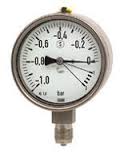
- Limited overpressure hampers production speed and the overall efficiency of the distilling device;
- Excessive overpressure creates potentially dangerous situations.
- Too much power input;
- Too little cooling capacity;
- Stabilization in a closed system.
- Creating vapour from a liquid;
- Condensing that vapour from gas to liquid phase again.
- Without a clear distinction between heating up and the actual production process, the distiller runs a risk of overpowering the column and cooling system during that run. When power input is not limited after heat-up, the unwanted externally caused overpressure mentioned above is created;
- Without double power input during heat-up the run time goes up significantly.
www.iStill.eu