Please, read the iStill Blog post "Odin's got Wood!" first! Otherwise you will miss out on half of the story.
Synopsis so far ...
Barrels are responsible for 50 to 65% of the taste of your whiskey. Barrels are made from oak. Not all oak is created equal. If you want sweetness and vanila, choose American White Oak. If you want character and complexity, you need European Oak (EUO). Which barrels you need, if character and complexity is your goal? The ones made from European Winter Oak from Hungary's Zemplén region. That's the best "terroir".
But there's more. We didn't dive into the role of the Master Cooper yet. And what age should the trees be, that are used by these Master Coopers? How should they be treated? What size barrel do you need, and what are the advantages and disadvantages of charring and toasting? Stay with me and let's dive in deeper!
The Master Cooper's Role
It is important to understand the difference between a Cooper and a Master Cooper. Where the Cooper makes barrels, it is the Master Cooper that decides which Cooper makes what part of the barrel. Who does the cleaving? Who makes the staves? Which Cooper is best at building up the barrel? And who does the toasting? The Master trains his employees and puts them to work. Important? Yes, but there's more ...
First of all, it is the Master Cooper that decides on what wood to use. Secondly, he decides how the production process is organized.
The Master Cooper personally visits the forests and selects the trees he wants to buy. This is an extremely important part of the whole oak to barrel to whiskey process. A well-experienced Master Cooper, that probably learned the trade from his father and grandfather, will select better trees in order to be able to make better barrels. And a well-connected Master Cooper gets the first choice on trees that become available.
When the trees are selected, cut down, and brought over to the cooperage, the Master Cooper has to decide on how to cut trunks into staves and how to age them. He has to be able to forecast demand for around 5 years ahead and plan accordingly. In short? This is not a low entry level profession!
The choice for working with a specific Master Cooper may well be more important than checking the wood that's used. The questions I'd ask myself, as a distiller, considering a certain cooperage and Master Cooper to co-operate with, would be these:
- How long is the cooperage in existence? The longer the better!
- Is the cooperage family owned or not? In general, it's the family owned cooperages, that exist for a long time, which are most involved, most experienced, and best connected.
- How big is the company? You need at least 5 to 10 employees to reap the benefits of specialization, co-ordination, and good service and after sales.
- How involved is their workforce? Do they hit the road the moment it's five o'clock or do they finish the task at hand and put in that extra 15 or 20 minutes?
- How tidy is the workplace? Cleaving, sawing, sanding wood is dusty labour. For me, a tidy workplace signifies the attention to detail I am looking for.
- If you want to release your product in a year, a 55 liter barrel is great;
- For two to three years of barrel ageing, a 110 liter barrel is perfect;
- Do you want to age for three to five years? Choose a 220 liter barrel!
- Heavy or Medium Plus toast for whiskey;
- Medium Plus or Medium toast for rum;
- Medium toast for brandy or Cognac;
- Light toast for fruit brandy and genever.
- Age a whisky for thee years;
- Then age rum in it for three years;
- Then age genever or a fruit brandy in that same barrel.
www.iStill.eu
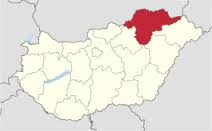
Zemplén Region ...